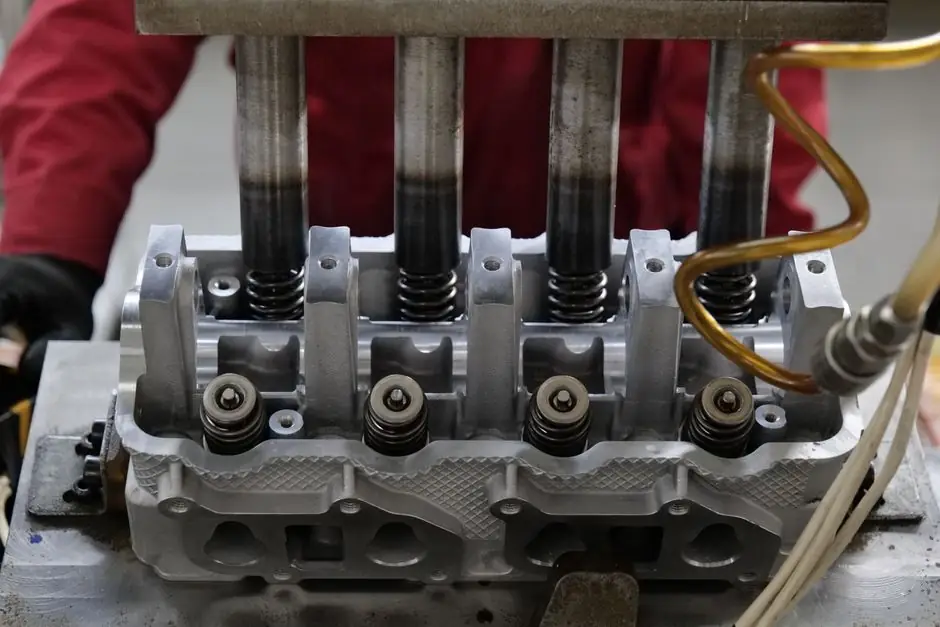
A pneumatic cylinder typically carries three dynamic seal stations: a piston seal on the bore ID at the piston, a rod seal inside the gland at the rod exit, and a wiper seal mounted in the external face of the gland [S1][S2][S3]. Each one operates against a different surface, sees a different pressure differential, and fails for a different reason.
The piston seal sees the full supply pressure differential (commonly 6-10 bar shop-air, up to ~10 bar for typical pneumatic actuator service) and must seal a sliding bore, while the rod seal only sees the differential between chamber pressure and atmosphere. The wiper seal sees zero pressure differential and is purely a mechanical scraper, which is why a worn wiper rarely causes hard leak-down but almost always kills a rod seal early [S2][S4].
Function of Each Seal Station
The piston seal sits in a groove on the OD of the piston and seals against the cylinder bore, preventing air from passing from the pressurised chamber to the exhaust chamber in a double-acting pneumatic cylinder [S1][S3]. In single-acting cylinders it holds pressure on one side only and is usually paired with a wear ring or guide ring to keep the piston centred.
The rod seal sits in the gland housing, sealing the dynamic interface where the piston rod exits the cylinder body, and its job is to retain the pressurised gas inside the cylinder [S1][S2][S4]. It is the primary pressure-containing seal of the rod station, and it is normally specified separately from the piston seal because the duty cycle, lubrication regime, and exposure differ.
The wiper (also called a scraper or dust seal) is installed in the open face of the rod gland, outside the rod seal, and its sole function is mechanical: as the rod retracts, the wiper lip scrapes dirt, dust, moisture, and swarf off the rod surface before they can be dragged past the rod seal into the gland [S2][S3][S4][S5]. It is a non-pressure seal, usually made of a harder polyurethane or nitrile compound than the rod seal, and it carries the contamination-control load for the whole pneumatic system.
Material Choices by Station
Seal material is not interchangeable between the three stations because each sees a different stress profile. Nitrile (NBR) is widely used across all three for general-purpose air service because of its oil resistance and low cost [S3][S4]. Polyurethane (PU) is preferred for rod seals and wipers where abrasion resistance matters more than low temperature, since PU can lift rod-seal pressure capability well above nitrile in mobile pneumatic equipment [S3][S4].
PTFE and filled-PTFE compounds are used for piston and rod seals where low friction, dry-running capability, or chemical compatibility is required, but PTFE alone does not recover elastically, so it is almost always energised by an O-ring or used as a wear ring rather than a stand-alone scraper [S3][S4]. Wipers are rarely PTFE because the scraping lip needs elastomeric resilience to maintain contact on a dirty, possibly scored rod.
Selection should follow operating pressure, temperature, rod speed, surface finish, fluid medium, and contamination level, exactly the criteria M Seals lists for its rod-seal portfolio and that apply equally to the piston and wiper stations [S4]. For typical ISO 6432 mini-cylinders at 6-10 bar with filtered air, NBR piston + NBR/PU rod seal + PU wiper is the default low-risk stack.
Pressure Differential and Failure Mode by Station
The three stations see very different pressure regimes, which is the single biggest reason they cannot be specified as one item. The piston seal carries full line pressure on the bore ID and fails by extrusion, spiral failure, or compression set when pressure spikes, which is why T-seals and backup rings are commonly added to piston grooves in higher-pressure pneumatic circuits [S3]. The rod seal only blocks escape of chamber air, so its pressure rating can be lower than the piston seal, but it runs hotter because the rod conducts heat out of the cylinder and the lip is starved of re-lubrication [S4].
The wiper sees no pressure differential at all, so its failure mode is wear and lip-tear from abrasive particles, not extrusion. Over-aggressive wipers are a known cause of premature rod-seal wear because they strip the lubrication film off the rod on every stroke, accelerating rod-seal friction and leakage, a failure-interaction that M Seals specifically calls out [S4].
In practice, contamination is the dominant failure driver across the whole rod station: industry data cited in wiper-seal literature attributes roughly 70% of hydraulic-system failures to contamination, and over 30% of hydraulic cylinder failures specifically to foreign-particle seal damage, which is why the wiper is treated as mandatory rather than optional on outdoor or mobile pneumatic equipment [S5]. The piston seal, being inside the bore, is largely protected by upstream filtration and rarely fails from contamination alone.
Selection Criteria Comparison
Comparing the three stations against the same set of decision criteria makes the trade-off obvious to a specifier. On pressure differential, piston seal carries full line pressure, rod seal carries the same differential but at a smaller diameter, and wiper carries zero. On surface, piston seal runs on honed bore (Ra typically 0.2-0.4 micrometre), rod seal and wiper both run on hard-chrome rod (Ra typically 0.1-0.2 micrometre), but the wiper sees the dirtiest condition because it contacts the rod before any other seal [S3][S4].
On life driver, piston seal life is dominated by pressure cycles and stroke length, rod seal life is dominated by stroke length and side-load-induced lubrication starvation, and wiper life is dominated by environmental dirt load. On typical compound, piston seal is commonly NBR or PTFE-energised, rod seal is commonly PU or NBR, and wiper is almost always PU for abrasion resistance [S3][S4][S5].
On interchangeability, the three are not interchangeable: a piston seal installed at the gland will not seal because the gland bore is shorter and the lip geometry is wrong, and a wiper installed in the rod-seal groove will pass air because it has no pressure-energising lip. This is the core engineering reason pneumatic-cylinder service kits are sold as matched piston-seal + rod-seal + wiper sets, and it mirrors the same logic used in pneumatic conveyor cylinder rebuilds.
Use Cases and When Each Seal Matters Most
For clean-room or laboratory pneumatic equipment, the wiper is often specified even when contamination risk is low, simply because any single particle dragged into the gland will score the rod seal lip and cause persistent leakage, so the wiper is cheap insurance. For food-grade or washdown pneumatic cylinders, the wiper specification moves to a PU or food-grade NBR with a secondary lip, and the rod seal is upgraded to a filled PTFE energised by a FKM O-ring to handle steam and cleaning chemicals [S3][S5].
For long-stroke pneumatic cylinders, where stroke length drives buckling and seal friction limits, the rod seal friction term dominates, so low-friction PTFE or PTFE-energised rod seals are preferred over PU even at higher unit cost, and the wiper is selected to minimise rod-side load, see the buckling-limit guidance in Pneumatic Cylinder Stroke-to-Bore Buckling Limit sizing rules for the geometry context that drives this trade-off. For high-cycle production-line cylinders (over 1-2 cycles per second), the piston seal moves to a T-seal or step-seal with backup ring to resist spiral failure, and the rod seal stays PU for abrasion resistance [S3].
Across all of these cases, a seal kit that does not include a wiper is a kit that has been optimised for first cost rather than service interval, and the 30-70% contamination-failure figures in the literature explain why field experience consistently favours the three-seal stack [S5].
Specifying the Three-Seal Stack
A defensible pneumatic-cylinder seal specification names each station explicitly, with compound, hardness (typically 70-90 Shore A for NBR/PU wipers, 90 Shore A for PU rod seals in high-pressure service), temperature range, and rod-surface finish requirement [S4]. The minimum viable stack is piston seal + rod seal + wiper, with optional backup rings on the piston seal for line pressure above ~8 bar and an optional wear ring on the piston for long strokes.
For a sourcing decision, match the stack to the operating environment: NBR throughout for general factory air at 6 bar and 5-50 degC, PU rod seal + PU wiper for mobile equipment exposed to dirt, and PTFE-energised rod seal + FKM wiper for chemical or washdown exposure [S3][S4][S5]. Replace the wiper at every rod-seal service because a fresh rod seal installed behind a scored wiper lip will fail within the first 10% of its rated life.
Trackable signals to watch in 2026: tighter ISO 8573-1 air-quality classes pushing more specifiers to fitted wipers as standard, and growth of pre-assembled three-seal cartridge kits from major cylinder OEMs reducing field assembly errors on the rod gland.