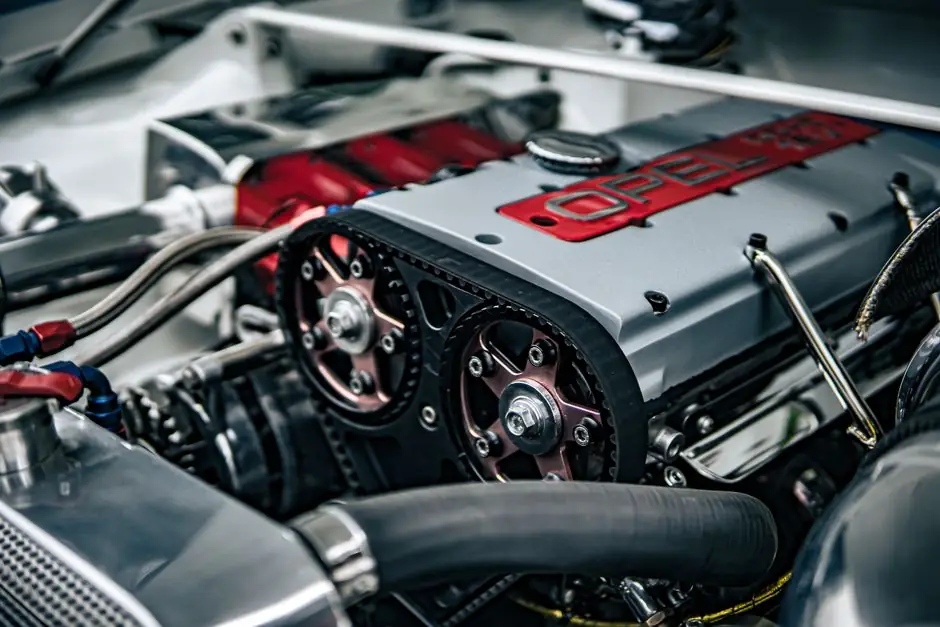
A pneumatic cylinder is a mechanical actuator that converts compressed air into linear force via a piston, piston rod, end caps, seals, and a cylindrical bore, with end-cap ports admitting and exhausting the working air [S1]. The five canonical construction families are single-acting, double-acting, rodless, diaphragm, and rotary; each is defined by how air enters, how motion is produced, and how the return stroke is generated [S2][S5].
Selection is driven by four spec gates: required stroke length, force at a given bore and supply pressure, mounting footprint (tie-rod, round-body, or NFPA), and environment (clean room, food grade, dirty/dusty, or washdown). Because air is compressible and a poor lubricant, pneumatic cylinders trade off against hydraulics on positioning accuracy and steady-state force density, and they are typically capped at low-pressure service compared with hydraulic systems that can reach ~10,000 PSI [S4].
Single-Acting Cylinders: Spring-Return and Push/Pull Subtypes
A single-acting cylinder uses compressed air on one side of the piston only; the return stroke is produced by an internal mechanical spring, so it has a true single air port and a fixed return direction [S1][S3]. Two subtypes are defined by which stroke is powered: in a push-type (spring-return) cylinder, air extends the rod and the spring retracts it, while in a pull-type unit air retracts the rod and the spring extends it [S1][S6].
Because spring force opposes the working stroke over the entire travel, effective output force is bore area times supply pressure minus the spring's opposing force at that position, which makes single-acting units best suited to short strokes (commonly under ~100 mm) and light clamping, ejecting, or blocking duty [S1][S3]. Simplicity is the upside: one air line, one 3/2 valve, fewer seals to leak, and a fail-safe return on air loss. The downside is asymmetric force, a limited stroke window, and spring fatigue over millions of cycles, so engineers usually avoid them on high-cycle or high-force axes. For a deeper look at how pneumatic cylinders differ from hydraulic actuators on inertia and cleanliness, the trade is straightforward: air is low-inertia and clean if it leaks, but compressible, which is why accurate positioning with a single-acting unit alone is not realistic [S4].
Double-Acting Cylinders: Independent Extend and Retract Control
Double-acting cylinders port air to both sides of the piston, so both the extend and retract strokes are pneumatically powered and independently controllable via a 4/2 or 4/3 directional valve [S2][S3]. This eliminates the spring and roughly doubles the available force envelope for a given bore, because both piston faces (minus the rod-side area) produce useful work [S1].
They are the default choice for material handling, indexing, press feed, and any axis needing adjustable speed in both directions or mid-stroke reversal. Mounting patterns typically follow ISO 15552 (the 32–320 mm bore family) for European/Asian builds or NFPA dimensional standards for North American machinery, which is what Nopak's "NFPA Aluminum" and "Intermediate Pressure Square Head" product lines are designed around [S4]. Compared with a single-acting unit, a double-acting cylinder has more seals, two air lines, and a 5/3 closed-center valve if you need true position holding, so it is a heavier controls package in exchange for symmetric force and longer strokes. The same air-compressibility limitation applies: deceleration profiles still need external cushioning or shock absorbers if cycle rates are aggressive, because pneumatic damping is weak at the end of stroke [S4].
Rodless Cylinders: Long Stroke in a Compact Envelope

Rodless cylinders deliver linear motion without a piston rod exiting the bore, which means stroke length is not limited by buckling or bending loads on a long rod. The two dominant variants are magnetically coupled (the carrier is driven by magnets through a non-metallic barrel wall) and mechanically coupled (a slot in the barrel with an internal piston carrying the load through the slot) [S2][S8].
Use rodless units when the required stroke exceeds what a rod-type cylinder can do in the available machine footprint, or when the load must travel along the entire cylinder length, as in conveyor diverters, web tensioning, and long-axis pick-and-place. Force ratings are similar to a rod-type cylinder of equivalent bore, but magnetic-coupler variants lose force with the air gap and have a strict non-ferrous load rule on the carrier. A practical selection tip: if the load must pass over the cylinder body, rodless is essentially the only option, but if the load can be pulled by an external rod, a telescoping cylinder is often a cheaper alternative for moderate strokes [S8].
Diaphragm and Rotary Cylinders: Specialty Duty
Diaphragm cylinders use a flexible elastomer or fabric-reinforced diaphragm instead of a piston, so the air acts on a rolling membrane to produce short, high-force linear strokes with zero piston-rod seal leakage, which is why they dominate sanitary, pharmaceutical, and food-grade pumping and pinch-valve service [S2][S5]. Stroke is limited to roughly half the diaphragm diameter and is non-adjustable, but the leak-tight design is what makes them specifiable where any seal weep is unacceptable.
Rotary cylinders, also called rotary actuators, convert pneumatic pressure into oscillating rotary motion. The two common subtypes are rack-and-pinion (a linear piston drives a pinion gear, producing high torque at limited rotation, typically 90°, 180°, 270°, or 360°) and vane-type (a vane attached to the output shaft sweeps inside a housing, giving compact rotation in a single integrated body) [S7]. Rack-and-pinion units are favored for heavy-inertia indexing and swing clamps because they tolerate larger bearing loads; vane units are compact and lower cost but are limited in torque and rotation angle. Both are covered in the pneumatic actuator category, which spans linear and rotary outputs from a common compressed-air supply.
Mounting, Standards, and Pressure Class
Mounting style is a spec line, not an afterthought. The most common families are tie-rod (high strength, easy rebuild, common in ISO 15552 and NFPA builds), round-body (compact, often non-repairable), and profile/reed (lightweight aluminum extrusion, common in European factory automation) [S1][S4]. Foot, flange, trunnion, and clevis mounts add fixed or pivoting anchor points, and the choice is dictated by the load direction relative to the cylinder axis.
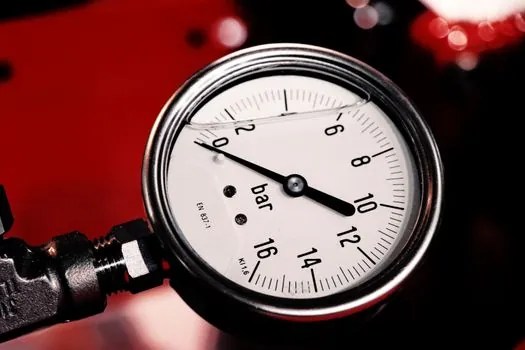
Two standards dominate dimensional interchangeability: ISO 15552 (formerly ISO 6431) for the 32–320 mm double-acting profile family, and NFPA dimensional standards for North American round-body and tie-rod builds. Operating pressure in factory shop air is typically 6–8 bar (~87–116 PSI), with 10 bar (~145 PSI) as a common industrial ceiling; the 250 PSI (~17 bar) figure cited as a practical upper bound for pneumatic service reflects rupture and energy-density risk rather than a specific code limit [S4]. Below ~10 bar, FRL (filter-regulator-lubricator) treatment of the supply air is the single biggest reliability lever, because air is a poor lubricant and contamination is the primary seal-killer.
Selection Matrix: Cylinder Family vs Decision Criteria
Use this four-criterion map to shortlist a family before sizing bore and stroke. Force envelope is the theoretical available force at a given bore; stroke is the practical linear range; cleanliness is the leak/weep risk in sterile or washdown service; controls complexity is the number of valves and sensors needed. [S1]
Single-acting: low-to-moderate force, short stroke (<=100 mm typical), clean (one seal path), one 3/2 valve, no mid-stroke hold. Double-acting: moderate-to-high force, short-to-long stroke, clean with proper seals, 4/2 or 5/3 valve, mid-stroke hold capable with closed-center valve. Rodless: moderate force, long stroke (up to several meters), clean (magnetic-coupler) or dirty-tolerant (mechanical slot), 4/2 or 5/3 valve, compact envelope. Diaphragm: high force at short stroke, ultra-clean (no rod seal), one 3/2 valve, fixed short stroke. Rotary (rack-and-pinion or vane): torque output, rotation up to 360 deg (rack-pinion) or limited angle (vane), clean with proper seals, 4/2 or 5/3 valve, replaces a linear cylinder plus linkage [S1][S2][S5][S7].
Two disqualification rules worth stating plainly. First, if you need closed-loop positioning better than a few millimeters, pneumatic alone is not the right technology; add a linear transducer and a proportional valve, or move to an electric linear actuator, because air compressibility defeats open-loop accuracy [S4]. Second, if force density above ~17 bar is on the table, spec a hydraulic cylinder instead, since pneumatic systems lose efficiency rapidly above the standard shop-air range.
Failure Modes, Lubrication, and Maintenance
The three most common field failures on pneumatic cylinders are seal wear from unfiltered/contaminated air, rod scoring from side-load misalignment, and internal corrosion from moisture in the supply. Because air is a poor lubricant, modern seals are typically self-lubricating elastomers (NBR, FKM) and the FRL's lubricator section is optional rather than mandatory, but the filter section is not optional [S4].
Cushioning is a maintenance lever: most ISO 15552 and NFPA double-acting cylinders have adjustable pneumatic cushions at both end caps, which decelerate the piston by trapping a small air column; for high-cycle or high-mass loads, external shock absorbers are added because pneumatic cushioning alone has a finite energy absorption. Tie-rod and NFPA-style cylinders are field-rebuildable with replacement seal kits, while many round-body and profile cylinders are factory-service only, which is a real lifecycle-cost line item and worth checking on the spec sheet before purchase. A related engineering decision upstream of the cylinder is the pneumatic distribution and treatment package, since FRL sizing and dryer selection drive the contamination and moisture loads the cylinder seals will see over their service life.
Trackable signals: ISO 15552 bore-and-stroke standardization continues to consolidate double-acting tie-rod and profile designs in factory automation, with magnetic-piston position-sensing and IO-Link digital feedback now common on new builds rather than optional [S1][S2]. For high-cycle or high-temperature service, FKM seals and externally lubricated PTFE rod coatings remain the default upgrade over standard NBR; a procurement spec should call these out by material rather than by trade name to keep sourcing open.
See also our earlier report, Surface Roughness Tester Selection: Parameters, Stylus, and Geometry.