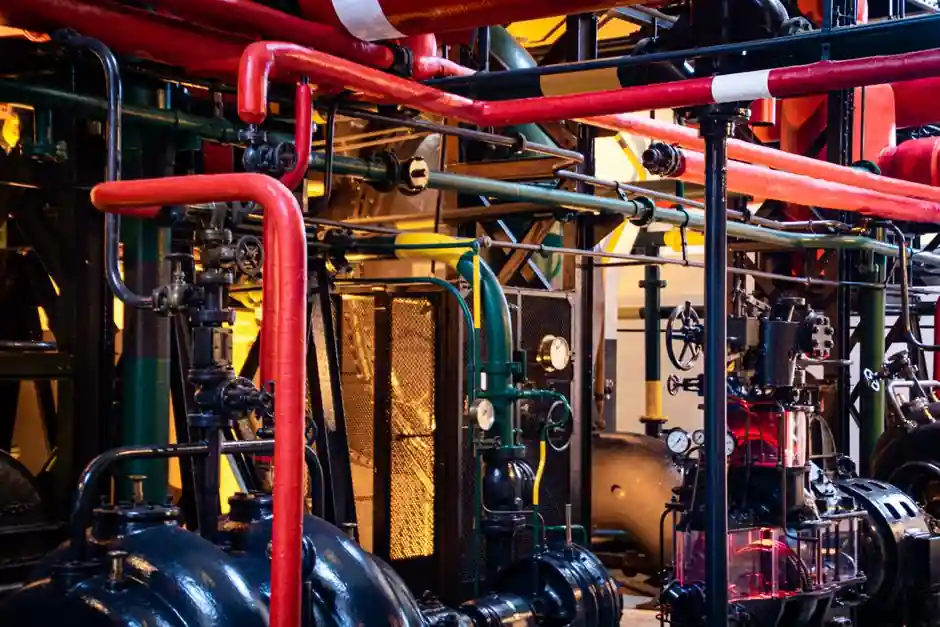
Centrifugal pumps handle roughly four discrete jobs in a seawater desalination plant, and the right selection at each zone decides both uptime and energy bill: high-pressure multistage centrifugal units pressurize RO feed to 55-80 bar, while axial flow, mixed flow, and vertical turbine pumps move raw seawater at low head and very high flow [S1].
Pumps typically consume 60-70% of a pump's 15-20 year lifecycle cost as electricity, and high-pressure pumps alone can hit 60% of total SWRO plant energy use, so the wrong hydraulic or material choice shows up fast on the kWh ledger [S1][S3]. Engineers who frame the decision around lifecycle cost, corrosion data, and zone-by-zone duty points usually end up with a noticeably lower $/m³ of permeate than those who buy on first cost.
Desalination Plant Zones and the Pump Each One Demands
Seawater desalination plants split into four pumping zones with very different duty profiles, and a single pump family cannot cover all four economically [S1].
Zone 1 (intake) is high flow, low head, and almost always handled by axial flow, mixed flow, or vertical turbine pumps sized for continuous raw-water duty. Zone 2 (RO feed) is where the centrifugal design earns its keep: a multistage centrifugal pump raises feed pressure to the 55-80 bar band the membranes need, and large SWRO facilities above 500 m³/h favour multistage centrifugal units precisely for that reason [S1][S3]. Zone 3 (brine discharge) uses high-head multistage pumps to push concentrated reject, and Zone 4 (permeate distribution) uses multistage booster pumps at low to medium pressure to feed the supply network.
Multistage centrifugal designs, including barrel-casing variants, are the workhorse of the RO feed and brine zones because each stage adds head incrementally, letting a single shaft train reach 80 bar without the pulsation penalties of a positive-displacement machine [S1][S3]. The same architecture also scales naturally to large permeate flows, which is why a multistage centrifugal pump is the default answer for any SWRO train above roughly 100-200 m³/h.
Centrifugal vs Positive-Displacement vs Axial Piston for RO Feed
For the high-pressure RO feed zone, three real options compete: multistage centrifugal, axial piston (a positive-displacement subtype), and standard piston diaphragm or plunger pumps. Each trades efficiency, turndown, and maintenance load differently. [S1]
Multistage centrifugal pumps win on flow density and integration with energy-recovery devices (ERDs) on large SWRO trains, but they lose efficiency fast at part load. Axial piston and other positive-displacement pumps can hold high efficiency across a wider turndown range, which is one reason they show up in smaller, modular, or load-following plants [S7]. For large SWRO plants above about 500 m³/h the multistage centrifugal plus ERD combination is normally selected for the lowest specific energy consumption (kWh/m³), while positive-displacement units are preferred when the feed flow varies widely or the plant is small, modular, or skid-mounted [S3][S7].
Materials matter as much as the hydraulic curve: seawater and high-salinity brines are aggressive, so a centrifugal pump for desalination almost always specifies duplex stainless (e.g. S31803), super duplex, or in the worst-case chloride/temperature window, titanium, rather than standard 316L [S4][S5].
Materials, Corrosion, and Cavitation: Where Pumps Actually Fail
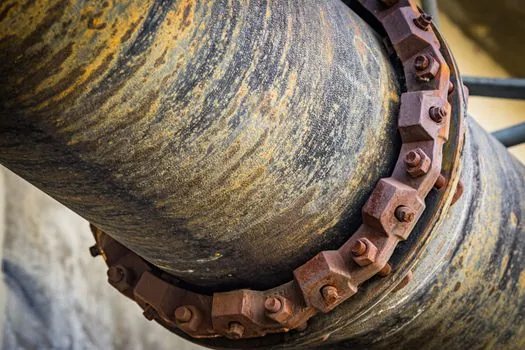
Centrifugal pumps are the type most commonly used in desalination processes, and the materials exposed to the fluid decide whether the unit lasts 5 years or 25 [S4]. The aggressive species that drive pump selection are chloride-induced pitting and crevice corrosion on stainless components, galvanic attack where dissimilar metals share an electrolyte, cavitation erosion on the impeller and casing, and corrosion-fatigue on high-speed shafts.
Duplex stainless steels such as CD4MCu and S31803 are the most widely used premium materials for seawater wetted parts, with super duplex and titanium reserved for the most demanding chloride, temperature, or abrasion conditions [S4][S5]. Centrifugal seawater pumps built with duplex wetted parts can tolerate sand and other entrained solids because the duplex hardness resists abrasion better than austenitic grades [S5]. Cavitation, deaeration behaviour, and wear rings are flagged as the dominant failure modes in desalination service, not the bulk impeller material, so the selection exercise has to look at the full bill of materials, not just the casing [S4].
Galvanic effects inside a single pump are often the surprise failure mode, since a single pump can contain copper-base alloy, stainless, and nickel-base components sharing the same brine; designers therefore often mix alloys deliberately, putting corrosion-resistant nickel-base parts in the most exposed locations and cheaper alloys where the duty is gentler [S4]. For higher-pressure RO feed pumps and recovery turbines, nickel-base alloys and super-duplex grades dominate, and desalination pump materials are commonly qualified against chloride service limits, with NACE MR0175 cited for sour-service variants where H2S is present in the feedwater.
Intake Pumps: Axial Flow, Mixed Flow, and Vertical Turbine
The intake zone is the only one where centrifugal designs are clearly not the right answer: axial flow and mixed flow pumps, plus vertical turbine and submersible units, dominate because they deliver very high flow at low head with better suction and NPSH behaviour than a radial or multistage centrifugal [S1].
These intake pumps must run continuously in raw seawater loaded with sand, organic matter, and biofouling risk, so the same material logic applies: duplex or super-duplex wetted parts, hardened wear surfaces, and bearings rated for continuous submerged service. Vertical turbine pumps in particular are common on deep beach-well intakes where the pump sits in a wet well and the column pushes water up to the screening and pretreatment stage, and a hydraulic pump-style drive train is normally avoided here in favour of a direct-coupled electric motor for efficiency.
For floating or offshore intakes, mixed flow and axial flow pumps mounted in caissons are increasingly common because they handle variable submergence and air entrainment better than centrifugal designs, and the same units can be used for brine outfall where head is low but flow is very high.
Lifecycle Cost, Energy Recovery, and Total kWh per m³
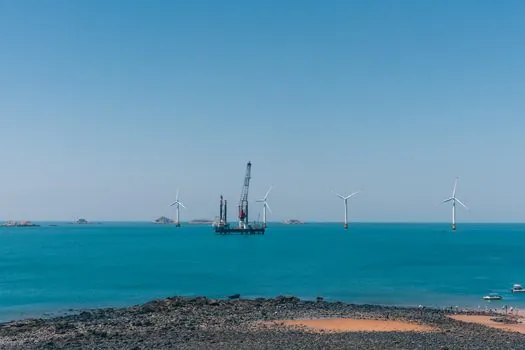
Pump selection in desalination is dominated by energy cost, not purchase price: energy consumption typically accounts for 60-70% of a pump's total lifecycle cost over a 15-20 year horizon, and the equipment purchase itself is usually under 15% of that total [S3]. A pump that costs 20% more up front can pay back in roughly three years on energy alone, which is the rule of thumb project finance teams use to evaluate bids [S3].
High-pressure pumps for desalination can account for up to 60% of total energy usage in an SWRO plant, so the biggest single lever is the combination of pump efficiency and energy-recovery device (ERD) integration on the RO feed and brine circuits [S1]. Multistage centrifugal pumps paired with isobaric ERDs are now the default large-plant recipe, while positive-displacement pumps with Pelton or hydraulic turbochargers are common on mid-size and modular units where the simpler ERD interface matters more than the last few percent of pump efficiency [S1][S3][S7].
Practical selection inputs to lock down before issuing an RFQ are: required permeate flow (m³/h), feed salinity and temperature, target recovery (typically 35-50% for SWRO), feed pressure (usually 55-80 bar), and the type of ERD the plant is designed around, since the pump-ERD pairing is a hydraulic decision, not a procurement one [S1][S3].
Who the Multistage Centrifugal Pump Is For, and Where It Is Not
The multistage centrifugal pump is the standard RO feed pump for SWRO plants, operating at 55–80 bar to force seawater through the membranes. It is also the right choice for high-pressure brine recirculation and for energy-recovery turbine drive trains on the concentrate side. [S1]
It is the wrong choice for: small modular or containerized plants below about 50-100 m³/h where the part-load efficiency penalty dominates; plants with strongly variable feed demand (island microgrids, tourist resorts, seasonal demand) where a positive-displacement or diaphragm pump holds efficiency better across turndown; and any duty where the feed contains more than trace oil, hydrocarbons, or abrasive load that would erode the close-tolerance wear rings and diffusers inside a multistage casing [S1][S3][S7].
For very high head beyond about 80-100 bar on first-pass SWRO or for second-pass brackish water polishing, integrally geared or barrel-casing multistage pumps with super-duplex or nickel-base wetted parts become mandatory, and selection should follow API 610 (or its ISO equivalent ISO 13709) for the mechanical design envelope, with material limits qualified against the specific chloride, temperature, and free-chlorine residual of the feed.
Sourcing, Standards, and What to Verify Before You Order
For procurement, the spec sheet should pin four things in writing: pump type and stage count, target efficiency at the design duty point (not at best efficiency point), full material list of every wetted part including wear rings and bearings, and the standards the unit is built and tested to. The two standards that show up most often in desalination pump specifications are API 610 for the pump itself and NACE MR0175 for sour-service material limits, with ISO 13709 as the international equivalent of API 610. [S4]
For seawater wetted parts, the dominant choices are duplex stainless S31803 / S32205, super duplex S32750, nickel-base alloys such as Alloy 625 or C-276, and titanium Grade 2 or Grade 5 where chloride pitting and crevice corrosion are the controlling risk; chloride level, temperature, and the presence of free chlorine from pretreatment are the three variables that decide which grade is needed [S4][S5]. For elastomers, EPDM and Viton are the default mechanical seal choices, with Viton preferred where feed temperatures or chemical resistance push past EPDM's limit.
On delivery, the most expensive line items to push back on are efficiency guarantees, performance test witness points, and the wear-ring and bearing material certificates; lifecycle cost analysis over a 10-15 year horizon should be the tie-breaker between equally qualified vendors, since a 2-3 point efficiency gap on the RO feed pump translates directly into thousands of kWh per day on a large SWRO train [S3]. Engineers comparing multiple bids often run a structured side-by-side using a gear pump or metering pump reference chart to score units against cost, head, NPSH, and material grade, even when the actual selection is centrifugal, because the same scoring grid forces consistency on the criteria that drive kWh/m³.
Two signals worth tracking through the rest of 2026: updated EUROPUMP and Hydraulic Institute specific-energy benchmarks for SWRO (the current published band is roughly 2.5-4 kWh/m³ for the whole plant, with the high-pressure pump and ERD combination the dominant slice), and the next round of API 610 / ISO 13709 clarifications on canned and between-bearings pull-out designs for desalination. Together they will tighten both the efficiency floor and the material envelope that any new RO feed pump has to meet.
Related analysis: Metal Curtain Wall Panel Selection for Warehouses: Rigid Cladding vs Flexible Curtain.