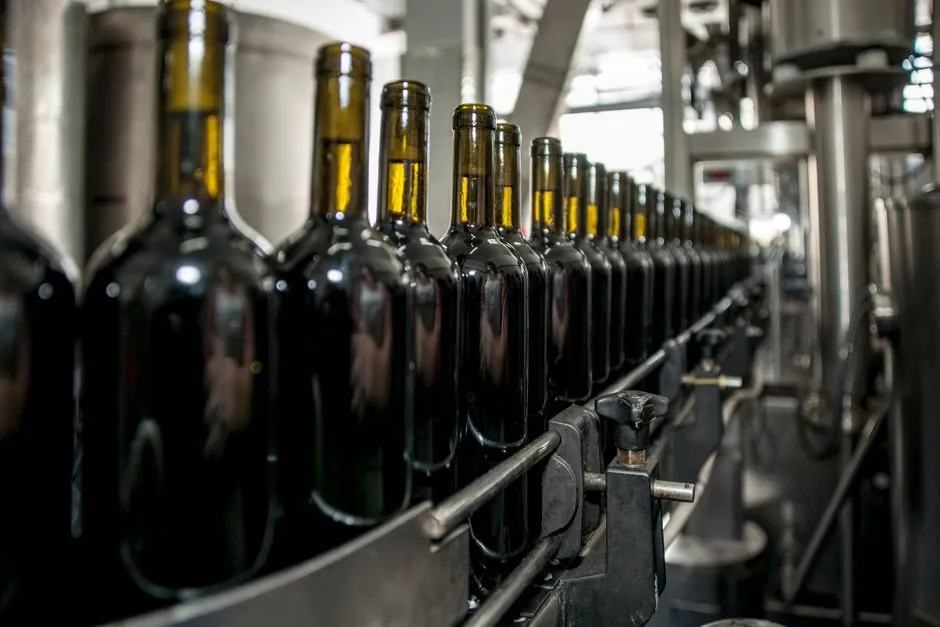
Pneumatic actuation suits rapid on-off diverting, while electric actuation supports controlled strokes, flexible positioning, and repeatable package alignment.
A conveyor sorting line uses diverters to route products by size, shape, weight, destination, or another identified characteristic, with actuator choice determining response speed, control complexity, and maintenance requirements.
Actuation decision criteria
Actuator selection should begin with the required motion profile: a fixed binary gate, a continuously positioned arm, a variable-length push, or a combined indexing and diversion function. Pneumatic cylinders and rotary vane actuators are suited to fixed-stroke linear and rotary motion, while electric ball-screw actuators provide controllable linear strokes and controlled rotation through geared motor arrangements [S1][S2].
Four criteria normally decide the outcome: switching time, positional accuracy, environmental exposure, and utility infrastructure. Pneumatic systems require a clean compressed-air supply, while electric systems require suitable electrical protection, motor controls, and mechanical guarding. Neither technology makes the sorting decision itself; that function belongs to scales, proximity sensors, encoders, and machine-vision systems that command the actuator [S1][S5].
Pneumatic actuator characteristics
Pneumatic diverters provide fast binary switching and can deliver high thrust from a compact cylinder, but they need clean compressed air and are less flexible when packages vary in size or shape. This makes a pneumatic gate practical when each destination has one fixed geometry, the stroke is fixed, and the line does not require frequent recipe changes [S1][S4][S6].
The available pneumatic forms include linear and rotary actuators. Air cylinders perform clamping, lifting, sorting, spacing, and pushing; rotary vane actuators suit diverting, tucking, swing stops, and other rotating mechanisms.
One implemented pneumatic sorting system used a proximity sensor and PLC logic for size identification, a camera and Raspberry Pi for shape detection, a relay module for output, and pneumatic actuators to route classified items into designated bins [S5]. That architecture demonstrates practical integration of machine vision, sensor-based size identification, PLC-based logic, and pneumatic routing.
Electric actuator characteristics

Electric actuation is the stronger option when the diverter must alter stroke, speed, direction, or timing without changing pneumatic hardware. Electric actuators are identified as best suited when speed, accuracy, flexibility, and control dominate the decision [S6].
A documented palletizing installation used an enclosed ball-screw actuator to activate pinions that caused conveyor rollers to turn left or right [S2].
The enclosed actuator had to withstand washdowns and harsh detergents, while pneumatic cylinders lacked flexibility for differently sized and shaped packages [S2].
Comparison by operating requirement
For a fixed two-position diverter, pneumatic actuation generally wins on mechanical simplicity and fast binary response. Pneumatic actuators also offer advantages in cost, size, and thrust, but electric actuators provide better control over speed, accuracy, flexibility, and programmable motion [S6].
Application selection
Use pneumatic actuation for repetitive fixed-route sorting, two-position pusher gates, swing diverters, and packaging lines where compressed air is already reliable and maintenance staff can manage valves and cylinders. Its direct operating principle is simple: compressed air moves a piston or vane into a predefined position, making it effective for consistent cartons, containers, or bulk-product routes [S1].
Use electric actuation for variable-size packages, precision alignment, washdown environments, or applications where control flexibility is important [S2][S6]. The documented package-alignment application moved containers linearly and left or right while also spinning them around [S2].
Pneumatic actuators are suited to fixed-stroke applications and require clean compressed air [S1]. For a broader comparison of pneumatic transport and sorting configurations, see pneumatic conveyor.
Control, reliability, and failure modes
Pneumatic failures usually involve the air supply, valves, leaks, contamination, or cylinder wear, while electric failures involve power, drives, feedback, encoders, motor overload, or mechanical transmission faults. The actuator should therefore be tested with the actual diverter load rather than rated only from free-air force or catalog thrust. The documented electric actuator combined a 500 lbf maximum force with a 50 ms stroke and a 25% duty cycle, demonstrating why duty cycle and force must be considered together [S2].
Position accuracy depends on the full mechanical chain, not actuator resolution alone. Pneumatic gates repeat at fixed end positions but can be affected by pressure variation, cushioning, friction, and wear. Electric systems can control motion more precisely, yet backlash, belt tension, package variation, roller alignment, and diverter geometry still affect the final placement [S1][S2][S3].
Controls should include hardwired interlocks so an upstream zone cannot release a package into a moving diverter. For pneumatic layouts, verify valve response, exhaust speed, and fail-safe behavior when air is lost. For electric layouts, verify limit inputs, drive fault response, and manual recovery. Machine vision, scales, and PLC logic can determine the destination, but the safety interlocks must prevent an incorrect or incomplete stroke from becoming a collision [S1][S3][S5].
Specification data for procurement
Specify pneumatic diverters by cylinder bore, rod diameter, stroke, working pressure, speed, cushioning, mounting orientation, valve size, air quality requirement, and cycle rating. Specify electric diverters by rated thrust or torque, stroke, speed, duty cycle, actuator material, enclosure rating, feedback method, motor voltage, drive interface, and required control protocol. A complete sorting system specification should also state product dimensions, mass range, conveyor speed, destination count, and error-recovery method. [S4]
Use the 50 ms, 6 mm, 25% duty-cycle, 500 lbf, 304 stainless-steel, 24 in, and IP67 figures only as a documented electric-actuator example, not universal limits [S2]. For pneumatic selection, use the actuator's published thrust at the actual supply pressure and load speed, because cylinder output force changes with pressure and motion sequence [S1].
Where lane economics determine the outcome, Conveyor Sorting Line Cost per Divert Lane provides a complementary view on the cost structure of adding routing capacity. The actuator decision should then be checked against the number of cycles per minute, product mix, required placement accuracy, washdown exposure, and available pneumatic and electrical infrastructure.
Track switching misses, stroke time, jam recovery time, compressed-air pressure stability, motor-drive faults, and maintenance labor per operating hour; these measurements provide a defensible basis for changing from pneumatic to electric actuation or adding electric units only where variable motion justifies the additional controls.