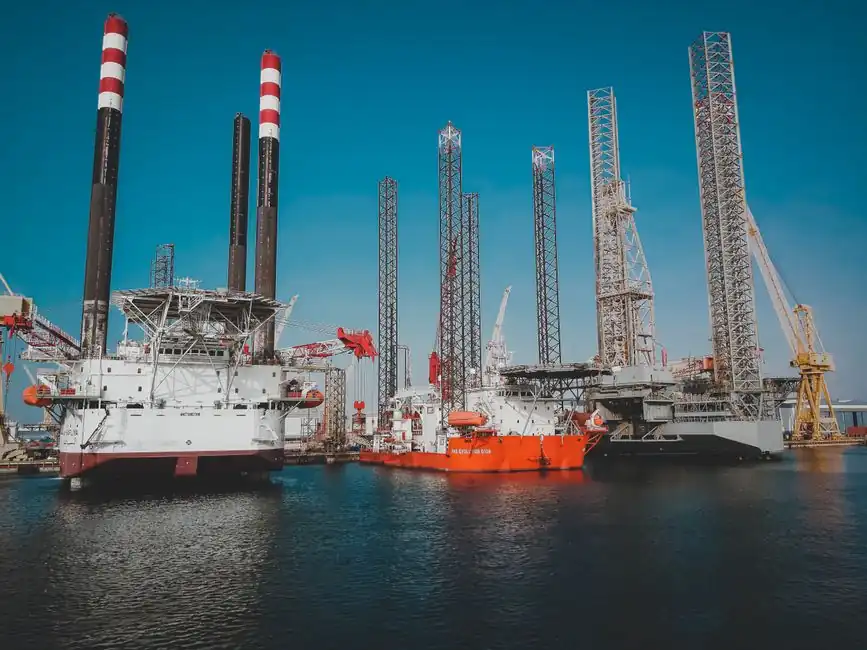
Bisphenol-A polycarbonate carries a notched Izod impact of 600–900 J/m and a heat deflection temperature of roughly 130°C (about 10°C higher on glass-filled grades), yet the same material is hydrolytically unstable and unsuited to repeated high-pressure steam service [S1]. In oil and gas specification work, that tension defines the entire selection problem: PC is a tough, transparent, dimensionally stable amorphous thermoplastic that fails on contact with hydrocarbons, strong bases, and UV exposure unless modified.
Upstream, midstream, and downstream oil and gas assets impose service conditions that are hostile to most engineering plastics. For procurement engineers who need a transparent, impact-resistant housing or sight glass, PC remains on the shortlist. For wetted, pressurised, or hydrocarbon-exposed service, the same resin is disqualified before the comparison table starts. The 2026 feedstock shock, with Brent crude briefly trading at $119–$126 per barrel in the first week of March 2026, has pushed PC resin and downstream PC sheet prices higher, and a general-purpose polycarbonate grade that was a routine catalog pick is now a budget line item that has to justify itself [S3].
What a PC datasheet actually says in oil and gas terms
Standard bisphenol-A PC has a density of 1.18–1.22 g/cm³, a linear expansion coefficient of 3.8×10⁻⁵ cm/°C, and a service window between −45°C and a 130°C heat deflection point [S1]. Its UL 94 V-2 flammability rating is achieved without additives, and its dielectric constant sits at 3.0–3.2 with a 120-second arc resistance, which is why it is a default material for junction boxes, instrument covers, and lighting equipment and electric lamps in non-hazardous areas [S1]. Glass-fibre-reinforced grades push the heat deflection up by roughly 10°C and lift the flexural modulus above 2400 MPa, but the underlying resin chemistry does not change.
The same datasheet also lists the disqualifying properties: poor hydrolysis resistance, notch sensitivity, marginal organic-chemical resistance, and yellowing under UV exposure [S1]. Aliphatic PC variants exist but their melting points and glass transition values are too low for structural use, restricting them to biomedical roles such as drug-release carriers and surgical suture substrates [S1]. For oil and gas engineering, only the aromatic bisphenol-A family is commercially relevant, and its weaknesses travel with it.
Why standard PC fails most oil and gas service conditions
Three of the four disqualifying properties map directly to upstream and midstream exposure. Polycarbonate is not resistant to strong bases, which eliminates any application involving amine-based corrosion inhibitors, caustic cleaning, or alkaline produced water. It is attacked by a wide range of organic solvents, which rules out contact with crude, condensates, diesel, and most glycol-based hydrate inhibitors. It does not survive repeated high-pressure steam sterilisation, which removes it from any process where steam tracing or chemical injection quills operate above 100°C in a wet cycle [S1].
UV sensitivity is a separate failure path. Standard PC yellows and embrittles under direct sunlight, and although UV-stabilised grades exist, they extend service life rather than solve the problem [S1]. On an exposed offshore module, an unenclosed PC cover typically has a 2–5 year service life before optical and impact properties degrade enough to require replacement. The same mechanical property that makes PC attractive, the 600–900 J/m notched impact strength, is also notch-sensitive: a small surface scratch in a hydrocarbon environment can propagate into a brittle fracture at well below the rated impact energy [S1].
Modified PC grades that buyers actually see in oil and gas quotes
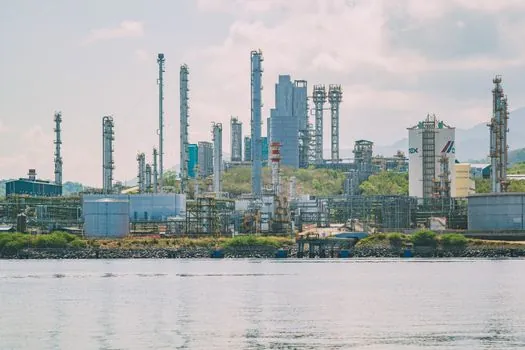
Modified PC falls into six commercial families on Chinese supplier datasheets: anti-static, conductive, glass-fibre-reinforced flame-retardant, UV-stabilised weather-resistant, food-grade, and chemical-resistant [S1]. In oil and gas procurement, three of these are the realistic shortlist. Glass-fibre-reinforced flame-retardant grades target industrial PC housings, junction boxes, and switchgear covers that need higher stiffness and a higher HDT. UV-stabilised weather-resistant grades are used for outdoor instrumentation covers and signage. Anti-static and conductive grades are specified for hazardous-area enclosures where surface resistivity must stay below the threshold set by the area classification.
Chemical-resistant PC is a real but narrow category. It is typically a PC alloy or a surface-modified grade that resists certain oils and greases at low temperature, but it does not extend PC's compatibility with aromatic hydrocarbons, ketones, or strong bases. Buyers who need transparency plus broad chemical resistance in wetted service are usually redirected to polymethyl methacrylate, polyethylene, or fluoropolymer liners, not to higher-spec PC. Comparing the four common engineering plastics used in oil and gas enclosures on a 1–5 scale across the relevant criteria gives the picture: PC scores 5 on impact, 4 on transparency, 2 on UV resistance without additives, 1 on hydrocarbon resistance, 3 on cost, and 1 on continuous service temperature. PA66 scores 3, 2, 3, 3, 4, and 4. POM (acetal) scores 2, 3, 3, 4, 4, and 3. PEEK scores 4, 3, 5, 5, 1, and 5. The takeaway is structural: PC wins only on the impact-plus-transparency combination, and PEEK wins almost everywhere else at a multiple of the cost.
Where PC is correctly specified on an oil and gas project
The right applications for PC in oil and gas are non-wetted enclosures and covers in non-hazardous or suitably classified areas. Typical uses include instrument housings, junction boxes, control panel windows, sight glasses on atmospheric storage, gauge covers, label plates, and indoor lighting diffusers. The same rule applies to PC sheet used for machinery guarding and operator screens. For these uses, the standard unmodified grade is usually adequate, and the cost case versus PMMA, glass, or metal is straightforward on weight, impact safety, and fabrication. [S3]
Two adjacent applications deserve a more cautious write-up. On offshore platforms, PC is used for windscreens, instrument covers, and lighting diffusers, but only in UV-stabilised, flame-retardant grades with a documented weathering data package. Inside hazardous-area enclosures, anti-static or conductive grades are mandatory; a standard-grade PC cover on an Ex-certified enclosure will not pass the surface-resistivity test. In both cases, the project specification, not the catalog, decides whether PC is allowed. The same logic applies when buyers compare alternative engineering thermoplastics, as covered in the polycarbonate selection for electronics enclosures: spec-first 2026 walkthrough, which covers the matching electronics-side specification logic.
Supply, cost, and 2026 feedstock risk
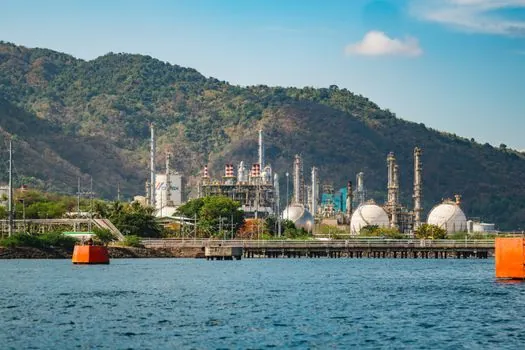
Polycarbonate resin is a direct petroleum derivative, with a production chain that starts from crude oil refining through to bisphenol-A and diphenyl carbonate feedstocks, and the 2026 Hormuz Strait crisis has put that chain under stress [S3]. In early March 2026, Brent crude briefly traded in a $119–$126 intraday range after the effective closure of the strait pushed oil above $100 per barrel, and tanker traffic through the waterway was reported to have dropped by 70–90% as maritime insurers withdrew cover [S3]. The G7 finance ministers' meeting on the strategic petroleum reserve produced no coordinated release, and India's rejection of the IEA call for reserve release kept the supply response off the table [S3].
For PC buyers, the practical effect is feedstock-cost pass-through and tighter availability, not an immediate allocation. Buyers planning Q3 and Q4 2026 deliveries of standard PC sheet and resin should expect a double-digit percentage cost increase on the resin side, longer lead times for specialty grades, and a higher risk of force majeure declarations from Asian producers. The same dynamic affects any oil seal and engineering-plastic component buyer, because upstream rubber and engineering-plastic supply chains all run through the same petrochemical chokepoints.
Selection checklist for oil and gas PC buyers
A defensible PC specification for oil and gas service starts with four binary questions. First, is the part wetted by process fluid? If yes, PC is out and the comparison moves to PA, POM, PPS, PEEK, or metal. Second, is the part exposed to UV, salt spray, or temperature cycling above 100°C? If yes, the grade must be UV-stabilised, glass-filled, and supported by weathering data. Third, is the part inside a hazardous area? If yes, the grade must meet the surface-resistivity requirement of the area classification. Fourth, does the application require transparency plus impact? If no, lower-cost engineering plastics usually win on cost. If yes, PC is still the default, subject to the previous three gates. [S3]
Trackable signals over the next two quarters include the NYMEX WTI and ICE Brent front-month settlements as a leading indicator of resin cost, Asian PC producer announcements on force majeure or price-list revisions, and any G7 or IEA-coordinated strategic petroleum reserve action that would ease the feedstock premium. Together these set the budget envelope for any PC specification on the 2026 oil and gas project list.