
Global polyethylene demand is on track to lift the addressable market from USD 170.46 billion in 2025 to USD 179.21 billion in 2026, a 5.31% CAGR trajectory that still runs into a hard upstream wall: as of the 3 April 2026 Matium market update, US polyethylene capacity utilization had pushed above 90% on the back of export demand created by Middle East supply chain disruptions, and resin prices were tracking crude upward [S3][S4].
For procurement teams and converters, the practical effect is a market where regional origin, recycled-content documentation, and mono-material packaging design carry as much weight as melt index or density. Strategic material origin has displaced pure landed-cost optimization as the deciding variable, with domestic suppliers and regional inventory hubs absorbing the volatility that long-haul imports can no longer hedge [S5].
Feedstock Disruption: Strait of Hormuz and Crude Pass-Through
Geopolitical tension around the Strait of Hormuz closure has been the single largest swing factor in 2026 polyethylene feedstock pricing, with rising crude costs flowing directly into resin contracts and squeezing converter margins within weeks rather than quarters [S4]. US resin producers responded by redirecting export-bound volume into higher-priced domestic slots, pushing plant utilization above 90% and tightening already stretched spot availability [S4].
Trade-policy uncertainty compounds the feedstock risk: the PLASTICS industry briefing flagged that 2026 could bring fresh tariff clarity, but the operational reality for 2026 procurement is that feedstock availability, not finished-resin quotas, is the binding constraint [S7]. For converters, this changes the math on hedging: long-dated fixed-price contracts now carry a premium, while spot exposure has widened on both sides of the bid-ask [S4][S7].
Regionalization as a Risk Control Strategy
Domestic and regional supply networks are now being prioritized over lower-priced imported resin, with shorter transit distances and fewer handoffs translating into measurable service-level gains when forecasts shift [S5]. Regional distributors operating inventory hubs can resupply customers inside days rather than the multi-week cycle typical of cross-ocean container freight, and that responsiveness is what 2026 procurement specs increasingly reward [S5].
This regionalization is not isolationist. Polyethylene trade flows are still rebalancing around natural gas liquid advantages, refining integration, and regional demand growth, particularly across Asia-Pacific converting hubs [S3]. The structural shift is that material origin, chain-of-custody documentation, and tariff exposure are now weighted alongside price per pound in the supplier scorecard [S7].
Grade Differentiation: HDPE, LDPE, LLDPE, and UHMWPE
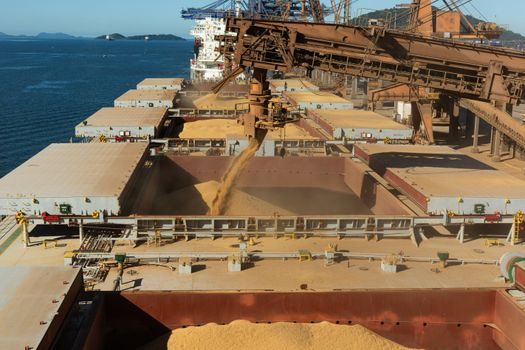
The polyethylene family splits into four commercial grades with sharply different supply-demand profiles: HDPE, LDPE, LLDPE, and UHMWPE, each tied to specific end uses including rigid packaging, flexible films, pipe extrusion, geomembranes, wire and cable insulation, and high-performance industrial parts [S3]. HDPE is the volume anchor for pipe, blow-molded containers, and rigid caps; LLDPE dominates stretch film and liner applications where toughness and drawdown matter; LDPE retains share in extrusion-coating and clarity-sensitive flexible packaging; UHMWPE is the niche high-margin grade for wear strips, medical implants, and ballistic panels.
Within the broader plastic resins category, crystalline resins — polyethylene, polypropylene, PVC, and polystyrene — are projected to hold 57.3% share of the 2026 plastic resins market on the strength of mechanical and chemical resistance, and that figure explains why PE supply shocks propagate so quickly into packaging, automotive, and construction [S6]. Buyers specifying 2026 volumes should treat HDPE, LLDPE, and LDPE as partially fungible on a 1-3 month horizon but not on long-term contracts, because reactor swing capability is limited once utilization is above 90% [S3][S4][S6].
Procurement Spec Shift: Recycled Content, Mono-Material, and Documentation
Specifiers are now writing recycled-content percentages, chain-of-custody evidence, lightweighting targets, and mono-material design constraints directly into 2026 purchase orders, and resins that satisfy these clauses are commanding both premium pricing and tighter allocation [S7]. Mono-material polyethylene structures are replacing complex multilayer laminates in flexible packaging specifically because they can re-enter mechanical and advanced recycling streams without separation cost, and brand owners are pushing converters accordingly [S3].
The documentation burden is non-trivial. Buyers should expect to receive lot-level recycled-content declarations, mass-balance chain-of-custody statements, and increasingly, product carbon footprint data per shipment, with the 2026 forecast calling these out as gating criteria rather than nice-to-haves [S7]. For converters running PVC Resin Supply 2026 operations alongside PE lines, the parallel is direct: documentation, not price, is the new bottleneck.
Circularity and AI Process Control as Capacity Multipliers

Bio-based feedstocks, waste-derived pyrolysis oil, and mechanically recycled resin are scaling from pilot to commercial volume, and polyethylene producers are integrating these alongside AI-supported process analytics that optimize reactor conditions, melt index consistency, density control, and predictive maintenance [S3]. The practical output is higher effective capacity from existing assets: tighter melt index control reduces off-spec regrind, predictive maintenance cuts unplanned downtime, and pyrolysis-oil co-feeding stretches naphtha demand.
For 2026 sourcing, this means recycled-content PE lots are no longer a specialty ask but a documented grade family, and the suppliers offering verified recycled volumes with consistent processing windows are the ones winning multi-year contracts [S3][S7]. Producers investing in process digitalization, AI-enabled quality control, and energy efficiency are extending asset life at a time when greenfield PE capacity is constrained by the same 90%+ utilization reading [S3][S4].
Selection Criteria: Who Wins 2026 PE Supply
A spec-driven shortlist for 2026 PE procurement should score suppliers on five criteria: regional inventory depth within 7-day resupply radius, verified recycled-content and chain-of-custody documentation, demonstrated AI/ML process control investment, multi-grade swing capability across HDPE/LLDPE/LDPE, and transparent tariff/feedstock exposure disclosure [S3][S5][S7].
Suppliers failing on any one of these will struggle in 2026: a regional-only distributor without documentation rigor loses brand-owner contracts; a low-cost importer without regional hubs loses service-level scorecards; a single-grade producer cannot absorb grade-substitution requests when LLDPE film demand spikes [S3][S5][S7]. The combined signal is that supply security, sustainability credentials, and processing consistency are now co-equal with price in the awarding matrix.
Limitations and Failure Modes to Watch
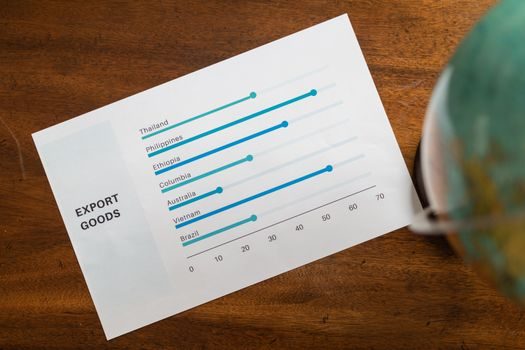
The 2026 PE supply picture carries three concrete failure modes: feedstock-driven price spikes that outpace contract repricing, recycled-content lot variability that breaks extrusion windows, and tariff/trade-policy shocks that invalidate landed-cost models built on pre-2026 baselines [S4][S7]. Each of these has already surfaced in 2026 market updates and is unlikely to resolve before year-end [S4].
Converter-side mitigations are well-defined: split volume across at least two regional suppliers, hold 30-45 days of safety stock on critical HDPE and LLDPE grades, qualify at least one recycled-content PE source for each major application, and insist on mass-balance documentation that survives an audit [S5][S7]. Skipping any of these steps leaves a converter exposed to the same 90%+ utilization tightening that has defined the 2026 market [S4].
Trackable signals through the rest of 2026 include the next Matium-style capacity-utilization reading (a print above 92% would confirm further tightening), the resolution or escalation of Strait of Hormuz transit risk, and any PLASTICS-briefing tariff clarity that could reset import-parity economics for US converters [S4][S7]. For comparison context on adjacent resin markets, the PVC Resin Suppliers and Manufacturers List: 2026 Sourcing Map tracks parallel dynamics in chlorine-chain resins, while broader polyolefin procurement patterns show the same regionalization arc playing out across PVC Resin Supply 2026 grade families.
For the relevant spec sheets and selection criteria, see synthetic resin, resin sand line, and dc power supply.