China's PVC resin supply growth has decelerated to a historically low band: the 2026-2028 pipeline adds only about 800,000 tonnes of new nameplate capacity, and 2027 looks set to bring zero new PVC plants online, leaving supply-side pressure at a multi-year floor [S1].
That supply restraint sits on top of a structural shift in trade flows — China shipped roughly 3.8 million tonnes of PVC abroad in 2025, equivalent to 16% of domestic output, making export the single largest release valve for high domestic inventories and the reason the market has not collapsed despite both acetylene-based and ethylene-based routes running at a cash loss [S1].
Capacity pipeline: 800,000 t for 2026-2028, 0 t in 2027
The 2026-2028 PVC capacity envelope is the tightest since the 2014-2016 trough, with the 800,000 t aggregate implying an annual run-rate well below the 1.2-1.5 million t/yr average added across 2020-2024, and 2027 currently scheduled to deliver zero new units [S1].
Two forces explain the freeze: negative or break-even cash margins across both acetylene (carbide) and ethylene routes, and tighter approvals tied to the "dual-control" energy intensity framework that has stalled coal-route and ethylene-cracker FID decisions [S1]. For procurement teams, the practical consequence is that any PVC supply shock in 2027 cannot be absorbed by a domestic ramp — relief will have to come from import substitution or, more likely, inventory drawdowns and import arbitrage windows. Engineering background on the polymer itself — a vinyl-chloride homopolymer belonging to the vinyl-chloride resin family, processed as a thermoplastic with good corrosion resistance and electrical insulation — is covered in the PVC-U pipe encyclopedia entry.
Production economics: both routes in the red, but at different depths
As of mid-2026 both the acetylene (calcium-carbide) route and the ethylene (oxy/ethylene) route are operating below cash cost, with the acetylene route running deeper in the red because of high calcium-carbide feedstock cost and elevated power tariffs in Northwest China, while the ethylene route is closer to break-even thanks to softer ethylene and chlorine coproduct credits [S1].
Inventory has stayed elevated but has begun to draw, which is why the market is reading the cycle as a profit floor rather than a free-fall: domestic stocks sit above the 2018-2019 norm, yet week-on-week destocking has held for several consecutive prints, and the price band has stabilised inside the marginal cash-cost zone of the highest-cost acetylene producers [S1]. For process engineers specifying PVC pipe or fittings, this means spot resin price volatility over the next two quarters is bounded by the cash-cost ceiling of the marginal producer rather than by speculative moves.
Trade flow pivot: 3.8 Mt exports, China overtakes the US
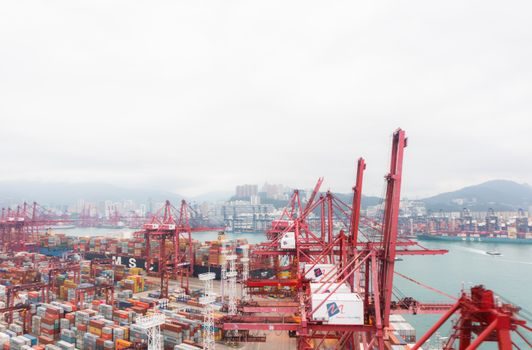
China exported approximately 3.8 million tonnes of PVC in 2025, equivalent to 16% of domestic production, surpassing the United States and becoming the world's largest PVC exporter for the first time on a calendar-year basis [S1].
China surpassed the United States to become the world's largest PVC exporter in 2025, with exports reaching 3.8 million tons and accounting for 16% of domestic production, thereby becoming the core channel for absorbing high inventory. The downside is that any anti-dumping action in India or extension of EU safeguard measures could remove roughly 0.5-1.0 Mt/yr of incremental offtake overnight — a tail risk procurement should hedge against when locking 2027 volumes. The cross-feedstock dynamics with chlorine and epichlorohydrin are analysed in the related epoxy resin supply chain 2026 piece.
Decision criteria: who should lock, who should wait
For a buyer choosing between acetylene-route domestic resin, ethylene-route domestic resin, and import arbitrage, the comparison in late 2026 lines up as follows:
Acetylene-route domestic PVC: lowest spot price, highest cash-cost sensitivity to power tariffs, longest and most volatile lead time, colour and thermal stability typically slightly below ethylene-route grades, suited to rigid pipe, profile and fitting extrusion where colour is correctable via masterbatch. Ethylene-route domestic PVC: tighter K-value distribution, better initial colour, better VCM residual control, premium of roughly 200-400 RMB/t over acetylene-route, preferred for flexible calendered film, medical-grade compounds and high-impact injection moulding. Import arbitrage (US Gulf, Northeast Asia CFR China): cleanest spec consistency, 30-60 day ocean lead time, exposed to FX and freight swing, only competitive when CFR China lands below domestic ethylene-route plus duty [S1].
The choice narrows to lead time versus spec consistency versus landed cost: a pipe-and-fitting extruder running 24/7 should weight landed cost and accept acetylene-route variability; a calendered film or medical converter should accept the ethylene-route premium for VCM residual and gel-fish-eye control; a trader with working capital and a 60-day horizon can run an import arbitrage sleeve when the spread opens. Material-property context — PVC as a polar, amorphous polymer with brittle base behaviour that requires impact modifiers to convert crazing stress into shear-band energy absorption — is detailed in the synthetic resin encyclopedia entry.
Risks and failure modes: the things that break the floor
Three tail risks can override the bottom thesis: (1) an Indian anti-dumping duty or a Turkish safeguard that closes roughly 0.5-1.0 Mt/yr of export offtake and pushes the surplus back into domestic inventory; (2) a coal-to-PVC project in Xinjiang or Inner Mongolia that resumes construction under relaxed dual-control enforcement and adds 200-400 kt of unexpected 2027-2028 nameplate; (3) a sharp chlorine price collapse that improves the ethylene-route cash margin enough to restart mothballed capacity faster than the announced pipeline implies [S1].
Engineering-quality risk sits on top of the macro picture: PVC is a hard, brittle base resin whose notched impact strength is too low for un-modified service, and impact modifiers — typically CPE, ACR or MBS elastomeric grades — must be correctly dosed so that the modifier's elastic particles lower craze-initiation stress and absorb fracture energy through particle deformation and shear-band formation, otherwise finished parts will fail under drop or cold-temperature impact [S3]. Converters chasing the cheapest acetylene-route resin should pair the purchase with a verified impact-modifier supplier and re-validate Charpy or drop-weight results before signing annual offtake.
Standards and specification discipline for 2026 sourcing
Procurement and QA teams should bind resin orders to explicit, testable limits rather than generic "industry grade" language: K-value (or viscosity number, Fikentscher) window, VCM residual below 1 ppm for food-contact and medical, impurity particle count per 100 g, volatile matter below 0.3% w/w, and bulk density tolerance, all reported on a per-lot Certificate of Analysis that is audited against the agreed sampling plan. For pipe and conduit extrusion — the dominant downstream — the relevant national standards for PVC-U pressure and non-pressure pipe testing frame the test methods that downstream converters must still satisfy even when the upstream resin changes [S2].
Two operational disciplines matter as much as the spec sheet itself: first, lot-to-lot traceability — if the export channel closes and the offtake pivots back to domestic inventory, the supply stream will be less homogeneous, so keep at least two qualified resin grades in the approved-vendor list; second, contract language that splits freight, FX and anti-dumping risk rather than burying them in a single CFR price, because the 2026-2027 macro spread is large enough to swing landed cost by more than the gross margin on a finished pipe. The current price band sitting close to the marginal producer's cash cost means the downside on price is structurally limited, so the realistic alpha over the next 12 months sits in spec discipline and lead-time hedging, not in further price compression.
Trackable signals for the next 90 days: weekly Caustic Soda/PVC integrated producer margin prints (a chlorine coproduct recovery uplift would be the first warning that mothballed ethylene-route capacity is being restarted), India and Turkey anti-dumping calendars, and any new coal-to-PVC project FID in Xinjiang or Inner Mongolia — each of these will reset the 2027 outlook well before year-end. For readers tracking adjacent petrochemical feedstocks, the aramid fiber allocation note and the copper manufacturing cost breakdown show how a tight downstream pipeline translates into spec risk for engineering buyers.
For the relevant spec sheets and selection criteria, see resin sand line.