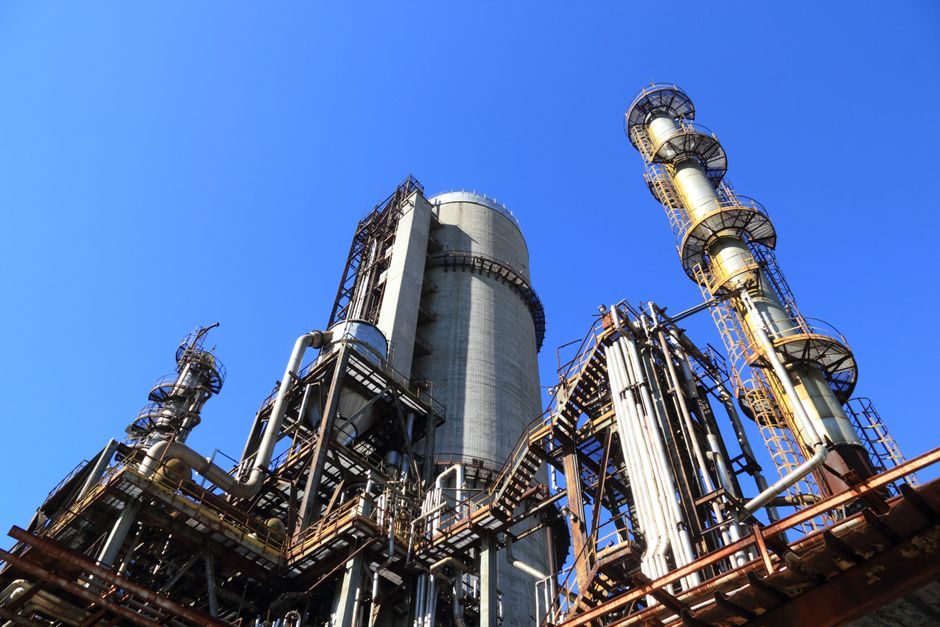
Polyethylene (PE) resin is the polymer family produced by polymerising ethylene (C2H4) at pressures and temperatures that vary by grade, and the chain runs from steam-cracker ethylene through PE reactor output to film extrusion, blow moulding, pipe extrusion, and injection moulding [S1].
The upstream feed is almost exclusively ethylene — itself produced from cracking naphtha, ethane, or LPG — while the downstream split divides cleanly into HDPE (density typically 0.940–0.965 g/cm³), LDPE (0.910–0.925 g/cm³), and LLDPE, each routed to different converter markets [S2][S3].
Upstream Feedstock: Ethylene From Crackers and Polymer-Grade Spec
Polymer-grade ethylene must reach 99.95% minimum purity to feed HDPE and LLDPE reactors, with methane/ethane impurities controlled to single-digit ppm to keep catalyst activity stable in Ziegler-Natta and metallocene loops [S1].
The same ChemicalBook entry for 2-polyethylene (CB91160984) lists the upstream-material column as the direct interface between the ethylene supplier and the polymerisation reactor train, confirming that the upstream chain is short — one monomer, one cracker family [S1].
Reference-standard PE resin (LDPE grade) is sold in 60 g laboratory packs for analytical calibration, indicating that even at the research end the resin is graded by density and processing window rather than by additive package [S3].
Ethylene itself is manufactured either by steam cracking of naphtha (integrated Asian and European plants) or by ethane dehydrogenation (US Gulf Coast), and the resulting PE capacity sits at the cracker mouth — meaning that any cracker outage propagates upstream of PE rather than downstream of it [S1].
Reactor Train and Grade Differentiation
HDPE resin (CB6942685) is a high-density grade produced via Ziegler-Natta, Phillips slurry, or gas-phase Unipol reactors, with the final product defined by melt index (typically 0.3–30 g/10 min) and density band [S2].
LDPE, in contrast, is produced in high-pressure autoclave or tubular reactors at 1000–3000 bar and 150–300 °C, giving a branched chain that lowers density to 0.910–0.925 g/cm³ and is preferred for clarity film [S3].
LLDPE uses a low-pressure solution or gas-phase process with comonomers (1-butene, 1-hexene, 1-octene) to give a linear backbone with short branches, hitting densities of 0.918–0.940 g/cm³ between LDPE and HDPE [S1].
The reactor step is where the chain forks: the same ethylene molecule exits the cracker but exits the PE plant as three distinct commercial grades with three different converter customer bases [S2][S3].
Downstream Converters: Film, Pipe, Blow Moulding, Injection
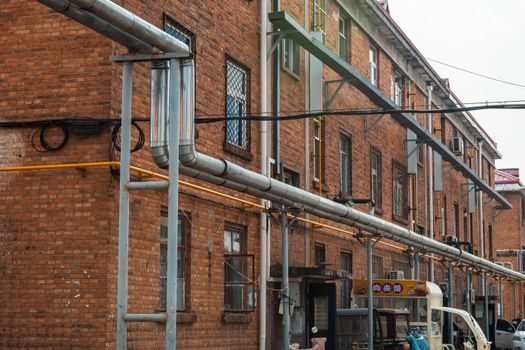
HDPE resin is consumed predominantly by blow moulding (bottles, drums, IBCs), pipe extrusion (PE80 and PE100 pressure pipe), and injection moulding (caps, crates, housewares), with the relative split shifting with regional infrastructure spend [S2].
LDPE is consumed in clear and cast film for food packaging, heavy-duty sacks, and extrusion coating onto paperboard and aluminium foil; its high melt strength and optical clarity keep it specified where LLDPE alone cannot match clarity [S3].
LLDPE dominates stretch film and liner film because of its higher dart-drop and tear resistance, typically blended 60–80% with LDPE to balance processability and mechanical performance [S1].
Reference-grade LDPE resin supplied at 60 g research pack size (Shanghai ZZBIO, product 1473b) shows that the same grade family reaches the analytical laboratory as a polymer-characterisation standard — the chain extends all the way from cracker to QC bench [S3].
Who the PE Chain Is For — and Where It Is Not
The PE chain is for converters running continuous film lines, pipe extrusion lines, or blow-moulding machines who need resin priced off the ethylene contract and whose product mix can absorb monthly price moves of USD 50–150/t [S1].
It is not for buyers needing small lot (less than 1 t) engineering polymer with tight dimensional tolerance — that segment is served by polyacetal, PA66, or PPS, not by commodity PE [S3].
It is also not for applications above ~100 °C continuous service: PE softens near 80–95 °C and cannot replace PP, PPS, or PEEK in under-bonnet or hot-fill duty [S1].
Procurement teams who already buy HDPE bottle-grade or LDPE film-grade and need a stable second source will recognise the value of the regional split between integrated Asian, Middle Eastern, and US cracker-backed producers [S2].
Comparison: HDPE vs LDPE vs LLDPE on Decision Criteria
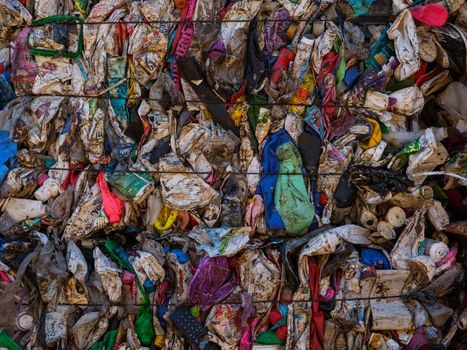
On density, HDPE sits at 0.940–0.965 g/cm³, LLDPE at 0.918–0.940 g/cm³, and LDPE at 0.910–0.925 g/cm³ — a 0.05 g/cm³ spread that defines the three families before any mechanical test [S2][S3].
On reactor process, HDPE and LLDPE run low-pressure (10–40 bar) while LDPE requires high-pressure (1000–3000 bar) reactors, which fixes capex and operating cost at the plant level [S1].
On application fit, HDPE wins stiffness and chemical resistance (pipe, bottle), LLDPE wins tensile and tear (stretch film, liner), LDPE wins optics and processability (clarity film, extrusion coating) [S3].
On price exposure, all three grades move with the ethylene contract — historically within a USD 100/t band of each other on a regional monthly index, so grade choice is dominated by application spec, not by resin cost differential [S5].
Standards, Spec Sheets, and Sourcing Discipline
PE pressure pipe grades follow ISO 4427 for PE80/PE100 designation, while PE food-contact applications sit under FDA 21 CFR 177.1520 or EU Regulation 10/2011 — both are decision filters at the converter spec stage [S2].
For process plants handling the resin itself, density and melt-index verification runs through ISO 1183 and ISO 1133, the two specs that govern the certificate of analysis that accompanies every commercial lot [S1].
Reagent-grade LDPE (60 g pack, NIST traceable) is sold explicitly for laboratory standard use, not for food or medical contact, per the supplier's non-medical disclaimer — a sourcing filter that industrial buyers should mirror at the QC end of their own chain [S3].
For broader resin-chain context, the Polyethylene Resin Supply Chain 2026: Feedstock Shock, Regionalization, and Spec Shifts piece tracks the ethylene-derivative side, and the PVC Resin Upstream and Downstream: 2026 Chain Map, Capacity Floor, Export Lifeline article provides a useful parallel chain map for chlorinated-polymer buyers.
Limitations and Failure Modes in the PE Chain
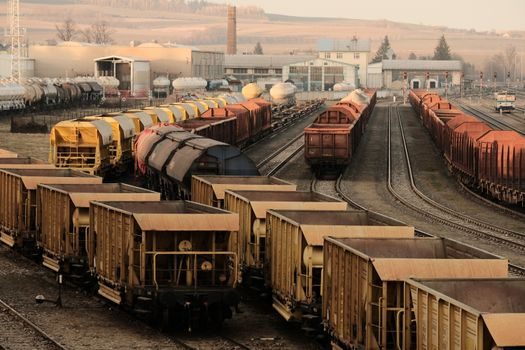
Single-source ethylene supply is the dominant failure mode: any cracker turnaround or ethane-feed disruption propagates directly into HDPE/LDPE/LLDPE output within 2–4 weeks because of limited merchant ethylene storage [S1].
Grade-mix drift within a reactor train is the second failure mode — a swing from film-grade to pipe-grade HDPE requires catalyst change, additive-package swap, and transition material that the converter cannot use on a food-contact line [S2].
Resin-grade mismatch in the converter — running injection-grade HDPE on a blow-moulding line, for example — produces poor parison stability and wall-thickness variation that no downstream process tweak can recover [S2].
At the laboratory end, the reference LDPE resin is sold only for research use and cannot be back-substituted into production if a plant-grade lot fails; the QC standard and the production lot are deliberately separate supply chains [S3].
Sourcing and Supplier Map (2026-08 Snapshot)
ChemicalBook lists a single global upstream-material supplier for 2-polyethylene CB91160984 — Jiangsu Chem. & Bldg. Ltd, China — and three global HDPE resin suppliers (CB6942685), all based in Shijiazhuang, China: Zhonghui Pharmaceutical Packaging, Shiyao Packaging, and a second Zhonghui listing [S1][S2].
This regional concentration is mirrored in the research-reagent side: Shanghai ZZBIO is the listed reference-grade LDPE resin (60 g pack) and branched-PE resin (12 g pack) supplier on the Chinese trade platform [S3][S4].
The Thai Production Value Index for synthetic-rubber/PE resin (CEIC series PVI:CC) reached 250.66 in September 2015 against a 2000=100 base — historical context that any 2026 price model must take as a long-run reference rather than a current datapoint [S5].
For industrial procurement, the practical sourcing question in 2026 is whether to dual-source across integrated Asian producers and US-Gulf ethane-cracker producers to dampen the ethylene-feed exposure that single-region supply cannot absorb [S1][S2].
Trackable signals for the next 90 days: monthly ethylene contract settlements (CME and ICIS regional indices), HDPE/LDPE spot spreads on the Chinese domestic market, and any cracker turnaround schedule published by integrated producers. These three data points together tell a converter whether the upstream shock is easing or tightening.
For the relevant spec sheets and selection criteria, see synthetic resin, resin sand line, and pressure transmitter.