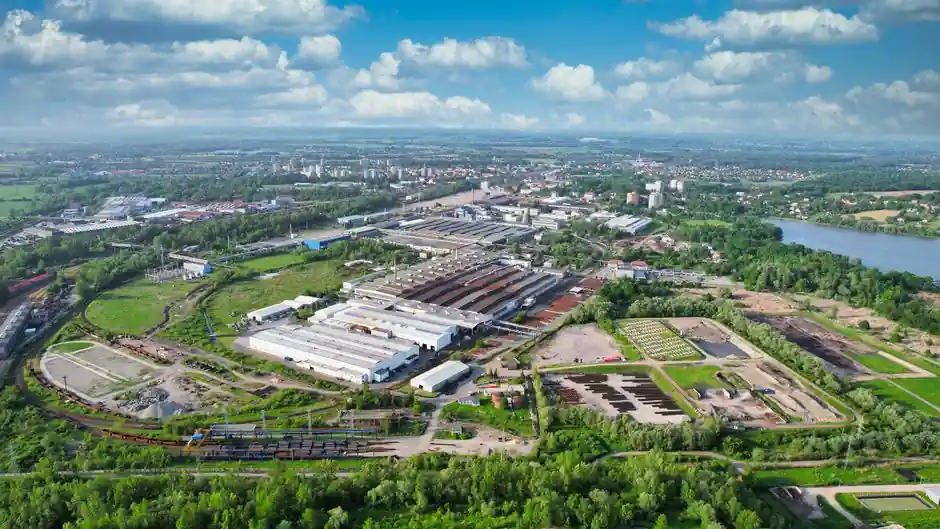
Asia Pacific controlled 55–63.8% of global copper cathode demand in 2025, with China, Japan, South Korea, India, and Australia driving a regional CAGR of 7.9–8.7% through 2034 [S1][S2].
The global market was valued at USD 28.84 billion in 2025 and is forecast to reach USD 55.33 billion by 2034, expanding at a 7.51% CAGR over 2026–2034, while the more conservative Technavio slice pegs incremental growth at USD 9.82 billion (6.3% CAGR, 2025–2030) [S2][S1].
Regional split: where the cathode tonnage is actually moving
Asia Pacific's 55–59% 2025 share, with a 7.9–8.7% CAGR, is the single largest demand pool and is structurally tied to wire rod, conductor, and EV/grid build-outs across China, Japan, South Korea, India, and Australia [S2]. Technavio places the figure even higher, attributing 63.8% of forecast-period growth to APAC and listing China, Japan, and India as the named country-level contributors [S1]. North America holds a 15–18% share with a 6.6–7.4% CAGR, of which the US alone represents 72–76% and grows at 6.8–7.6%, pulled by grid modernization, semiconductor packaging, and data-center power infrastructure [S2]. Europe sits at 18–21% share (6.2–7.0% CAGR), with Germany, France, Italy, Spain, and the UK named as the principal demand centers [S2].
Product mix: standard vs high-quality cathode, and the technology split
Standard quality cathode (LME-grade A copper for wire rod and conductor applications) held 61–65% share in 2025 with a 6.8–7.6% CAGR, while high-quality cathode (electronics and precision components) took 35–39% share and grew faster at 8.1–8.9% CAGR through 2034 [S2]. By production route, electro-refining remained the dominant technology in 2024, with smelting as the secondary segment, and electro-winning plus other routes rounding out the smaller third bucket per Cognitive Market Research's segmentation [S1][S4]. Application-weighted, consumer durable goods were valued at USD 8.27 billion in 2024, ahead of building and construction, power generation, and telecommunication [S1].
Supplier concentration: who actually moves the cathode
The competitive field is concentrated around ten named majors: Aurubis AG, BHP Group, Codelco (Corporación Nacional del Cobre de Chile), Freeport-McMoRan, Glencore, Jiangxi Copper, Southern Copper, Sumitomo Metal Mining, Tongling Nonferrous Metals Group, and Hindalco Industries [S2]. Research and Markets widens the lens to roughly 25 vendors, adding Antofagasta, Bhagyanagar India, China Daye, ENEOS, First Quantum Minerals, Hindustan Copper, KAZ Minerals, MMG, Sumitomo Corp., and Zijin Mining, with Codelco, Aurubis, Glencore, and Freeport recurring as the cross-source anchors [S5]. Buyers chasing copper material for wire rod or conductor lines should treat this ten-to-twenty-five-firm pool as the practical LME Grade A universe; second-tier names matter mostly for regional scrap-blend cathode and SX-EW cathode lots.
Demand drivers: electrification, grid, and the EV pull-through
Electrification is the single biggest demand signal: EV traction motors, renewable energy wiring, and grid upgrades all pull LME-grade A cathode through wire-rod and rolling-mill conversion [S1][S2][S6]. North America's 6.6–7.4% CAGR is explicitly tied to grid modernization, semiconductor packaging, electrical-equipment manufacture, and data-center build-outs, while APAC's higher 7.9–8.7% CAGR is mirrored against Chinese and Indian wire-rod capacity additions and Korean/Japanese electronics demand [S2]. Procurement teams building long-term contracts increasingly pair primary cathode supply with secondary-refiner agreements, a structural hedge against mine-disruption and price-volatility risk documented across the 2025 base year [S1]. For a connected view on adjacent industrial inputs, the Lithium Carbonate Production Line Design feed-and-mass-balance piece tracks the upstream battery chain that competes with copper for the same electrification dollar.
Supply-side constraints: ore grade, scrap feed, and feedstock blending

Mining-concentrate supply is geographically dispersed, and declining ore grades at major porphyry operations (Chilean and Peruvian copper belts, central African copperbelt) keep the marginal cost curve elevated, which in turn keeps cathode pricing sensitive to TC/RC terms [S1][S6]. Producers have responded by blending mining concentrate, scrap copper, solvent-extraction electrowinning (SX-EW) feed, and conventional electrorefining, optimizing for purity, impurity control (oxygen, sulfur, and trace-element limits), and origin certification rather than pure capacity growth [S2]. Multi-metal recycling investment is rising, with secondary refiners offering shorter-cycle cathode that complements, rather than replaces, primary LME-registered tonnage [S1].
Selection criteria for buyers: what to lock in a 2026 cathode contract
For procurement engineers writing 2026 cathode specs, four criteria separate a workable contract from a problematic one. Origin and traceability: EU and North-American buyers are tightening chain-of-custody documentation, which favors suppliers running audited SX-EW and electrorefining lines with mass-balance records [S1]. Form and packing: standard cathode sheet (typically 1×1 m, 50–80 kg), cut cathode, and briquette formats each carry different handling and downstream-melt behavior; buyers feeding continuous rod mills should specify sheet geometry. Logistics and Incoterms: APAC-origin cathode to North-Atlantic ports typically prices on CIF basis with 30–60 day discharge windows, a fact that ties directly into the working-capital cycle of the wire-rod converter [S1][S2]. For related industrial buying context, the EV traction motor capacity planning baseline piece is a useful cross-check on how much copper each new EV line actually pulls.
Risks and watch items for the 2026 procurement cycle

Commodity-price volatility on the LME remains the dominant swing factor, with cathode premiums over LME copper pricing shifting on regional supply tightness, freight, and TC/RC benchmarks [S1][S6]. Geopolitical exposure is concentrated: Chile, Peru, the DRC, and Zambia together account for the bulk of mined-concentrate feed, so any disruption cascades directly into cathode output [S1]. Regulatory pressure on carbon intensity of cathode production is rising, with European buyers starting to differentiate on Scope 1 and 2 emissions per tonne of cathode, a data point most producers do not yet publish in a comparable format [S1][S2]. The next signal worth tracking is the Q4 2026 LME copper stockpile drawdown and the 2027 Japanese and Korean wire-rod mill capacity announcements, both of which will tighten or loosen the APAC cathode balance within a single procurement cycle.
Spec-level background on the components involved: pressure transmitter, and flow meter.