Industrial buyers should anchor every PVC resin purchase to a verified K-value or SG grade that maps to a specific processing method, then qualify at least two suppliers across different Chinese feedstock clusters to hedge energy and logistics risk [S2][S5].
China controls roughly 45% of worldwide PVC capacity, with the top three provinces (Shandong 22%, Inner Mongolia 18%, Xinjiang 15%) accounting for 55% of national output, almost all of it running on coal-based calcium carbide feedstock [S5]. Spot offers for standard SG-5/K67 pipe-grade resin in Q1 2026 ranged from $465 to $900 per metric ton FOB, with verified virgin material clustering near $630 to $800 per ton [S1].
Match K-Value and SG Grade to Process Before Talking Price
SG-5 (K-value 67) is the workhorse for pipe extrusion, cable insulation, and rigid profiles, while SG-3 (K-value 71 to 72) is specified for films, sheets, and injection-molded fittings that need higher impact strength [S1][S4]. SG-7 and SG-8 (K-value 60 to 64) cover flooring, foaming, and low-viscosity applications where faster fusion and higher filler loadings are required [S1].
Specifying the wrong grade is the most expensive line-item mistake: mismatched molecular weight raises scrap rates, widens fusion windows, and can push scrap above 5% on calendering lines that expect SG-5 [S8]. Bulk density, particle size distribution, and residual VCM (CAS 9002-86-2) limits below 5 ppm are the next three quality parameters to lock in writing, alongside thermal stability and stabilizer compatibility [S2][S3].
Cluster Selection: Coal-Based Inland vs. Oil-Based Coastal
Resin production in China is feedstock-driven, so the lowest-cost resin (Inner Mongolia, Xinjiang) sits far from the export ports, while oil-based ethylene plants in Jiangsu (12% of capacity) and Zhejiang (10%) deliver higher-purity resin near Shanghai and Ningbo for medical, electronics, and high-clarity compounds [S5]. Guangdong holds only about 8% of capacity and is essentially not a resin-producing region; it dominates downstream pipe, profile, and cable processing instead [S5].
Coal-based capacity in Inner Mongolia faces tighter 2025-2026 emissions rules that have already idled older units, while Xinjiang's geographic position adds 4-8 week international lead times and geopolitical scrutiny [S3][S5]. For most European and North American buyers the practical balance is a primary supplier in Shandong (Weifang/Dongying/Zibo) for SG-5/SG-7 volume, backed by a secondary qualification in Jiangsu or Zhejiang for higher-purity grades.
Supplier Qualification: Certifications, Capacity, and Resilience
Procurement should require ISO 9001 as a baseline plus application-specific compliance: FDA and NSF for potable water and medical contact, REACH and RoHS for European end-products, and EN71-3 for toys [S2][S3]. A credible resin producer or distributor must publish production capacity, demonstrate scale (monthly volumes above 4,000 tons indicate a real player), and document raw material sourcing and supply-chain resilience [S2][S3].
Incoming-material testing for K-value and bulk density, even with certified suppliers, catches specification drift early, and maintaining 2-3 qualified sources is the standard hedge against regional outages and price spikes [S2]. Long-term contracts with volume commitments during low-price cycles can lock in 12-18 months of favorable economics, but only when paired with feedstock indexation clauses tied to ethylene or calcium carbide benchmarks [S2][S5].
Procurement Model: Direct Producer vs. Authorized Distributor
Direct procurement from international brand manufacturers (Eastman, BASF, Shin-Etsu, LG) offers formulation consistency and tighter technical support, but enforces higher minimum order quantities, longer contracts, and limited flexibility for bespoke grades [S3]. The alternative is an authorized Chinese distributor running an in-house R&D laboratory with GC-MS, ICP-MS, and LC-MS/MS capability, which can offer free regulated-substance testing, volume-based discounts, and 3-5 day lead times from a 20,000 sqm self-built warehouse with 16 liquid storage tanks [S3].
For buyers in slush molding, artificial leather, waterproof coatings, and wire and cable, a PVC blend resin powder (polymerization degree ~1000, K-value ~65, average particle size 20-40 micrometers, residual VCM at or below 5 ppm) can substitute 10-20% of the standard paste resin and reduce total plasticizer consumption by the same range, cutting formulation cost meaningfully while meeting FDA, REACH, RoHS, and EN71-3 limits [S3].
Logistics, Lead Time, and Total Cost of Ownership
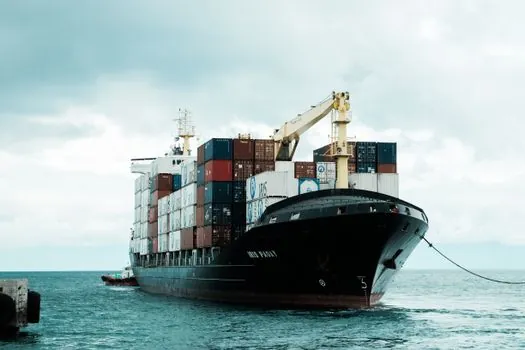
Domestic Chinese lead times for stocked SG-5 run 3-5 days from large distributor warehouses, while international orders from brand manufacturers commonly run 4-8 weeks, with safety stock covering over 3 months for bulk European materials at the better service providers [S3]. World Bank Logistics Performance Index (LPI) 2025 scores should be checked per origin port because inland coal-based plants add rail and intermodal drayage costs that erode the headline FOB price advantage [S5].
Total cost of ownership is rarely the unit price: freight, demurrage, import duties, inventory carrying, and the cost of one rejected 25-ton lot can each swing landed cost by 5-10%, so a $500/ton FOB quote can land above $700/ton after realistic handling [S2][S5]. For a deeper look at how cluster geography reshapes raw-material flows, the analysis in Titanium Sponge Manufacturer Share 2026: Capacity Map and Sourcing Reality follows the same feedstock-versus-port logic. Similarly, Industrial Solvent Selection for Energy Equipment: 2026 Spec Gates documents how ESG verification and logistics scoring combine in a modern chemical sourcing gate.
What to Reject and When to Walk Away
Reject offers missing a published K-value or SG grade, any lot without a residual VCM figure (CAS 9002-86-2), and suppliers who cannot show ISO 9001 plus the application-specific certifications the end product requires [S1][S2]. Be cautious with newly registered 1-year-old trading companies offering 10-30% below the market band, as low reorder rates and single-digit review counts correlate with quality drift after the first shipment [S1][S4].
The resin category is best understood as a family of distinct materials: PVC-U pipe compounders specify SG-5 with calcium-zinc stabilizers, while synthetic resin systems covering paste, blending, and copolymer grades each carry their own viscosity, particle size, and contamination limits. Where higher-temperature or higher-purity duty applies, PEEK and POM are the typical engineering alternatives, not PVC substitutes, so they belong in the qualification matrix only when the application has crossed out of vinyl's operating envelope.
Trackable Signals for the Next Buying Window

Monitor the CCAI (China Chlor-Alkali Industry Association) monthly operating rate and the ICIS ethylene and calcium carbide price assessments, because a 5% move in feedstock historically flows through to SG-5 spot offers within 30-45 days [S5]. Watch for new Inner Mongolia and Xinjiang unit start-ups versus emissions-related curtailments in Q4 2026, as that balance will determine whether 2026 low prices persist or snap back in 2027 [S5]. Buyers who lock feedstock-indexed contracts in the current window, qualify a secondary supplier outside their primary cluster, and pre-test every incoming lot for K-value plus bulk density will outperform peers on landed cost and on-time-in-full metrics through the next demand cycle [S2][S3].