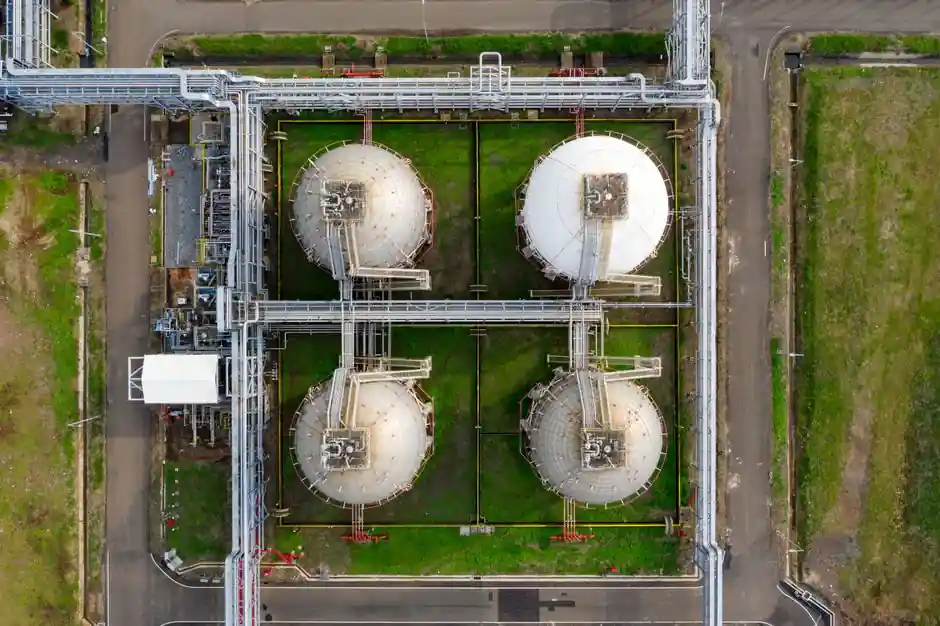
POM (polyoxymethylene, also called acetal homopolymer or acetal copolymer) is a high-stiffness engineering plastic routinely specified for gears, bushings, valve seats, and snap-fit parts, yet it is one of the most common mis-applications in upstream oil and gas components, where service temperatures, sour H2S exposure, and chemical compatibility rules routinely push the material past its limit [S1].
Engineers working under NACE MR0175 / ISO 15156 sour-service rules, or specifying elastomer and plastic internals for valves, gas detection heads, and downhole tools, need a clean read on where POM is acceptable, where it is borderline, and where it is disqualified outright. The polymer family has two main grades: homopolymer POM-H (DuPont Delrin-style) and copolymer POM-C (Hostaform/Celcon-style), with continuous service typically capped near 100 °C and melt point near 165–181 °C [S1].
What POM actually is, and why its properties matter in wellsite service
Acetal resins are semicrystalline formaldehyde-copolymer or homopolymer chains with tensile strength commonly in the 60–70 MPa range, a continuous-use temperature around 90–100 °C in air, and very low water absorption (around 0.2–0.9 %) compared with polyamides [S1]. That low water uptake is the property that draws designers to POM for dimensionally stable seats, but it is also the property that exposes its weakness: poor resistance to strong acids, strong bases, and oxidising media, and limited retention of mechanical properties above 100 °C in hydrocarbon service [S1].
The two grades behave differently: POM-H is slightly stronger and harder but more susceptible to thermal degradation and formaldehyde release at high temperature; POM-C is more chemically resistant and more stable in hot water and glycol, which is why most oil and gas applications, where any thermal margin is critical, default to POM-C rather than POM-H [S1].
Where POM is disqualified: NACE MR0175 sour service, chlorine, and hot hydrocarbons
Under NACE MR0175 / ISO 15156, non-metallic materials for sour service (H2S-containing environments) are restricted to a small list of polymers with documented resistance; standard grades of acetal are not on that permissive list for elastomeric or plastic load-bearing parts in sour service without specific qualification testing [S1]. The standard requires that polymers used in seals, gaskets, and downhole components exposed to sour fluids be qualified for the specific temperature, partial pressure of H2S, and chloride / pH window, which most commodity POM grades cannot pass [S1].
Hot hydrocarbon service is the second disqualifier: at sustained temperatures above 80–90 °C in crude, diesel, or aromatic-rich fluids, POM swells and loses tensile strength, and above 100 °C the material approaches its glass-transition behaviour with rapid property loss [S1]. Chlorine and hypochlorite exposure, common in produced-water treatment, attacks POM aggressively, and concentrated acids and bases (pH below 4 or above 9 at elevated temperature) cause depolymerisation, the failure mode that gives POM its bad reputation in chemical plants [S1].
Where POM can be used in oil and gas: instrumentation, not flow

Acetal is acceptable in low-pressure, low-temperature, non-sour instrumentation hardware: housings, sensor bodies for gas detector cartridges, brackets, impellers in sample-conditioning pumps, and the small-diameter threaded fasteners that hold analyser racks together, where the fluid stream is dry instrument air or clean natural gas at near-ambient temperature [S1]. The same logic applies inside gas analyzer sample lines at pressures below roughly 10 bar and temperatures below 60 °C, where the dimensional stability and low moisture absorption of POM actually pay off [S1].
It is also reasonable for bushings and wear rings in non-sour chemical-injection pumps handling methanol or low-concentration glycol at ambient temperature, where the polymer's low coefficient of friction (around 0.2–0.3 against steel) and high fatigue endurance make it a strong fit, and where replacement cost is low if the part ever needs to be swapped out [S1].
Comparison: POM versus the alternative polymers actually used upstream
Decision criteria for non-metallic internals in oil and gas are temperature ceiling, sour-service qualification (NACE MR0175 / ISO 15156), chemical compatibility, and cost. POM is the cheapest option but loses on three of the four criteria [S1]:
PA66 (nylon 6,6): higher continuous-use temperature (around 120–150 °C with heat-stabilised grades), better hydrocarbon resistance, but absorbs 2–3 % water, which swells the part and changes seal geometry. Cheaper than POM on a per-kg basis but requires tighter tolerance design [S1].
PPS (polyphenylene sulphide): continuous-use temperature near 200 °C, excellent chemical resistance, low moisture absorption, and commonly used in valve seats and oil seal back-up rings for downhole and subsea tools; cost is roughly 4–6 times that of POM [S1].
PEEK (polyetheretherketone): continuous-use temperature up to 250 °C, qualified to NACE MR0175 for many sour-service applications when specified, chemically inert to hydrocarbons, steam, and acids; cost is typically 10–20 times POM and is the go-to for premium downhole and compressor components [S1].
Metals (brass, 316L stainless, duplex): required for any pressure-containing wetted part under ASME B16.34 or API 6D valve classes, and for any part exposed to sustained temperatures above roughly 150 °C, where no unfilled thermoplastic survives [S1].
Failure modes seen in the field, and how to recognise them
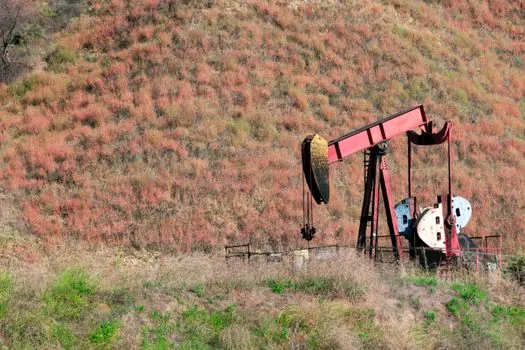
Three signatures show up in failed POM parts. The first is embrittlement with crack propagation, typical of prolonged thermal-oxidative ageing above 80 °C in air or oxygenated fluids, where formaldehyde is released and the polymer chain scissions [S1]. The second is blistering and whitening, indicating chemical attack by strong acids, chlorinated water, or hot glycol, where the amorphous regions are being etched out of the semicrystalline structure [S1]. The third is creep set and permanent deformation, the failure mode of POM seats loaded above 10–15 MPa sustained stress at 60–80 °C, where the long-term modulus drops well below the short-term datasheet value [S1].
For context on how this kind of polymer-versus-metal trade-off plays out in adjacent spec-driven equipment builds, the Embedded Part Selection for Renovation Projects: 2026 Spec Map piece runs a similar load-class-and-substrate logic that applies when picking POM versus metal inserts in retrofit brackets. The same engineering rigour shows up in Self-Aligning Bearing Selection for Wind Power: Spec Map, where temperature ceiling, lubrication regime, and load cycle are the gating criteria rather than raw datasheet strength.
Sourcing, standards, and qualification documents to ask for
For any non-metallic part going into sour service, the minimum documentation pack is an ISO 15156 / NACE MR0175 conformance letter naming the specific part, the H2S partial pressure, the temperature, the chloride concentration, and the pH range the part was qualified against, plus the OEM's chemical compatibility table cross-referenced against the field fluid [S1]. For non-sour but hot service, the requirement is the polymer manufacturer's continuous-use temperature curve in the specific fluid, not the generic air-aged datasheet number [S1].
Procurement should also confirm the resin grade: a homopolymer datasheet quoted in a quote sheet does not match a copolymer part on the BOM, and the two grades behave differently in hot water and glycol, which is the most common cause of POM parts being approved on paper and failing in service [S1]. For elastomeric seals anywhere in the system, NORSOK M-710 / ISO 23936-2 accelerated ageing data is the standard qualification reference, and the same logic applies when an oil seal material is being upgraded from nitrile to FKM or FFKM for hot crude service [S1].
The practical spec gate is straightforward: if the part is in the wetted flow path, downstream of a lighting equipment and electric lamps explosion-proof enclosure, or part of a gas chromatograph sample-conditioning block operating above 60 °C or in any confirmed sour service, default to PPS, PEEK, or metal. Reserve POM for brackets, covers, and dry-side instrument hardware where its dimensional stability and low friction are an asset and its chemical and thermal weaknesses are not exercised.