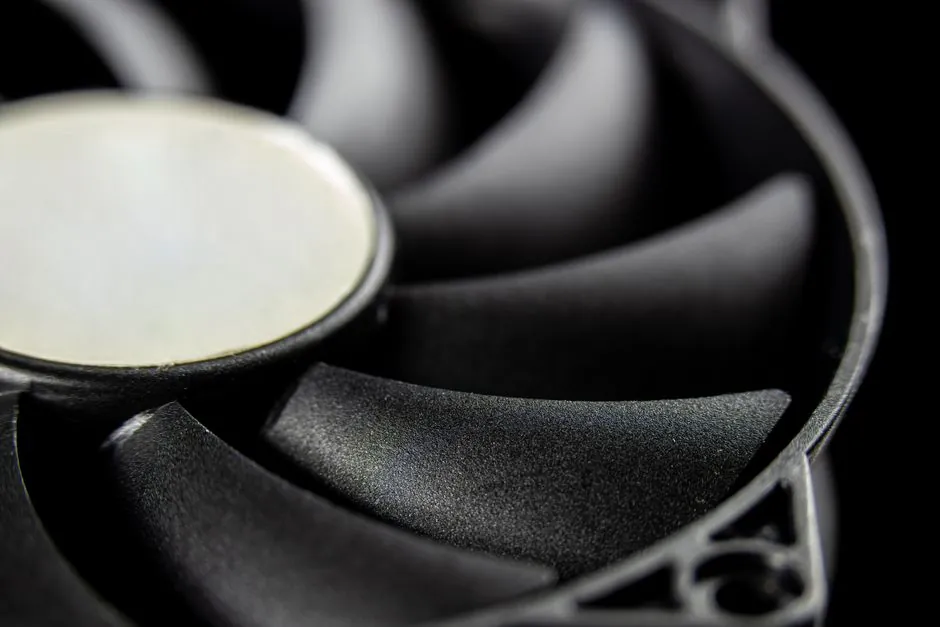
Polyamide (nylon, PA) is the default engineering thermoplastic for non-metallic housings, gaskets, fasteners, and wire insulation in energy equipment, with PA6, PA66, PA11, and PA12 covering most spec sheets reviewed in 2026 [S1][S2]. The family is rarely the cheapest polymer per kilogram, yet it is the most cost-resolved when lifetime, weight, and corrosion resistance are tallied across a 10-15 year service window.
For upstream oil and gas exposure, low-moisture grades like PA11 and PA12 retain ductility and dielectric strength in saturated hydrocarbon service where PA6 would creep [S2].
PA Family and Continuous Service Temperature Bands
PA6 (polycaprolactam), PA66 (polyhexamethylene adipamide), PA11 (castor-oil derived), and PA12 (laurylactam) anchor the four most-quoted grades on 2026 industrial datasheets [S1]. PA6 has a melting point near 220 deg C and a continuous service ceiling around 120-150 deg C unfilled; PA66 raises the continuous rating by roughly 10-20 deg C over PA6 due to its higher amide density and tighter hydrogen-bonding network. PA11 and PA12 are lower-melting (around 190 deg C and 178 deg C respectively) but absorb roughly one-third the water of PA6 at 50% RH, which preserves modulus and dimensional stability in humid energy cabinets and outdoor switchgear.
For energy equipment running inside lighting equipment and electric lamps housings or in junction boxes near transformers, PA66 at 30% glass fill is the conservative baseline. Glass-filled PA66 holds tensile strength above 150 MPa and HDT (heat deflection temperature) at 1.82 MPa past 240 deg C, which is why it shows up in molded busbar supports and meter bases.
Moisture Absorption and Dimensional Stability
Equilibrium moisture pickup at 50% RH, a key 2026 selection discriminator, ranks as: PA6 approximately 9-10%, PA66 approximately 7-8%, PA11 approximately 1.5%, PA12 approximately 1.0% [S1][S2]. A 1% moisture shift in PA66 changes tensile strength by 30-40% and shifts the as-molded dimension by roughly 0.3% along the flow direction, which is enough to misalign snap-fits and molded-in thread tolerances in a power-meter housing.
For energy meters and energy management enclosures specified for tropical or coastal sites, PA12 and PA11 are the moisture-stable choices. Their water pickup curve plateaus within a few weeks of exposure, so the post-mold conditioning window is short and predictable, which simplifies JIT inventory for panel builders in humid climates.
Mechanical Performance After Glass and Heat Stabilization
Glass-fiber reinforcement at 30% is the industry default for structural PA parts in energy equipment, with 15% and 50% grades used for fine-tuning impact versus stiffness [S2]. Typical 30% GF PA66 reports tensile strength of 170-200 MPa, flexural modulus of 8-10 GPa, and a notched Izod impact around 80-120 J/m; PA6 at 30% GF lands 10-20% lower on stiffness but tracks PA66 closely on heat distortion.
Heat-stabilized PA66 (using copper-iodide or phenolic antioxidant packages) extends continuous use temperature to 150-170 deg C, which is the band that PV inverter housings, busbar supports, and molded transformer coil formers occupy in 2026 spec sheets. For environments where halogenated flame retardants are restricted, red-phosphorus or melamine-cyanurate systems are now standard on datasheets, with UL 94 V-0 ratings at 1.5 mm and 3.0 mm commonly reported.
Electrical and Insulation Behaviour
PA grades are widely used in molded insulation, cable ties, and wire-jacketing layers because of their dielectric strength (typically 15-25 kV/mm unfilled) and volume resistivity above 10^12 ohm-cm at 23 deg C, 50% RH [S1]. Dry-as-molded PA66 reaches dielectric strength above 20 kV/mm, but values drop 30-50% as moisture rises, which is why PA11 and PA12 dominate cable-jacket specifications in wet environments.
Tracking resistance (CTI, comparative tracking index) of unfilled PA66 sits around 600 V; glass-filled versions drop to 400-500 V, which is still adequate for most low-voltage energy hardware. For higher creepage distances on PCB-mount power supplies, mineral-filled PA66 grades push CTI past 600 V at the cost of a slightly heavier molded part.
Chemical and UV Resistance for Outdoor Energy Use
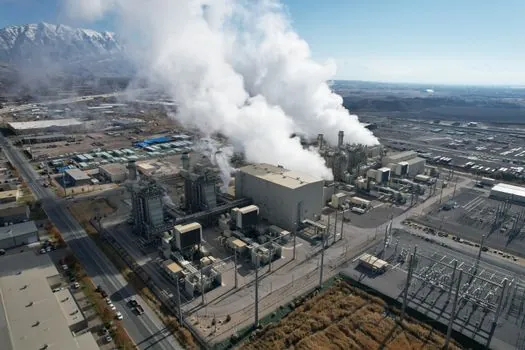
PA6 and PA66 resist dilute acids, alkalis, and most petroleum products, but both are attacked by strong mineral acids and long-term exposure to glycol-based coolants, a frequent pain point in wind-turbine hub castings [S2]. PA11 and PA12 are the bio-derived, low-moisture grades used in flexible risers, umbilicals, and flexible conduits, with a published PA11 vs PA12 selection map relevant to upstream energy service.
UV resistance is the other long-tail failure mode. Without carbon black or hindered-amine light stabilizers (HALS), PA6 and PA66 lose roughly 50% of tensile elongation within 12-24 months of direct Florida-azimuth exposure. UV-stabilized PA66 with 1.5-2.0% carbon black holds 70-80% of its initial elongation at 24 months, which is the rule-of-thumb cutoff for outdoor energy hardware warranties written in 2026. Black is the default color for energy-grade nylon because the carbon black acts as both a UV screen and a heat sink, reducing solar heat gain.
Selection Decision Table by Application
For a structured side-by-side, the four common 2026 PA grades line up against typical energy-equipment criteria. PA6 is the low-cost, general-purpose choice for indoor cable ties, snap-fit covers, and non-critical housings where moisture pickup is acceptable. PA66 30% GF is the workhorse for molded busbar supports, contactor housings, and meter sockets that need higher HDT and creep resistance. PA11 is the bio-based, hydrocarbon-resistant choice for flexible offshore umbilicals and low-temperature impact parts, with impact strength staying above 50 J/m at -40 deg C. PA12 is the lowest-water-absorption grade, used in cable jackets, precision gear trains inside NDT equipment and in antistatic tooling where predictable dimensions matter. [S3]
Costs scale roughly: PA6 at 1.0x base, PA66 at 1.1-1.2x, PA12 at 2.5-3.0x, PA11 at 3.0-3.5x, with 30% glass-filled versions adding 15-25% over the base resin. The 30% GF and heat-stabilized package pushes PA66 30% GF into the 1.4-1.6x range, often the most economical high-temperature structural choice.
Standards, Sourcing, and Compliance Anchors
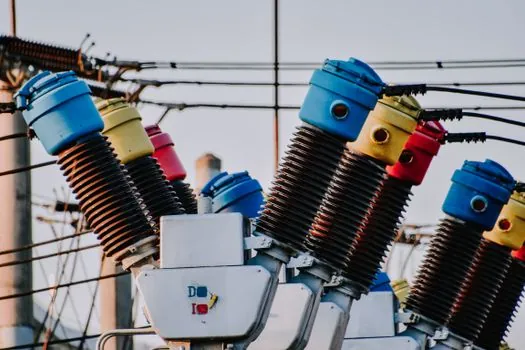
Most PA grades used in 2026 energy equipment are listed by Underwriters Laboratories (UL) for Yellow Card traceability of flame class, hot-wire ignition, and HAI/HWI ratings; the European Union follows the same UL 94 V-0 / V-2 vocabulary through IEC 60695 series on glow-wire and tracking tests. For drinking-water and food-adjacent energy infrastructure (chillers, HVAC, renewable heat), WRAS, KTW-BWGL, and FDA 21 CFR listings are checked on the datasheet, with PA12 carrying the most approvals out of the box.
For the electronics-side plastics, including PA6 vs PA66 used in switchgear and meter housings, datasheet comparisons in 2026 follow the same flame and tracking language. A 2026 spec comparison for PA6 vs PA66 for electronics lines up the dielectric, flow, and HDT numbers side by side; an embedded part selection map for industrial facilities covers the metal-to-PA insert interface that frequently shows up in molded structural frames. The offshore and hydrogen use cases get a sharper view from the PA11 vs PA12 for oil and gas selection map.
Common Failure Modes and What to Avoid
Three recurring 2026 failure patterns show up on returned-material authorizations from energy customers: hydrolytic embrittlement of PA6 in steam-leaking cable trays, UV-driven surface cracking of black-but-unfilled PA66 used in solar combiner boxes, and creep rupture of PA66 fasteners at 90 deg C sustained service in inverter busbars [S1]. Each is a selection error, not a manufacturing defect, which is why the 2026 spec sheets are biased toward glass-filled, heat-stabilized, and moisture-stable grades even at a higher unit cost.
Two practical guardrails help avoid these: (1) match the resin moisture-absorption data, not just the dry-as-molded HDT, to the in-service environment; (2) treat carbon-black level as a binary spec for outdoor parts, since under-stabilized black compounds fail almost as fast as natural-colored parts. The nylon material family page links to the broader property data that grounds these selection rules.
Trackable 2026 signals to watch: whether UL 746C outdoor weathering data starts to appear on more PA66 grades (currently published by only a handful of suppliers), and whether bio-based PA56 and PA5,10 reach UL Yellow Card status at competitive pricing, which would re-rank the cost table above. Until then, the default 2026 spec map remains PA66 30% GF for structural energy parts, PA12 for moisture-critical cable and gear, and PA11 for hydrocarbon-flexible offshore service [S1][S2].