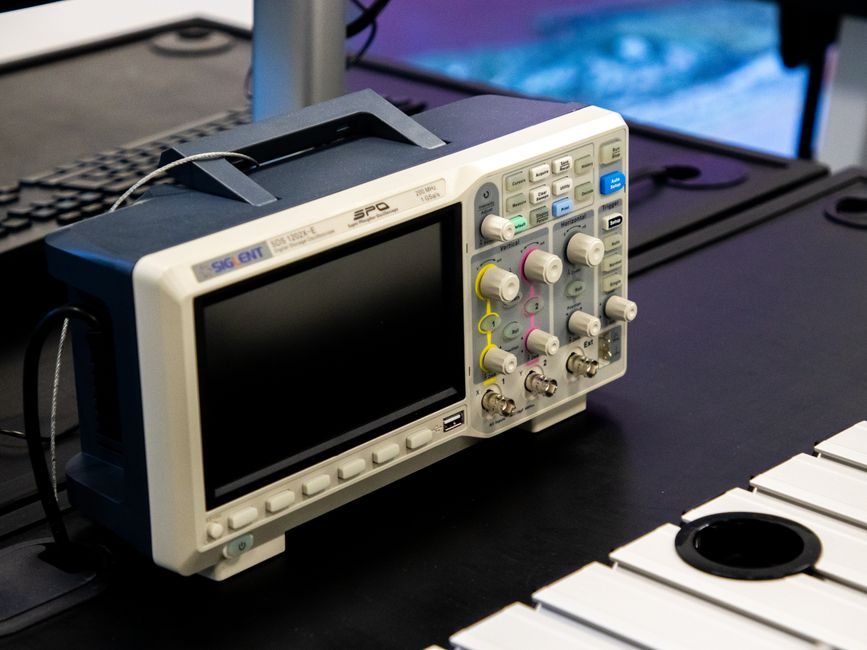
A wall-mounted 4-channel gas alarm controller bought for USD 800-1,500 will typically cost an industrial buyer USD 4,500-7,500 over a 10-year operating window once calibration gas, mandatory sensor swaps, and end-of-life detector replacement are booked against the same budget line [S1][S3]. The single largest TCO lever is the detector element, not the controller, because the sensor heads carry their own finite service life and must be replaced on a fixed schedule irrespective of whether they have triggered an alarm.
This article breaks down where the money goes, which line items procurement teams systematically miss, and how a plant-side spec can be written so the TCO is comparable across gas alarm controller bids instead of being hidden inside a 5-year sensor-swap line item [S2].
TCO Cost Silo Map: Purchase Price Is Roughly 20-30% of the 10-Year Bill
A useful rule of thumb from process-plant capex reviews: the controller head-end, power supply, and enclosure typically account for 20-30% of the 10-year lifecycle cost of a fixed toxic/combustible gas detection loop; the remaining 70-80% is consumed by sensors, calibration consumables, documentation, and labour for proof tests [S1][S3]. The same split is observed across capital equipment classes where recurring field service and consumables dominate a small initial invoice, which is precisely the structure USPS uses when it flags that "TCO refers to the total cost incurred over the life cycle of an item, encompassing purchase, use, maintenance, support, and disposal" [S3].
For a gas detection loop, the seven recurring cost silos are: (1) initial purchase of controller + detectors + cabling; (2) commissioning and loop check; (3) calibration gas (typically 4-gas mixes at USD 50-150 per cylinder, refilled quarterly); (4) mandatory sensor replacement on a 24-36 month cycle for electrochemical toxic sensors and 36-60 months for catalytic combustible or NDIR sensors; (5) annual proof-test and bump-test labour at roughly 15-30 minutes per point; (6) certification and revalidation against IEC 60079 / EN 50402 when the plant re-files its explosion-protection dossier; (7) end-of-life decommissioning and detector disposal as electronic waste.
What the OEM Datasheet Does Not Show: Calibration Gas, Calibration Caps, and Test Gas
The largest single hidden cost in a fixed gas alarm controller TCO is the consumable stream around calibration. Most electrochemical and catalytic sensors are specified to be bump-tested on a 30-90 day interval, with full span calibration at least annually; some hazardous-area operators, particularly in oil & gas and LNG terminals, default to a 90-day bump-test cycle to satisfy ATEX/IECEx dossier evidence. Each bump event consumes 5-30 mL of test gas per sensor from a certified reference cylinder, and a calibration cap or flow adapter is required on diffusion-style heads, costing USD 30-120 each per point [S2].
For a 16-point loop with quarterly bump tests, the annual calibration consumable budget is on the order of USD 600-1,200 in test gas alone, plus USD 400-900 in calibration adapters if they are not shared across loops. The hidden multiplier is labour: a bump-test at 5 minutes per point plus cylinder setup, log entry, and controller reset typically runs 10-20 minutes per point, which over a 10-year horizon adds 800-1,600 person-hours per loop, a figure easily missed when procurement evaluates OEM quotations on unit price only [S1].
Sensor Replacement Cycle: The Real Cliff in Year 3
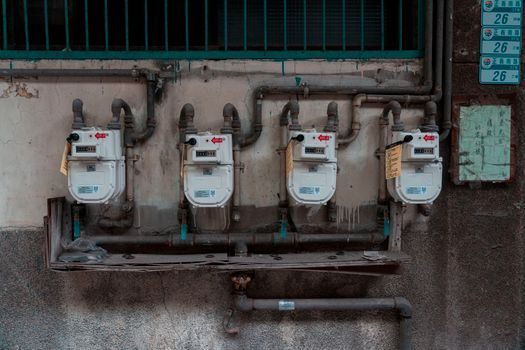
Electrochemical sensors used for toxic gases (H2S, CO, NH3, Cl2, SO2) carry a working-life spec of 24-36 months in clean service, with the OEM warranty voided the moment that interval is exceeded, regardless of whether the cell has triggered. Catalytic pellistor sensors for combustible gas (LEL) generally run 36-60 months, and NDIR infrared sensors for CO2 or hydrocarbons can reach 5-10 years but at a higher unit cost [S2]. The financial consequence is that in year 3 of a toxic-gas loop, the owner faces a wholesale sensor replacement that is roughly equal to 60-100% of the original detector purchase cost.
Plant teams that book a 10-year TCO on a controller-only basis routinely get hit by this cliff in the 24-36 month window. A defensible TCO model books a sensor replacement reserve of roughly USD 200-450 per toxic point in year 3 and year 6, and a catalytic pellistor swap of USD 80-200 per point in year 5-7. For an LEL loop the reserve is smaller but pushed later; for a multi-toxic loop in a refinery or fertilizer plant it is the single largest non-labour line on the schedule [S1][S3].
Distributed vs Centralised Architecture: A Real TCO Trade-off
Specifying choices between architectures is where TCO really diverges, and the same trade-off structure that the Oracle TCO chapter shows for hardware sizing — "smaller hardware systems can be deployed across many locations… management, administration, and maintenance costs go up as the number of hardware systems goes up" [S1] — applies almost verbatim to detector loops. A single multi-channel controller serving 16-32 points minimises head-end cost (one PSU, one SIL-rated logic board, one set of relay outputs) but creates a single point of failure and pulls long analogue cables through hazardous areas. A distributed architecture with loop-powered 4-channel transmitter heads at the sensing location reduces cable cost (bus cable vs individual 3-wire runs) but multiplies calibration labour because each addressable head must be individually logged and proof-tested.
The table below lines the two architectures against four decision criteria a plant-side spec engineer actually has to defend:
Centralised 16-32 channel controller — lower head-end capex per point (roughly USD 200-400 per point for the controller share); lower calibration adapter spend because bump tools are pooled; but cable cost per point of USD 30-90 in copper and conduit, and a single point of failure for the fire alarm control panel-style logic core. Distributed bus architecture (e.g. addressable 4-wire loop with remote heads) — higher head-end capex per point (USD 400-700 per point for the addressable transmitter), but cable cost falls to roughly USD 8-20 per point on a single 4-wire bus, and a single transmitter failure does not disable the whole loop. The breakeven for new plant builds typically sits at 8-12 points per loop, and below that the centralised architecture wins on TCO; above that, the cable and failure-isolation savings flip the result [S1][S2].
Standards, Recalibration, and the Compliance Cost Bucket
Two standards drive most of the recurring compliance cost on a gas detection loop: IEC 60079-x for the explosion-protection construction and routine inspection regime, and EN 50402 (or the national equivalent) for the functional performance of fixed toxic gas detection apparatus. The first requires periodic inspection of the flameproof or intrinsically safe enclosure, cable glands, and earth bonding; the second requires documented proof that the sensor still responds to target gas within the response time specified at commissioning. Together they generate a 12-24 month revalidation event per loop, which for a 32-point system typically consumes 2-4 days of competent-person time and external calibration gas, easily USD 1,500-3,500 per event [S2].
Conversely, a low-cost analog-only controller with no per-point history forces the owner to retain a paper bump-test register, which is fine for the first audit and painful for the fifth. The same TCO logic is visible in concrete admixture fleet management, where ready-mix concrete TCO sits in 5 cost silos and the "hidden variance" bucket is driven by documentation and compliance rather than the drum itself; gas detection has an analogous structure, where the hidden variance is calibration documentation rather than the controller.
Who This TCO Model Is For — and Who It Is Not
This 10-year TCO framework fits permanent fixed gas detection in continuous-process plants: oil & gas, petrochemical, LNG receiving, fertilizer, semiconductor fabs, wastewater treatment, and large cold-storage ammonia plants. It assumes compliance with ATEX 2014/34/EU or IECEx for hazardous-area equipment and a documented proof-test regime. It does not fit portable 4-gas monitors for confined-space entry, where the TCO is dominated by sensor replacement, bump station cost, and unit-out-for-service logistics; it also does not fit residential CO or domestic LPG detectors, which are throwaway units on a 5-7 year life with no calibration or field service. [S1]
Buyers who should not adopt this 10-year horizon are short-tenure tenants, contractor-owned process skids with an 18-month project life, and small commercial kitchens; their TCO should be evaluated on a 1-3 year cycle against disposable detector cost instead. Buyers who must adopt it are anyone whose insurer, ATEX notified body, or process safety management system requires evidence of detector competence and detector log retention over the asset's installed life, which in practice means most process plants in the EU, UK, North America, and the Gulf.
Sourcing Reality: Why Two Bids at the Same Unit Price Have Different 10-Year Numbers
Two gas alarm controller quotes at the same unit price can diverge by 40-80% in 10-year TCO depending on three procurement-spec clauses. First, the sensor source: OEM-branded replacement cells at USD 180-450 each versus compatible third-party cells at USD 60-150 each — the latter can void the controller's hazardous-area certification if the certificate list does not include the alternative cell, so the saving is only real when the cell appears on the certificate. Second, the calibration gas: certified gravimetric reference gas with traceability at USD 80-150 per cylinder versus industrial-grade gas at USD 30-50, the latter being unsuitable for the annual span calibration that closes the proof-test dossier. Third, the documentation: per-point HART or fieldbus diagnostics versus analog 4-20 mA only, where the former halves proof-test labour at the cost of a slightly more expensive head [S1][S2].
For buyers who want to lock the TCO without locking the vendor, a defensible spec requires three clauses: (1) a multi-year price commitment on the OEM replacement sensors with a fixed annual escalator; (2) a calibration gas vendor list accepted by the certifying body; (3) an option for the controller to accept third-party sensors provided the hazardous-area certificate is updated at the supplier's cost. The same logic shows up in adjacent industrial categories: an aluminium-coil buyer's alloy and MOQ sourcing map and a 55-gallon drum buyer's new vs used cost guide both run on the principle that the unit price is the visible tip and the lifecycle line items are the iceberg, and gas detection behaves no differently.
Failure Modes That Inflate TCO Beyond the Model
Three failure modes drive TCO above the modelled envelope. Sensor poisoning: exposure to silicone vapours, lead compounds, or certain solvent atmospheres can permanently damage an electrochemical cell in days, requiring replacement that the model has not booked. The mitigation is poison-resistant cell chemistry and a physical filter, both of which add 20-40% to the detector unit price but eliminate the unrecoverable replacement event. Condensation and dust ingress on the sensor face: a sintered flame arrestor that is not blow-cleaned on a 6-12 month interval will slowly choke the diffusion path and bias the reading low, triggering nuisance trips and false alarms that are not model items but consume maintenance time. Controller obsolescence: a 10-year TCO run on a controller family that the OEM drops in year 6 forces a forced migration cost (engineering, commissioning, re-documentation) that the model has not booked; the mitigation is to specify a controller family with a published 10-year production and 7-year support commitment. [S2]
For owners running catalytic-bead LEL detection specifically, a useful cross-reference is the catalytic gas detector selection guide on specs, pitfalls, and use-case match, which lays out where catalytic-bead sensors are the right tool and where NDIR or electrochemical paths save the TCO in the long run. Specifying on sensor principle alone — without matching the gas, the background atmosphere, and the required response time — is one of the more common ways a TCO model quietly doubles between bid and year 5.
The first trackable signal for any buyer running this model in 2026 is whether the OEM publishes a fixed-price multi-year sensor replacement contract; the second is whether the certifying body accepts the alternative-cell approach without re-issuing the certificate. Both questions should be on the RFQ, not in the post-award clarification, if the 10-year TCO number is to be trusted.
For component-level specifications, see total station.