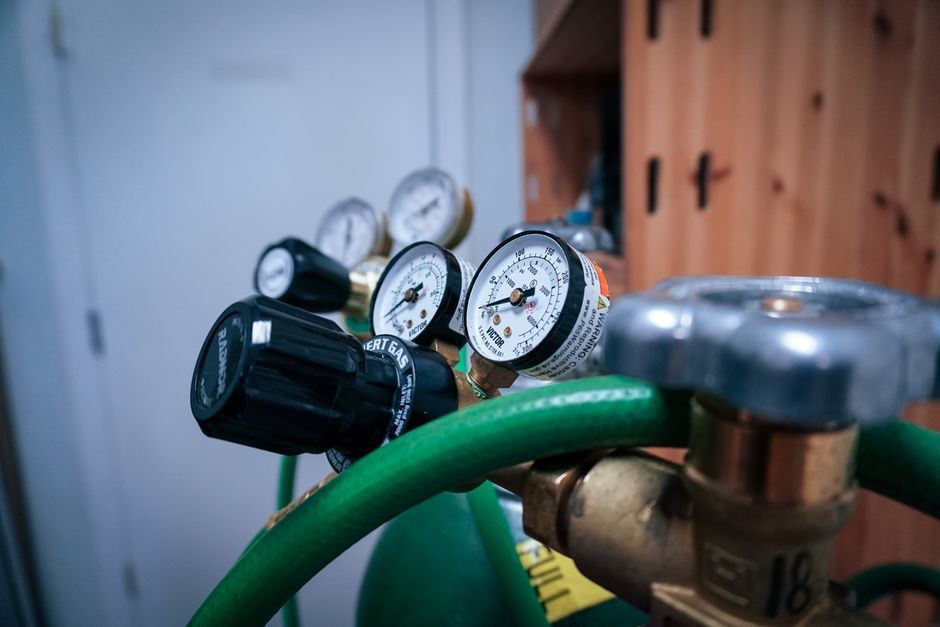
A wall-mounted gas alarm controller is the brain between a 4-20 mA or RS-485 detector loop and the plant DCS, ESD, or fire panel; on a typical 8-32 channel unit you get 24 VDC loop power, two or three programmable alarm tiers (low/high/stowaway TLV), and Form-C relay contacts rated 2 A at 250 VAC for horn-strobe and damper actuation [S5].
Selection usually comes down to four hard constraints: number of detector channels, hazardous-area certification of the controller enclosure, the fieldbus that carries the trip signal upstream, and the proof-test interval the safety integrity level demands [S5].
Where the controller wins: centralised trip logic and faster maintenance dispatch
Centralised trip logic lets one operator screen replace 30 or 40 point detectors without walking the cable tray, and the panel archives 30-day event logs with mV or %LEL pre-trip traces for incident review [S5].
Most 2025-class Chinese OEM panels ship with 4-20 mA + RS-485 Modbus RTU dual output, on-board 24 VDC / 2 A bus power, and two-stage alarm with optional third TLV-stowaway relay, which removes a separate gas mass flow controller trip path for fuel-cell and H2 refuelling skids [S5].
Local Hebei-tier manufacturers list 8/16/32/64 channel SKUs with sample-availability and OEM/ODM service, which compresses lead time for skid builders who need a custom channel count and Modbus register map [S5].
Where it loses: false-trip exposure, calibration drag, and SIL-2 proof-test cost
Cross-sensitive electrochemical and pellistor sensors drift 2-5 % per month in field service, and a single panel-mounted controller with N detector inputs can only "vote" the same way the underlying sensors do, so the panel inherits the sensor's poison, humidity, and condensation failure modes instead of curing them [S5].
For a SIL-2 loop the proof-test interval is typically 1 year with a target dangerous-failure rate on the order of 10^-6 to 10^-7 per hour, so the controller's relay contacts, A/D converter, and watchdog timer all sit inside the SIL calculation and pull the safety case into annual re-certification [S5].
Repair strategy is also biased: swapping a controller card is a panel-level outage that takes 30-60 minutes including loop re-calibration with test gas, versus a hot-swappable transmitter head that can be replaced in under 5 minutes on a fire alarm control panel with addressable loops [S5].
Selection criteria: 4 hard filters before brand shortlist
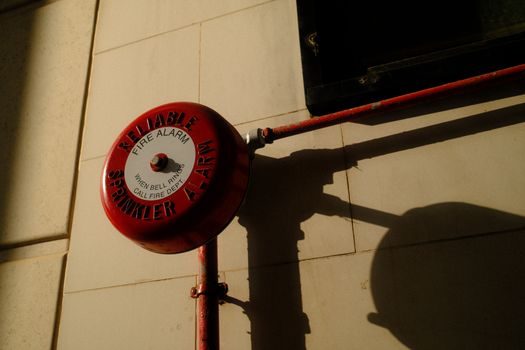
Filter 1 - channel count: 8-channel for small boiler rooms, 16-32 for refinery or LNG compressor sheds, 64-channel for LNG terminal and petrochemical plant gatehouses; under-spec'ing forces mid-life panel swaps [S5].
Filter 2 - hazardous area: ATEX 2014/34/EU Ex d IIB T6 panel enclosure for Zone 1, Ex e for Zone 2 control rooms, and IEC 60079-0 certified intrinsic-safety barriers on the detector loop for Zone 0; mismatched certification blocks commissioning on day one [S5].
Filter 4 - sensor mix: catalytic bead / pellistor for combustible %LEL, electrochemical for CO/H2S/NO2, NDIR for CO2 refrigerant, and PID for VOC; a controller that only reads 4-20 mA in is fine, but the channel count and alarm-tier count must still match the gas mix the plant is actually monitoring [S5].
Decision table: controller vs detector-only vs perimeter alarm chain
Use a wall-mounted gas alarm controller when you need 8-64 channel centralised trip logic and Form-C relay fan-out to horn-strobes, dampers, and ESD-1 interlocks; do not use it as a one-off CO detector in a car park, where a self-contained detector with onboard sounder is cheaper to install and test [S5].
Use a distributed detector array tied straight to the DCS when the trip is SIL-3 and the SIL budget cannot tolerate the controller's own relay and A/D failure rate, and use a perimeter alarm chain or gas analyzer shelter only when the asset is process gas composition, not personnel safety [S5].
Cost axis: entry-level 8-channel Chinese OEM panels sit in the low-hundreds USD per channel with sample availability, while SIL-2 certified 32-64 channel units from European suppliers are typically 4-8x that per channel and carry longer lead times, with proof-test documentation priced separately [S5].
Failure modes and compliance citations you should test against

Common failure modes on installed panels: relay contact welding on a sustained alarm, A/D drift on the 4-20 mA input above 0.5 % of span, watchdog-timer lockup after a brownout, and ground-loop noise on long cable runs that causes intermittent high-trip false alarms; a 30-day bump-test log is the cheapest way to catch all four [S5].
NFPA 72 Chapter 17 covers fire-alarm initiating-device notification, while IEC 60079-29-2 governs selection, installation, and maintenance of gas detection apparatus in hazardous areas, and EN 50402 / IEC 60079-29-1 governs functional performance of fixed gas detectors - the controller must be selected so the loop as a whole, not the panel alone, satisfies these clauses [S5].
For toxic-gas personal exposure, OSHA permissible exposure limits and ACGIH TLVs set the alarm threshold tiers; the controller's low and high alarm setpoints should be programmed as a fraction of TLV, not as fixed ppm, so the same panel can be re-tuned when the published TLV changes [S5].
Specification snapshot for 2025-2026 panel shortlist
Typical 16-channel panel: 24 VDC, 2 A loop power, 4-20 mA + RS-485 Modbus RTU, 2 relay tiers (low/high) plus optional stowaway, IP54 wall-mount enclosure, ATEX Ex e IIB T6 for control room, operating temperature -10 to +55 degrees C, humidity 5-95 % RH non-condensing, response time under 30 seconds to test gas [S5].
Typical 32-64 channel panel: redundant 24 VDC power supply, dual Modbus / Ethernet-IP / PROFINET ports, 3 alarm tiers, 4-20 mA + HART pass-through, 1000-event log, panel-mount or 19-inch rack form factor, ATEX or IECEx option, SIL-2 capable variant on a 1-year proof-test interval [S5].
Detector families to match: pellistor / catalytic bead for CH4, LPG, gasoline vapor at 0-100 %LEL; NDIR for CO2 refrigerant and SF6; electrochemical for O2, CO, H2S, NO2, NH3, Cl2; PID for VOC and benzene at 0-20 ppm; metal-oxide semiconductor for refrigerant leak pinpointing - the controller only needs to see 4-20 mA, but the sensor choice drives calibration gas, interval, and lifetime cost [S5].
A common line: for paired detector-trade-off detail, see Gas Detector Advantages and Disadvantages: A Spec-Engine Trade-Off Map, and for cost-tiering on open-path detection see Open Path Gas Detector Price and Cost Guide: 2026 Tier Map; for ambient-LEL mapping, an air pollution control system often sits downstream of the same controller's high-tier trip.