
Portable gas detectors on the 2026 industrial market list 24 SO2-capable models and 83 single-gas models, while toxic-gas detectors are classified by hazard, not by housing — making form-factor versus hazard-class the first fork a specifier must resolve [S1][S2].
The overlap is heaviest in handheld SO2, H2S, CO, Cl2, NH3, PH3, and ETO instruments, with Chinese OEM pricing in mid-2026 clustered between US$93 and US$310 per unit for diffusion-style single-gas units and US$234-1,000 for pumped four-gas LEL/O2/CO/H2S combinations [S5][S8].
Form Factor vs Hazard Class: Why the Categories Are Not Interchangeable
A portable gas detector is defined by its housing and power path: a battery-powered, clip-on or hand-held unit weighing roughly 100-400 g, designed for personal monitoring or short-duration area surveys [S1][S9]. The K60B series from Kelisaike is a representative 2026 portable — electrochemical sensor, large LCD, three-level alarm (sound + red flash + vibration), and undervoltage alert — and is shipped as a generic "gas detector" SKU rather than a hazard-specific model [S9].
A toxic gas detector is defined by the hazard class it addresses: gases such as SO2, H2S, CO, Cl2, NH3, PH3, HCN, NO2, and ETO that cause acute or chronic health effects at ppm-level exposure [S1][S2][S8]. The same instrument can be both — a portable SO2 clip-on is simultaneously a portable detector and a toxic-gas detector — which is why the two categories cannot be treated as alternatives in a bill of materials.
Sensor Count and Gas Coverage: 1-Gas, 4-Gas, and Beyond
2026 single-gas portable product lines (83 models on one industrial index) dominate the toxic-gas portable segment, with one electrochemical sensor per device and a fixed range such as 0-100 ppm, 0-500 ppm, or 0-100% VOL depending on target gas [S2][S4]. Representative SKUs include the SKY2000-C2H4 ethylene detector (0-100 ppm, 0.1 ppm resolution) and the YT-1200H-S VOC PID portable (0-100 ppm range), both pumped or diffusion single-gas instruments [S4].
Multi-gas portables stack 2-4 sensors into one housing, with the most common 2026 build being LEL (combustible catalytic bead or NDIR) + O2 + CO + H2S, priced US$234.78-1,000.00 per unit at MOQ 10 [S5]. Henan Inte's portable PH3 (US$295-310, MOQ 5) and Cl2 (US$240-270, MOQ 1) sit in the single-gas toxic niche, while its H2 unit (US$150-160) targets the combustible-but-also-toxic hydrogen segment [S8]. The functional comparison: 1-gas portables win on size, weight, and unit cost (often sub-US$200), 4-gas portables win on situational awareness for confined-space entry but cost 2-4× more and require more frequent bump-testing per sensor channel.
Certification Gates and Sourcing Reality in 2026

Fixed and portable gas detectors sourced from Chinese OEM hubs in mid-2026 carry the standard ISO 9001:2015 quality mark and, for hazardous-area fixed units, ISO 45001 occupational-health alignment — visible in supplier-side certification lists on Made-in-China listings [S5]. The K60B portable and Henan Inte portables are positioned for general industrial and confined-space use, not for ATEX/IECEx Zone 1 continuous-flammable atmospheres; specifiers working in oil & gas or refinery turnarounds must request zone certification separately rather than assume it from a "portable" SKU [S9][S8].
Beijing Zetron Technology, Prosense, and Hanwei Electronics each list 11-32 portable SKUs on the 2026 industrial-manufacturer indexes, making them the highest-volume Chinese portable specialists, while Western names — Crowcon, Blackline Safety, RKI, Teledyne — appear in smaller numbers (1-4 SKUs each) and typically command 2-3× the Chinese OEM list price [S1][S2]. For a complete gas-alarm control-loop architecture, the upstream channel and relay count of the controller matters as much as the detector head; see the Gas Alarm Controller 2026 buying guide for the panel-side spec cut.
Detection Method and Alarm Hierarchy
Toxic-gas portables in 2026 overwhelmingly use electrochemical cells for SO2, H2S, CO, Cl2, NH3, and PH3 because of sub-ppm resolution, low power draw (suitable for 8-24 h shift operation), and selectivity against common interferents [S1][S2][S9]. Combustible-gas channels inside multi-gas portables use either catalytic bead (pellistor) for LEL% by volume, or NDIR for methane-only or CO2 measurement; PID (photoionization) is reserved for VOC portables like the YT-1200H-S [S4].
Alarm output across 2026 portable SKUs is uniformly a three-tier stack: low-level warning, high-level danger, and TWA/STEL short-term-exposure alarms tied to occupational exposure limits — typically with sound >95 dB at 1 m, red LED flash, and vibration on the body [S4][S9]. Fixed toxic-gas detectors, by contrast, route 4-20 mA or RS485 to a panel rather than alarming at the sensor head, which is the main functional reason to spec a fixed unit over a portable for continuous area coverage [S3][S8]. For a broader taxonomy of the family, the portable gas detector and toxic gas detector reference pages cover the form-factor and hazard-class split in more depth.
Use-Case Fit: Confined Space, Fugitive Emission, and Plant Turnaround
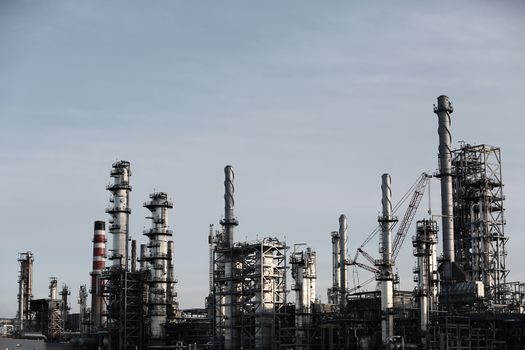
For confined-space entry — vessels, pits, sumps — a pumped 4-gas portable (LEL/O2/CO/H2S) is the 2026 default, with pre-entry bump test mandatory on each sensor channel per shift [S5]. For fumigation crews handling PH3, a dedicated single-gas PH3 portable (US$295-310) avoids cross-sensitivity issues that plague 4-gas combinations [S8]. For wastewater-treatment plant operators needing area coverage, a fixed Cl2 detector with 4-20 mA or RS485 to a SCADA/PLC is preferred over a portable because chlorine excursions are slow but sustained, and a portable only alarms locally [S8][S3].
Portable toxic units also serve as the personal protective layer for the worker at risk, complementing fixed area monitors — a dual-layer model consistent with industrial-hygiene practice and the supplier-side argument made by Henan Inte, Shandong Dory, and the Made-in-China factory cluster [S3][S6][S8]. For a detailed look at multi-gas portables, the multi gas detector page covers sensor stacking and bump-test cadence, while the combustible gas detector page covers the LEL channel that most 4-gas portables inherit.
Limitations and What Portable/Toxic Detectors Do Not Cover
Portable toxic-gas detectors do not replace fixed gas detection on a process line: a portable alarms only the worker in the gas envelope, whereas a fixed detector alarms the control room and can trip interlocks (valve closure, ventilation start, ESD activation) [S3][S8]. The 2026 portable category is also limited on sensor life — most electrochemical cells used for SO2, H2S, CO, and Cl2 are rated 2-3 years and drift visibly in the last 6 months, so a calibration-gas program (clip-on bump gas, 50-100 ppm range typical) is mandatory, not optional [S2][S7].
Portable units are also poor fits for oxygen-deficient atmosphere monitoring at heights (drone inspection, tank-top work) where a pumped aspirated fixed O2 sensor is the right call, and for low-ppb VOC monitoring where PID portables (0-100 ppm range) cannot resolve the sub-100-ppb band needed for IAQ or cleanroom work [S4]. When in doubt about form factor for a given plant scenario, a fixed-gas reference such as the fixed gas detector page makes the architectural call explicit.
Pricing Bands, Calibration, and Total Cost of Ownership
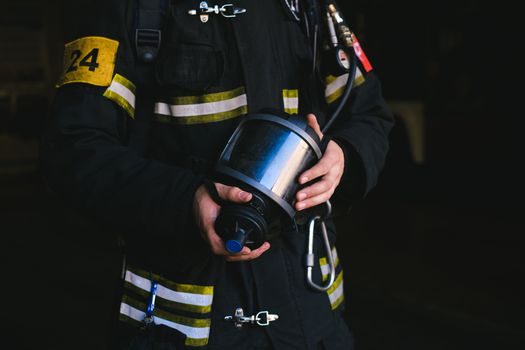
Entry-tier 2026 portable toxic SKUs from Chinese OEM channels start at US$93-110 (fixed LPG/CO units) and US$150-160 (portable H2), scaling to US$234-310 for application-specific single-gas toxic units (Cl2, PH3, ETO) and US$234-1,000 for pumped 4-gas combinations, all at MOQ 1-10 pieces [S5][S8]. Crowcon, Blackline Safety, and Teledyne SKUs are typically 2-3× those prices; the gap is real but partly reflects housing ruggedness, sensor brand (City Technology / Nemoto / Sensirion inside), and ATEX/IECEx certification cost [S1][S2].
Hidden cost on a portable fleet is calibration gas and bump-test adapters: a 4-gas calibration cylinder (25 ppm H2S, 100 ppm CO, 18% O2 balance N2, 50% LEL CH4) runs US$80-150 plus US$30-50 regulator, and each bump test consumes 5-10 s of gas — over a 100-unit fleet on monthly bump cadence, the gas budget is comparable to the capex of the instruments within 18-24 months [S7]. Specifiers writing 2026 purchase orders should therefore budget calibration consumables as a separate line item rather than rolling it into the unit price.
Two trackable signals to watch into late 2026: the number of Chinese OEM portable SKUs with explicit ATEX/IECEx Zone 1 marking (currently a small fraction of the 83 single-gas models indexed in May 2026), and the displacement of catalytic-bead LEL channels by NDIR methane-specific sensors in entry-tier 4-gas portables, which would cut the combustible-channel false-alarm rate in H2-rich environments [S1][S2]. Pricing for both single-gas and 4-gas portables in mid-2026 remains in a narrow US$93-1,000 band, suggesting limited upward pressure on entry-tier Chinese OEM list prices through the next two quarters [S5][S8].