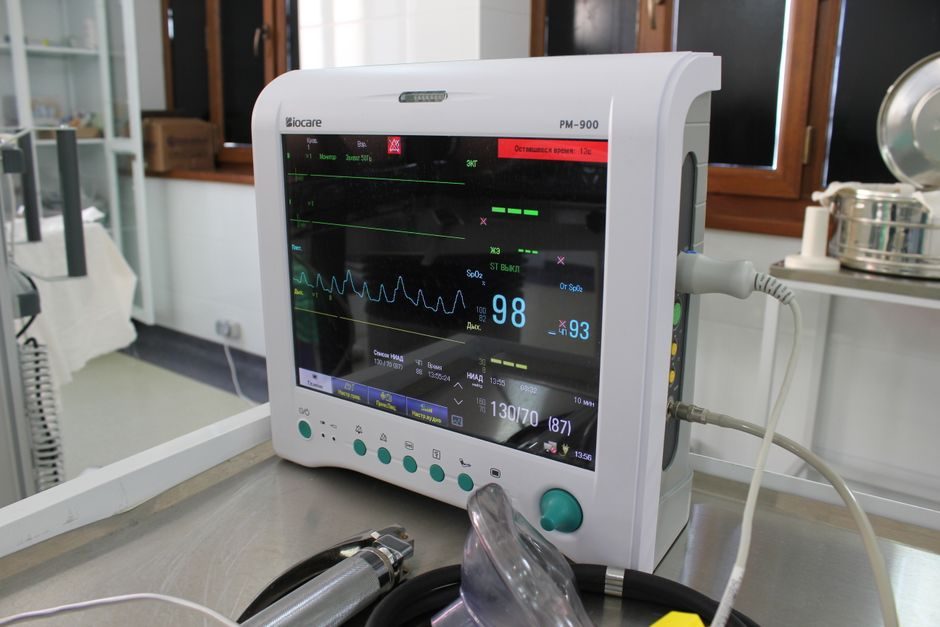
A 2026 DirectIndustry index lists 69 manufacturers offering 87 power-monitoring products, with primary measured quantities ranked as power (87 products), current (27), voltage (23), and temperature (21) on the same tag taxonomy [S2].
The Cattron Messenger BLE shows how a single remote telemetry device now carries temperature, power, pressure, machine-condition, level, flow, speed and performance measurement through Modbus RTU, CAN protocol, RS-485, and IoT interfaces with a one-year limited warranty [S1].
What Each Category Actually Measures
Power monitoring systems, as a category on the 2026 index, resolve electrical quantities (W, kW, kVA, kWh, power factor, harmonics) and on the mechanical side shaft torque, speed and transmitted power; the Datum Electronics Series 420 documents a power floor of 101 kW at 540 rpm on a 1" 3/8 shaft, rising to 261 kW at 1,000 rpm on a 1" 3/4 shaft, with torque ceilings of 1,800 Nm and 2,500 Nm on those two shaft standards respectively [S3].
Temperature monitoring devices, by contrast, resolve thermal state via thermocouples, RTDs, thermistors or infrared sensors and report °C/°F; the same Cattron Messenger BLE accepts direct analog and digital signals, reads daily fuel rate, and auto-reports max/min engine parameters including temperature, with diagnostics filtered to suppress intermittent faults [S1].
For a decision-maker, the operational rule is straightforward: if the failure mode is electrical (trip, brownout, harmonic distortion, energy cost) choose a power monitoring system; if the failure mode is thermal (overheat, bearing failure, process drift, cold-chain breach) choose a temperature monitoring device, with hybrid telemetry units acceptable only when both are secondary.
Protocol, Interface and Integration Comparison
DirectIndustry's 2026 product taxonomy tags power-monitoring systems with measurement (28 listings), industrial (25), process (19), alarm (11), power quality (5) and predictive-maintenance (4) applications, while the bus and I/O columns show Ethernet, USB, PROFINET, Modbus, RS-485 and CAN protocol coverage in modern units [S2][S4].
The Cattron Messenger BLE specifically runs independent Modbus master and slave over two serial ports and supports 16-bit and 32-bit register, coil, float and packed-digital reads and writes, with optional satellite modem for hard-to-reach sites — a feature set more typical of remote asset telemetry than of fixed panel power meters [S1].
The Simco-Ion Manager IQ Easy exposes Ethernet, USB and PROFINET as the public interface set and is positioned for static-control process and device-level monitoring rather than substation metering [S4]. Buyers should pin protocol choice on the receiving SCADA, not on the sensor vendor's brochure: PROFINET and EtherNet/IP dominate European and North American discrete factories, while Modbus RTU/TCP remains the lingua franca for power-quality meters and small temperature scanners.
Performance Envelope: Speed, Range, Accuracy
Mechanical power monitors such as the Datum Series 420 operate at PTO speeds of 540 / 1,000 rpm as standard, extendable to 3,000 rpm, with 1" 3/8 and 1" 3/4 spline male/female shaft configurations covering six and 21 / twenty spline counts respectively [S3].
Temperature monitoring devices for industrial SCADA typically span -200 °C to +1,800 °C depending on probe type, with sampling rates from one channel per few seconds (data loggers) up to 100 Hz on multi-channel scanners; the Cattron telemetry unit aggregates temperature alongside pressure and machine-condition readings and reports daily fuel rate plus automatic min/max for all engine parameters [S1].
For mechanical power applications like marine shaft lines, Datum specifies max measurable torque of 1,800 Nm (1" 3/8) and 2,500 Nm (1" 3/4) with calibrated power readings at each standard PTO speed — a mechanical envelope without a direct thermal-monitoring analog, since temperature devices usually do not bound rotational or torque limits [S3].
Decision Matrix: When to Specify Which
Cost: panel-mount power-quality meters (Janitza, SATEC, Acrel, SOCOMEC) generally sit in the low-thousands USD with three-phase voltage/current inputs; shaft-power monitors with torque/speed transducers are 5–10× the meter-only cost due to the mechanical coupling; multi-channel temperature scanners and BLE telemetry gateways fall between the two. [S1]
Integration effort: a panel power meter with Modbus TCP is a one-day SCADA tag exercise; a shaft-power system requires mechanical installation on the driveline plus slip-ring or telemetry coupling; a temperature monitoring device on a Modbus RTU multidrop is typically half a day per node.
Lifetime and maintenance: contactless optical or magnetic speed pickups on shaft-power units have no wear parts, while thermocouples degrade with thermal cycling and typically need recalibration or replacement every 12–24 months in harsh process service; RTDs are more stable but drift more slowly than thermocouples.
Use case fit: a wastewater plant spec'ing power monitoring system on its MCC bus and a temperature sensor chain on bearing housings is the canonical pair; a cold-storage warehouse typically needs a temperature recorder and a temperature monitor, with no power monitor beyond a basic kWh meter.
Selection guideline drawn from the 2026 index: if the application's "tag" on the supplier taxonomy is power/condition/predictive-maintenance or shaft/torque, the power-monitoring class wins; if the tag is temperature/process/environmental and the chain is HACCP, pharmaceutical or HVAC, a temperature monitoring device with alarm outputs is the right call [S2].
Limitations, Failure Modes and Common Mis-Specs

Power monitoring systems fail in three predictable ways: CT polarity reversal (negative kW readings), phase-sequence error on first commissioning, and harmonic aliasing when the meter's bandwidth is below the 50th/63rd order needed for VFD-rich switchboards; buyers should require Class 0.2S or 0.5S accuracy for revenue-grade billing and Class 1 for internal allocation. [S2]
Temperature monitoring devices fail via cold-junction compensation drift on thermocouple scanners, self-heating errors on thermistor-based RTD substitutes, and IR emissivity mis-setups (a polished stainless target reads several °C low if emissivity is left at the generic 0.95 default); buyers should pin the probe type and the calibration interval in the same line item as the transmitter.
Hybrid devices such as the Cattron Messenger BLE accept both analog and digital inputs across CANbus and Modbus, but the unit is a telemetry gateway, not a metrology-grade power analyzer or a laboratory temperature calibrator — buyers who treat it as either end up with data, not measurement [S1].
Sourcing, Standards and Trackable Signals
For a comparison-driven buyer the first verifiable signals are the supplier counts and product counts themselves: 69 manufacturers / 87 products on the power-monitoring index versus a thinner temperature-monitoring device long tail, with Cattron, Simco-Ion, Allen-Bradley (3), Janitza electronics (6) and Jiangsu Sfere among the higher-product-count suppliers on the 2026-06-25 listing [S2].
Related reading on this site: the electrical fire monitoring system GB 14287 buying guide for arc-fault and residual-current monitoring on switchboards, and the PU sandwich panel vs fire alarm control panel spec map for adjacent facility-side selection logic.
Trackable next nodes for a specifier: (1) confirm the bus protocol on the receiving SCADA before shortlisting sensors; (2) request shaft standard (1" 3/8 vs 1" 3/4, spline count) from any PTO or marine shaft-power vendor, since torque ceiling is set by the shaft, not the electronics; (3) require probe type, sheath material and calibration interval in every temperature-device line item, and verify Modbus register maps in writing [S1][S3].