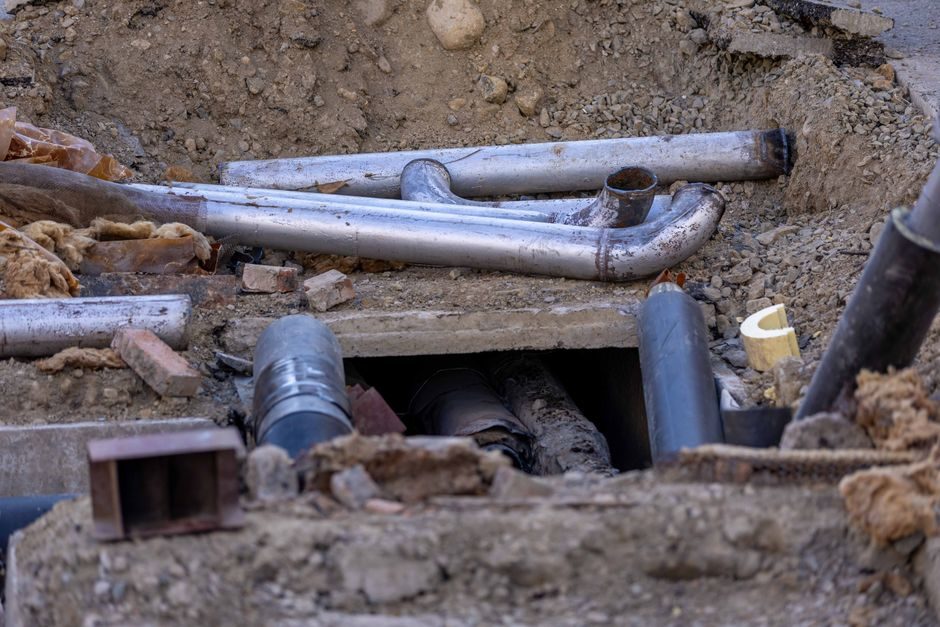
China B2B listings on 2026-05-22 and 2026-05-29 show DN20 PN20 PPR pipe priced in a US$0.10–1.00/m band at 100-metre MOQ, with DN110 PN20 hot-water grade clusters landing around US$1.50–2.50/m for export buyers [S4][S2].
What separates a US$0.20/m quote from a US$1.50/m quote is never freight — it is the certification stack, the brass-insert content and whether the resin is virgin random copolymer PP-R or a calcium-carbonate reblend. The full decision tree below maps price to spec.
DN20–DN110 Price Bands and What Drives Them
Per-metre rates scale roughly with diameter squared: a DN20 PN20 hot-water pipe lists near US$0.30–0.60/m, a DN32 around US$0.80–1.20/m, and a DN110 near US$1.80–2.50/m in China export channels in May 2026 [S2][S4]. PPR pipe fittings — elbows, tees, valves — carry a separate per-piece tariff, with brass-insert elbows typically quoted at US$0.05–0.20/pc at 1,000-piece MOQ. A complete cold/hot-water riser is therefore fittings-heavy on small diameters and pipe-heavy on DN63 and above.
The three price-lever variables, in order of magnitude, are: (1) certification — AENOR/DVGW/WRAS/TÜV stock adds an estimated 15–25% over CE-only equivalent in the same size [S2]; (2) composite structure — PPR-Aluminum or PPR-Fiberglass composite pipes (PP-R/Al/PP-R or PP-R/GF/PP-R) sit roughly 30–60% above plain PP-R at DN20, based on the 58 SKUs in DSTHERM's PPR catalog versus its 18 aluminum and 15 fiberglass listings [S3]; (3) MOQ — a 200-metre MOQ at Ifan lists DN20 PN20 at US$0.83–0.99/m, while a 100-metre MOQ on Shandong G. Star drops to US$0.10–0.22/m, a 4× spread that is almost entirely tier-mix [S1][S4].
Material Grades: PP-R vs PP-RCT vs Composite
PP-R (random copolymer polypropylene) is the baseline resin used by every supplier in the research: Shandong G. Star, Okorder-listed manufacturers, DSTHERM, Ifan, Zhuji Haishi, Ouding and VASEN all list "Random Polypropylene" or PP-R as the base material [S1][S2][S3][S4][S5][S6]. PP-RCT (crystalline-tacticity random copolymer) — a higher-pressure/temperature variant — does not appear in any of the 2026-05/06/07 listings, so unless the buyer explicitly requests it, expect plain PP-R.
Composite variants carry a real engineering premium. PPR-Aluminum composite is sold as a distinct product category that includes floor-heating applications, and PPR-Fiberglass composite is sold as a separate product category from plain PPR pipe [S3][S4]. The 5-layer aluminum version typically costs 40–60% more than plain PP-R at the same diameter and pressure rating, while fiberglass composite sits 20–35% above plain PP-R [S3].
For typical domestic hot-water duty (60–70°C, PN20), plain PP-R is fully code-compliant; composite upgrade is justified only when the spec calls for underfloor heating loops, embedded-in-screed runs, or oxygen-barrier performance for steel-radiator systems.
Pressure Ratings, Certificates and Code Compliance

Three pressure ratings dominate the listings: PN10 (1.0 MPa), PN16 (1.6 MPa) and PN20 (2.0 MPa), with PN25 (2.5 MPa) appearing on aluminum-composite skus [S2]. Okorder's 2026-05-29 listing explicitly enumerates "1.25 MPa, 1.6 MPa, 2.0 MPa" as available classes for DN20–DN110 PP-R [S2]. For a domestic hot/cold building riser, PN20 is the default; PN10 is generally reserved for cold-water only or underfloor heating low-pressure loops.
Certificate stack controls export market access. AENOR (Spain), DVGW (Germany), WRAS (UK), TÜV, NSF and CE collectively define a "Europe-ready" PP-R pipe [S2]. VASEN's 2026-07-04 corporate page explicitly lists DVGW, AENOR, WRAS, TÜV, CE and NSF, plus ISO 9001/ISO 14001 at the plant level. A CE-only product typically ships to a 5–10% lower FOB price than a fully-certified equivalent, but it cannot legally connect to potable water in most EU member states.
MOQ, Lead Time and Sourcing Realities
MOQs fall into three brackets across the surveyed suppliers. Small diameters (DN20–DN32) are commonly sold at 200-metre MOQ with 100-metre flexibility [S1][S4]. Fittings and brass-insert components move to 1,000-piece MOQ with monthly capacity quoted at 100,000–300,000 pieces — Okorder's 2026-05-29 listing claims 100,000 pc/month for PPR pipe and 300,000 pc/month for pipe clamps [S2].
Large-diameter DN110 coils (where offered) typically require a 20-foot container commitment. A 20GP holds roughly 4,000–6,000 metres of DN20 PN20 PP-R pipe depending on coil diameter, so per-container landed cost becomes the meaningful unit. For an export buyer outside China, a 20GP of DN20 PN20 from a Zhuji or Shandong supplier in 2026-05 typically landed in the US$2,500–4,500 FOB Ningbo range based on the per-metre rates above — equivalent to roughly US$0.40–0.75/m delivered to a Southeast Asian port before local duty.
Lead time, based on the Zhuji Haishi and Shandong G. Star profiles, runs 15–25 days for a stock DN20–DN63 order and 30–45 days for non-standard diameters or full-container custom-color runs [S1][S5]. For project buyers, the binding constraint is usually brass-insert fitting production, not the pipe extrusion line itself.
Selection Criteria: Who PPR Is For — and Who It Isn't
PPR is the right call for: residential and light-commercial hot/cold potable water (60–70°C continuous, peak 95°C), underfloor heating low-temperature loops (35–55°C), compressed-air distribution at low pressure (≤8 bar), and food-grade process water where stainless steel is over-specified and budget is tight [S2][S3]. It is also the default for pipe clamp-supported risers in multi-storey residential builds across MENA, Southeast Asia and Eastern Europe.
PPR is the wrong call for: high-temperature process steam (above 95°C continuous), hydrocarbon or chemical service (PPR has poor chemical resistance to aromatics, ketones and chlorinated solvents), exposed outdoor UV service without a UV-stabilised jacket, and any high-pressure gas distribution. For those duties, PE pipe (gas), stainless steel (steam/chemical) or cross-linked PE (PEX, high-temp) are the proper substitutes. The Ouding and DSTHERM catalogs do not advertise PPR for any of these duty classes [S3][S6].
For plumbing-spec readers also weighing PEX and PE-RT, the pipe fitting choice at the manifold often matters more than the pipe-body choice — brass Dezincification-resistant (DZR) inserts are mandatory for hot-water brass-to-PPR transitions in WRAS-listed builds.
Cost Levers: The 5 Numbers That Move the Quote
A buyer who specifies "DN32 PN20 PP-R, AENOR, 1,000 m" and a buyer who specifies "DN32 PN20 PP-R" with no certificate will receive two different quotes that may not be for the same pipe. Always pin diameter, pressure class, certificate list and MOQ in writing before comparing per-metre rates.
Trackable signals for the next 60 days: new AENOR/DVGW addenda on PP-RCT resin classification, and Q3 2026 PP-R resin spot prices out of Sinopec and Borouge — both flow through to FOB PPR pipe within 30–45 days. For spec-led commercial procurement, a concrete curing compound spec written for the same project often drives the same buyer's resin-vendor shortlist.