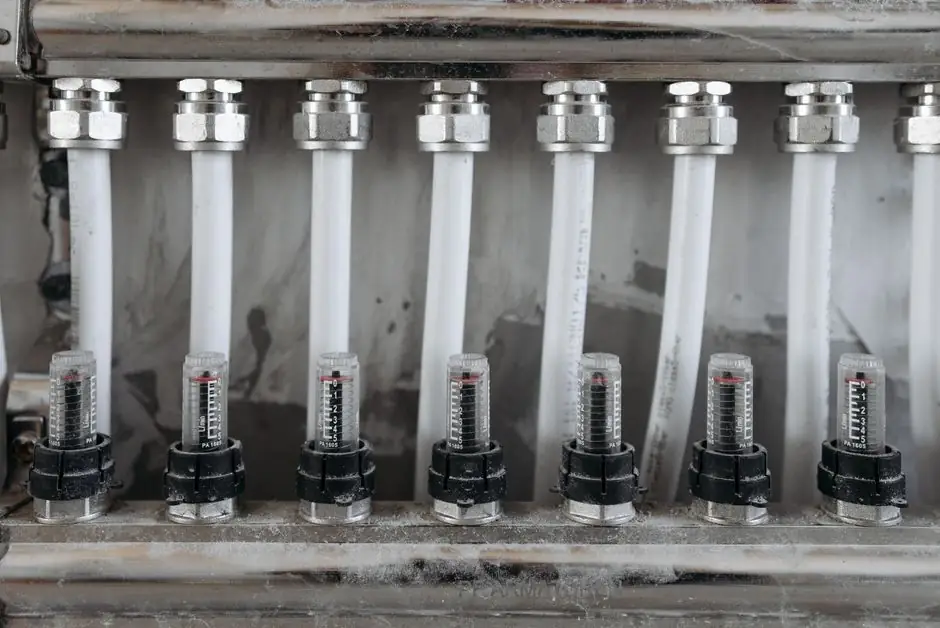
PPR pipe selection for a renovation is governed by four engineering axes: PN pressure rating, SDR/S-series wall class, outer diameter, and the structural variant (standard, fiber, PPRCT, aluminum) matched to temperature regime and exposure conditions [S2][S3].
Renovation-specific decisions are tighter than new-build work because pipe runs are partially concealed, expansion loops are hard to retrofit, and water-quality carryover from old metal lines often pushes specifiers toward PPR over copper or galvanized steel on a cost basis as well [S1]. This guide lines up the PN classes, sizes, and variants against a renovation decision matrix.
PN Rating and SDR/S-Series: The Load-Bearing Decision
PN rating is the first line check on any PPR datasheet, and it ties directly to allowable internal pressure at a reference temperature of 20°C with a built-in safety factor, typically 1.25 [S5]. The standard renovation ladder reads PN12.5 (S4, SDR 9) for cold water, PN16 (S3.2, SDR 7.4) for mixed domestic lines, PN20 (S2.5, SDR 6) for sustained hot water up to 70–80°C, and PN25 (S2, SDR 5) where designers want extra margin on hot risers or higher-pressure branches [S3][S5].
Renovation projects almost always need at least two PN grades on site: PN16 for branch hot/cold lines, and PN20 for any recirculation loop or continuous hot water run above 60°C [S3]. Pipe catalog outer diameters for renovation work concentrate in the 20–32 mm range, with 20 mm serving basin connections at roughly 15–20 L/min, 25 mm serving shower branches at 25–35 L/min, and 32 mm serving main bathroom feeders at 40–60 L/min [S3]. Larger 40 mm and 50 mm+ diameters enter the picture only on vertical risers or when a single line feeds multiple fixtures, where friction loss across 10 m of run can shave 5–10% off delivered pressure [S3].
Four Renovation Variants: Standard, Fiber, PPRCT, Aluminum
Standard PPR is the default all-rounder: random copolymer (e.g., Borealis or Hyosung grades), smooth inner wall with Ra ≤ 0.007 mm, heat-fusion joints, 70°C continuous / 95°C peak operating envelope, and a PN16 rating suitable for domestic hot water in most urban apartments [S2]. Its linear expansion coefficient sits around 0.15 mm/(m·K), so long exposed runs need expansion loops or strict fixing intervals [S2].
PPR Fiber pipe adds a glass-fiber reinforced mid-layer at 15–20% fiber loading, cutting longitudinal thermal expansion to roughly half of standard PPR and improving creep resistance at elevated temperature, which makes it the right pick for underfloor heating loops embedded in screed and for long, exposed hot water drops where sagging is unacceptable [S2]. The minimum bend radius is larger, so tight ceiling cavities need planning. PPRCT (crystal-treated PP-R) uses a nucleating agent to shift crystalline form from α to β, raising low-temperature impact strength by roughly 40% versus standard PPR and keeping the pipe ductile at sub-zero temperatures; this is the variant for cold-region renovations, seasonal homes, and winter construction where the system may sit filled before commissioning [S2]. PPR Aluminum (composite) pipes add an aluminum foil barrier that drops oxygen permeation to near zero and further trims thermal movement, typically used where the designer wants both lower expansion and protection against oxygen diffusion into closed heating circuits [S2].
Selection Matrix: Matching Variant to Renovation Scenario

For a typical mid-rise apartment renovation with moderate climate and mains pressure under 0.4 MPa, standard PPR PN16 in 20 mm and 25 mm covers kitchen and bathroom lines at the lowest cost, with PN20 reserved for any recirculation or continuous hot circulation [S3]. A renovation that includes underfloor heating should spec PPR Fiber for the loop, kept in screed where the reduced expansion prevents tile lift, and standard PPR PN20 for the manifold supply [S2]. Cold-region or winter-build renovations should spec PPRCT for any run that could see sub-zero exposure, with standard PPR PN16 confined to interior conditioned-space lines [S2].
A side-by-side comparison on four decision criteria sharpens the call: standard PPR scores best on cost and joint compatibility, PPR Fiber on dimensional stability under heat, PPRCT on low-temperature impact, and PPR Aluminum on oxygen barrier and lowest expansion [S2]. Commercial retrofits that include riser replacements generally step up to PN20 across the board, with PN25 reserved for boosted-pressure branches or buildings above six floors where static head amplifies working pressure [S3][S6].
Jointing, Sizing, and On-Site Spec Checks
Socket fusion welding at 260°C is the universal PPR joint, and it requires that pipe OD and fitting socket tolerance line up cleanly; mismatched tolerance between batches is the single most common cause of cold-fusion leaks in renovation callbacks [S5]. Before ordering, three on-site checks pay off: dimensional consistency across batches, matching pipe-to-fitting tolerances, and clear PN/size marking on packaging to avoid site mix-ups between PN16 and PN20 sticks that look identical to the eye [S5].
Sizing should be driven by flow demand rather than nominal main size: 20 mm for sink/basin branches at 15–20 L/min, 25 mm for shower and bathroom branches at 25–35 L/min, 32 mm for main bathroom lines at 40–60 L/min, 40 mm for small building mains at 90–110 L/min, and 50 mm+ only on commercial or industrial headers above 150 L/min [S3]. For renovation work that reuses part of an old metal riser, a dielectric transition fitting at the interface is mandatory to separate the PPR from any copper or galvanized steel still in the circuit [S1]. Working with a PPR pipe selection that also pairs the right pipe fitting and plastic pipe families keeps the system inside a single fusion-welded material family, which is the core renovation advantage PPR offers over mixed-metal repipes.
Limits, Failure Modes, and What PPR Will Not Do
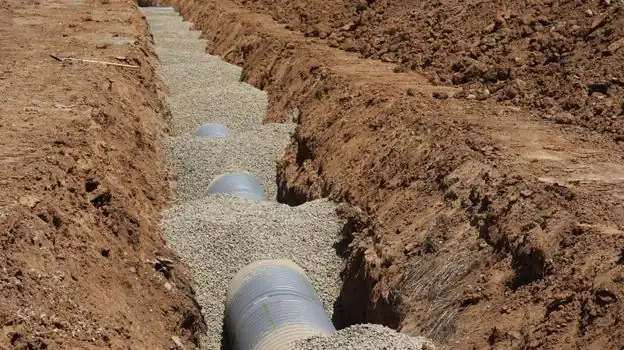
PPR is not a universal replacement: outdoor UV exposure degrades unprotected PP-R over years, so any exterior run needs a UV-resistant jacket or a different material [S3]. Sustained temperatures above 95°C or pressures above the PN class at design temperature will creep-fail the wall; PN16 at 70°C continuous is within design margin, but PN16 at 95°C continuous is not [S3][S5]. Chemical resistance is good for potable water but selective for industrial chemicals, so chemical-service lines need a specialized PPR compound, not the standard random copolymer [S3].
Standard PPR is also the wrong pick for underfloor heating because its expansion coefficient is high enough to lift tiles if a long run is embedded without fiber reinforcement; PPR Fiber is the correct call there, with PPRCT reserved for the cold-climate niche [S2]. Renovation work in occupied buildings should also plan for thermal expansion in any riser that runs more than 6–8 m without a directional change, since the cumulative movement at 50°C ΔT over 10 m is on the order of 75 mm for standard PPR, half that for fiber-reinforced [S2].
Standards, Certifications, and Sourcing Checks
Hydrostatic design data for PPR piping is published under ISO 15874, with the SDR/S-series classification, 50-year design life at reference temperature, and 1.25 safety factor all anchored to that standard [S4]. Regional certifications that renovation specifiers verify on the datasheet include NSF for North American potable water, DVGW for German and broader European drinking water contact, and equivalent national marks where the project is sited [S4]. For hot-water applications the operating envelope is typically quoted as 70°C continuous with a 95°C peak short-term rating, and any PN class should be re-rated downward as sustained temperature rises above the 20°C reference [S4][S5].
Sourcing for renovation bids that span multiple regions benefits from keeping PN16, PN20, and PN25 in stock rather than forcing one product into every project; the cost gap between PN16 and PN20 is small relative to the risk of an under-spec'd hot run [S5]. Two trackable signals to watch: manufacturers extending PPRCT offerings into temperate-climate catalogs, and stricter low-temperature impact thresholds in updated ISO 15874 derivative standards, both of which will tighten the renovation variant matrix over the next product cycle [S2][S4]. Specifiers working on renovations that touch heating plant boundaries should also review the PPR pipe selection map for cold storage warehouses, since the low-temperature impact criteria overlap directly with PPRCT decision logic for residential cold-region work.