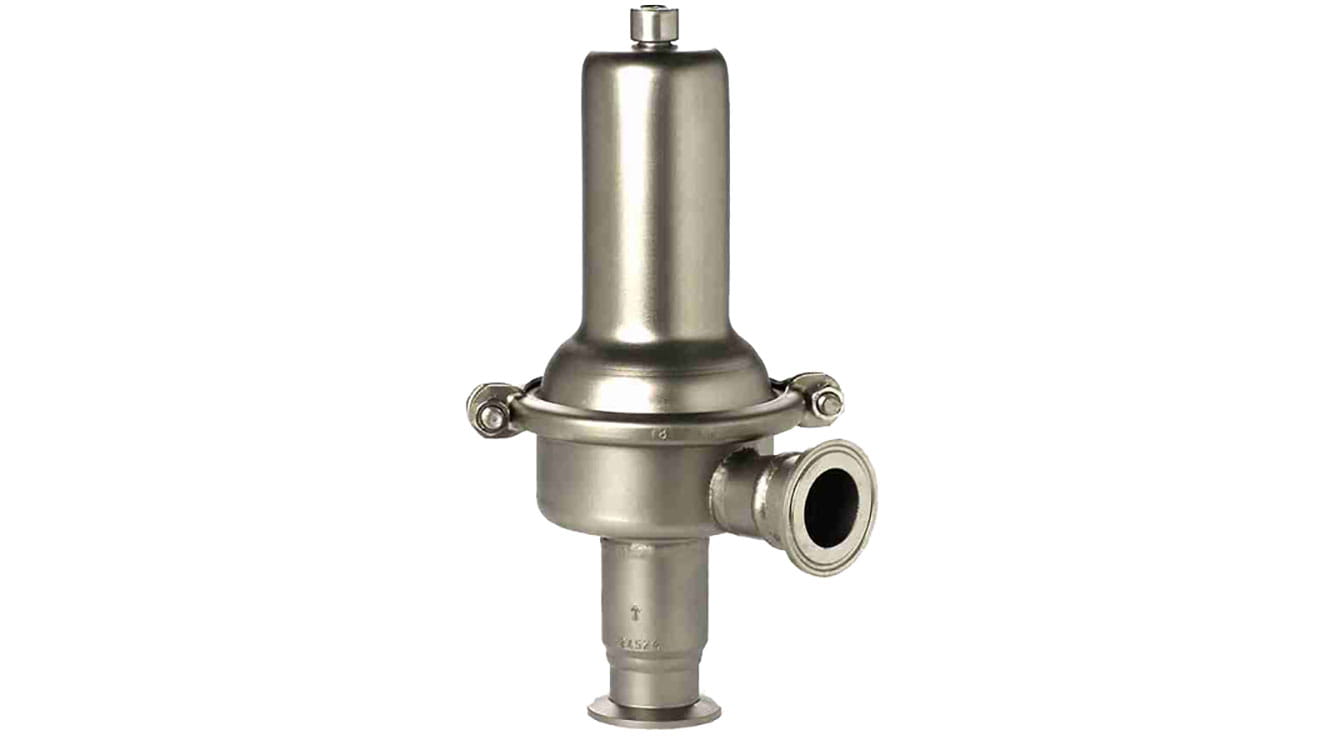
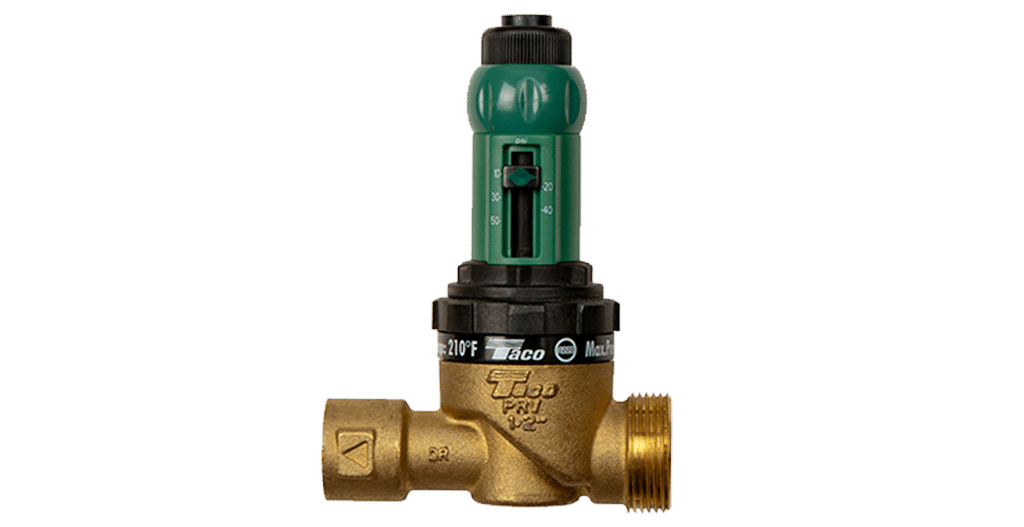
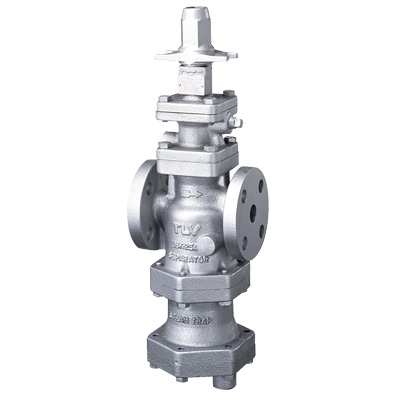
A pressure reducing valve (PRV), also called a pressure regulator, is a self-contained control valve that takes a higher and often fluctuating inlet pressure and holds a steady, lower outlet pressure regardless of changes in flow or supply. Unlike a relief or safety valve, which is normally closed and acts only on overpressure, a PRV is normally open and modulates partly closed to defend its downstream set point. It is one of the most common valves in water distribution, steam systems, compressed air, and hydraulics.
This guide separates the two dominant architectures, direct-acting and pilot-operated, decodes the spec sheet parameters that actually drive selection (range, turndown, droop, Kv, materials, and certification), and walks through a repeatable selection sequence. Every value is referenced to a published standard or a manufacturer datasheet.
Photo: Ilja, CC BY-SA 3.0, via Wikimedia Commons
This guide is aimed at industrial purchasing engineers and design engineers. It covers 6 chapters from working principle, valve types, sealing and body materials, flow-coefficient sizing, to selection decisions, with 7 selection FAQs and manufacturer comparisons. All parameters reference public standards including EN 1567 (water pressure reducing valves), ASSE 1003 and NSF/ANSI 61 (potable water), IEC 60534 (control valve flow capacity), and manufacturer datasheets from Cla-Val, Spirax Sarco, and Bosch Rexroth.
Chapter 1 / 06
What is a Pressure Reducing Valve
A pressure reducing valve is a self-acting throttling device whose only job is to convert a higher, variable upstream pressure into a constant, lower downstream pressure. It does this without any external power, instrument air, or electrical signal: the controlled (downstream) pressure is fed back onto a sensing diaphragm or piston that works against an adjustable spring, and the resulting force balance positions the valve plug. When downstream demand rises and pressure starts to fall, the valve opens further; when demand falls and downstream pressure rises toward the set point, the valve throttles closed. The set point is the spring setting, adjusted by a screw or handwheel.
The most important conceptual distinction for a buyer is that a PRV is a normally open, downstream-sensing device. Lose the downstream signal and it opens. This is the opposite of a back-pressure or relief valve, which is normally closed, senses its own upstream pressure, and opens on overpressure. The two are routinely installed together: building codes such as the International Plumbing Code require a relief valve downstream of a water PRV in a closed system because, once the PRV closes, thermal expansion of trapped water has nowhere to go and pressure can climb dangerously. The PRV controls everyday pressure; the relief valve is the safety backstop.
Pressure reduction is needed wherever a supply is delivered at a pressure higher than the equipment downstream can tolerate. Municipal water mains often run at 5 to 10 bar (70 to 145 psi) but plumbing fixtures and appliances are rated for far less, so codes such as the IPC require a reducing valve where static pressure exceeds 80 psi (about 5.5 bar). Boiler plants generate steam at 10 to 40 bar for efficient distribution, then reduce it locally to the 1 to 7 bar a process or heating coil actually uses. A hydraulic power unit runs a common pump pressure of 150 to 300 bar, while a clamping or pilot circuit on the same machine may need only 30 to 80 bar, supplied through a reducing valve.
Industrially, the PRV grew out of the steam-engine governor and the gas regulator of the nineteenth century, and matured alongside municipal waterworks. Today the category spans a vast range: from a 1/2 inch bronze domestic water regulator costing tens of dollars, through 600 mm pilot-operated waterworks valves on a transmission main, to compact hydraulic cartridge reducers smaller than a thumb. Despite the range, the underlying physics is identical, and so is the selection discipline: match the required reduced pressure, flow, and fluid to a valve whose capacity, accuracy, and materials suit the duty.
Four engineering metrics govern whether a PRV will perform: set-point range and adjustability, flow capacity (Kv or Cv), droop or accuracy across the flow band, and material compatibility with the fluid and temperature. A valve that is correct on pressure but undersized on flow will starve the downstream system at peak demand; one that is oversized will hunt and chatter at low flow. Getting these four right is the whole of the selection task, and the chapters that follow take each in turn.
Chapter 2 / 06
Valve Types and Architectures
Pressure reducing valves divide first by control architecture into two families, direct-acting and pilot-operated, and second by service into water, steam, and hydraulic or pneumatic variants. The architecture decision is the one that most affects accuracy, flow capacity, and price, so it comes first. The table below contrasts the two architectures on the metrics that drive selection.
Attribute
Direct-acting
Pilot-operated
Sensing
Downstream pressure acts directly on the main diaphragm or piston
A small pilot senses downstream and positions the main valve
Typical turndown
Up to 10:1
Up to 20:1, more in series
Droop (accuracy)
Higher, 10 to 20% of set
Lower, a few percent
Flow capacity
Lower, small to medium lines
Higher, large mains and headers
Complexity / cost
Simple, compact, low cost
More parts, pilot strainer, higher cost
Typical service
Instrument air, single fixtures, lab, tools
Steam mains, water distribution, process headers
Direct-acting PRVs are the simplest practical regulator. Downstream pressure bears directly on a spring-loaded diaphragm or piston; the force balance opens or closes a single seat. Because the main element does all the sensing and all the actuation, the design is compact, cheap, fast to respond, and tolerant of dirt. The trade-off is droop: as flow rises the diaphragm must move further, the spring relaxes, and the controlled pressure falls. A direct-acting valve is the right choice for instrument air sets, point-of-use water regulators, laboratory gas, and pneumatic tooling, where flow is modest and a few tenths of a bar of offset are acceptable.
Pilot-operated PRVs add a small pilot regulator that senses downstream pressure and meters a control flow onto the main valve diaphragm or piston. Because the pilot does the sensing and the main valve uses upstream energy to actuate, the main element can be large while still holding a tight band. This architecture delivers the flat pressure curve, high capacity, and wide turndown (around 20:1) needed for steam distribution and large water mains, at the cost of more internal parts, an essential pilot strainer, and more maintenance. Self-acting valves in this family can be staged in series when the required turndown exceeds what a single valve can hold.
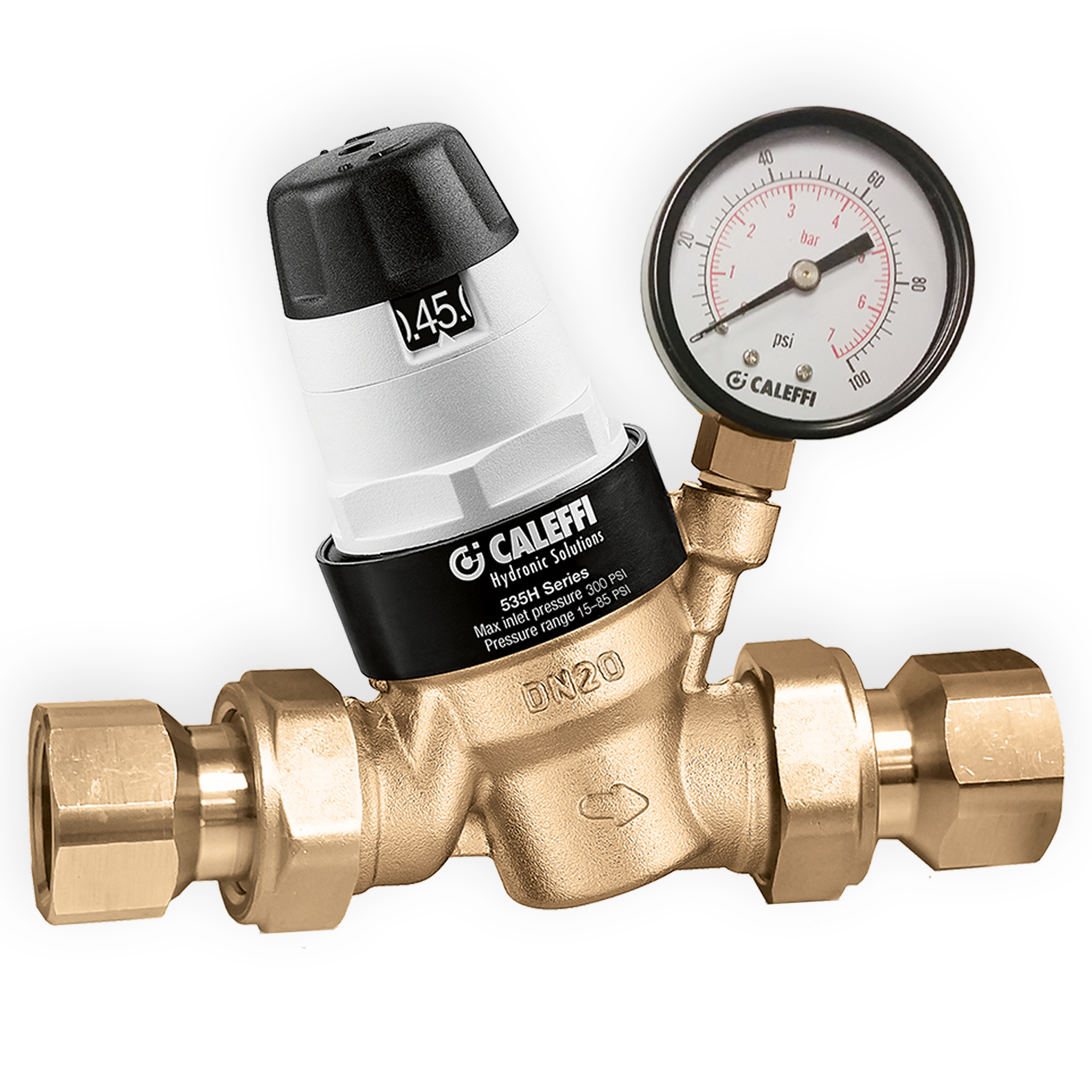
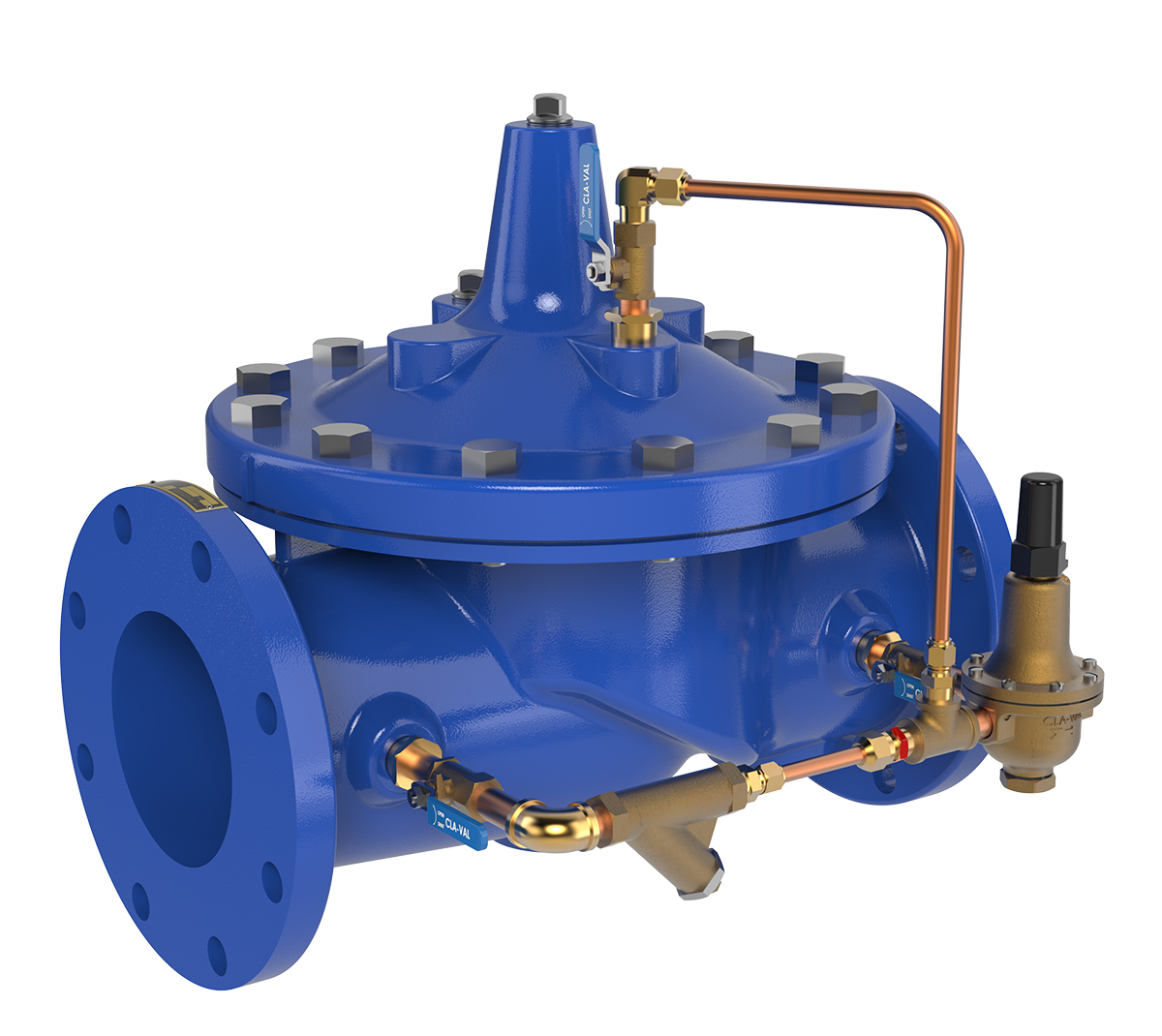
By service, water PRVs for buildings and waterworks dominate by unit volume. Compact bronze or brass domestic regulators follow EN 1567 (DN 8 to DN 100, inlet to 16 bar) and ASSE 1003 with NSF/ANSI 61 potable listing; large pilot-operated waterworks valves such as the Cla-Val 90-01 and 690-01 are hydraulically operated, pilot-controlled diaphragm globe or angle valves with a standard adjustment range around 30 to 300 psi. Steam PRVs use metal bellows or pistons rather than soft diaphragms to survive saturation temperature; Spirax Sarco BRV71/BRV73 are ductile-iron direct-acting valves with up to 10:1 turndown, while pilot-operated steam valves reach higher turndown for distribution mains. Hydraulic and pneumatic reducing valves appear as in-line bodies or screw-in cartridges; Bosch Rexroth, Parker, and others supply direct- and pilot-operated cartridge reducers, including proportional types whose reduced pressure tracks a solenoid current.
Chapter 3 / 06
Working Principle by Service
Although every PRV balances downstream pressure against a spring, the implementation differs enough between water, steam, and hydraulics that a buyer must understand each. The shared core is a force balance: spring force sets the target, controlled pressure pushes back through a diaphragm or piston, and the difference moves the plug. What changes is the sensing element, the seat technology, and the failure-mode physics. The table below maps the three mainstream services to their dominant principle and constraints.
Water service uses a soft elastomer diaphragm because temperatures stay below about 80 degrees C (176 degrees F) for hot water and the elastomer gives a tight shutoff at lockup. The classic domestic regulator is a fall-off direct-acting valve: a spring loads a diaphragm, the diaphragm carries a stem to a soft-seated disc, and downstream pressure in the chamber below the diaphragm fights the spring. EN 1567 governs these valves for DN 8 to DN 100 at inlet pressures up to 16 bar and water temperatures to 30 degrees C cold or 80 degrees C hot. The critical safety point is that closing the valve traps water downstream, so a relief valve or expansion vessel must absorb thermal expansion.
Steam service cannot use a soft diaphragm because saturated steam at 10 bar gauge is roughly 184 degrees C. Self-acting steam PRVs therefore use a stainless steel bellows or a piston, with a stainless seat and a PTFE or metal disc, and they must drain condensate to avoid waterhammer. Direct-acting steam valves such as the Spirax Sarco BRV71/BRV73 hold up to 10:1 turndown; where a flatter curve and higher capacity are needed across distribution mains, a pilot-operated steam valve is specified, and beyond about 20:1 turndown two valves are staged in series. Steam sizing must also respect choked flow, discussed in Chapter 5.
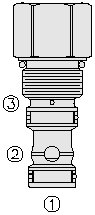
Hydraulic reducing valves work as a normally open spool held open by a spring; reduced (outlet) pressure is fed to the spool end, and when outlet pressure reaches the setting the spool throttles. Most hydraulic reducing valves are also relieving: a small internal relief path bleeds the reduced circuit back to tank if a downstream load (for example, a clamping cylinder pushed by an external force) drives the reduced pressure above set, holding the set point in both directions. Pilot-operated cartridge reducers from Bosch Rexroth and Parker provide higher flow with a flatter characteristic, and proportional versions let the reduced pressure follow a solenoid current for electronic control.
Across all services the failure logic is the same and must be designed for. A PRV fails open on loss of its downstream signal, so the downstream system can see full inlet pressure if a diaphragm tears or a seat erodes. That is precisely why an independent relief or safety valve, sized for full PRV capacity at the bypass condition, is mandatory protection on anything that cannot tolerate the upstream pressure. The PRV is a control device, not a safety device.
Chapter 4 / 06
Body and Trim Materials
Material selection determines pressure rating, temperature limit, corrosion resistance, and, for water, regulatory compliance. A PRV has three material groups: the pressure-retaining body and bonnet, the wetted trim (seat, disc, stem, spring), and the sealing diaphragm or bellows. A mismatch causes leakage, dezincification, stress corrosion, or, in potable systems, a failed health-effects listing. Common body materials run from low-lead bronze for domestic water to cast carbon steel WCB for steam and high pressure.
Bronze and low-lead brass dominate building water service. Low-lead or lead-free bronze and dezincification-resistant (DZR) brass bodies pair with stainless steel springs, a bronze or stainless seat, and an EPDM or NBR diaphragm and disc. For potable water the wetted parts must carry an NSF/ANSI 61 health-effects listing and meet the lead-content limits of the applicable plumbing code; in Europe the valve must satisfy EN 1567. These materials handle cold and hot water to 80 degrees C but are not suited to steam or aggressive chemistry.
Cast iron and ductile iron (ASTM A536) serve larger water mains and lower-pressure steam where cost matters and the body is not subject to thermal shock; ductile iron tolerates higher pressure than gray cast iron. Cast carbon steel WCB (ASTM A216) is the workhorse body for steam and higher-pressure process service, rated to ASME Class 150 through 600 flanges and the corresponding temperature, and is the standard choice where saturation temperature or pipeline shock would crack iron. 316 stainless steel bodies and trim are specified for corrosive process fluids, sanitary duty, and where iron contamination is unacceptable.
The diaphragm or bellows is the most service-sensitive component. Elastomer diaphragms in EPDM suit water and many chemicals, while NBR (Buna-N) suits oils and air and FKM (Viton) suits higher temperatures and aggressive media; the elastomer must be checked against both fluid and temperature. Stainless steel bellows or a piston replace the elastomer in steam and high-temperature valves because no common elastomer survives saturated steam long term. The table below is a quick-reference starting point; always confirm against the manufacturer corrosion chart and pressure-temperature rating before committing.
Reading a PRV datasheet means separating the parameters that drive selection from the marketing line items. Eight parameters genuinely matter: pressure range and adjustment, reduction ratio limit, turndown, droop or accuracy, flow coefficient (Kv / Cv), pressure-temperature rating, connection and size, and certification. Each is explained below, with the values traced to standards and datasheets.
Pressure range and adjustment states the maximum inlet pressure and the adjustable outlet (set-point) span. EN 1567 water valves cover inlet pressures to 16 bar; the Cla-Val 90-01 pilot has a standard adjustment range around 30 to 300 psi (about 2 to 21 bar). The set point must sit inside the valve's adjustable span with margin, and the inlet must stay within the body and bellows or diaphragm rating.
Reduction ratio and turndown are distinct. The maximum reduction ratio (inlet over outlet) is limited per stage because a very large drop forces high velocity, noise, and choked flow; ratios beyond roughly 10:1 on steam, or severe drops on liquids, are usually split across two stages. Turndown is the ratio of maximum to minimum controllable flow at the set point: self-acting direct-acting valves manage up to 10:1, pilot-operated valves up to about 20:1, and staged valves beyond that.
Droop (proportional offset) is the fall in outlet pressure from no-flow to full flow, inherent to spring regulation. Direct-acting valves droop more (often 10 to 20 percent of set); pilot-operated valves hold a few percent. Set the valve for correct pressure at normal flow, not at lockup, and treat droop as the accuracy figure that matters in practice.
Flow coefficient is the capacity number you size on, defined by IEC 60534. Kv is the flow in m3/h of water at 5 to 30 degrees C through the valve at 1 bar drop; Cv is US gpm of water at 60 degrees F at 1 psi drop, with Cv about 1.16 times Kv. For steam and gas the sizing must respect choked flow: when the pressure drop reaches the critical ratio (outlet near 58 percent of absolute inlet for steam, drop about 42 percent of inlet), flow stops rising and you size on critical conditions, not on the full mechanical drop.
Pressure-temperature rating: the body P-T curve, tied to material and ASME or PN flange class (Class 150 to 600, PN16 to PN40). Steam valves must be rated at saturation temperature, not just gauge pressure.
Connection and size: threaded (BSP, NPT), flanged (DN / ANSI), or cartridge. Size the valve on Kv, then pick the body size, which is often smaller than the line.
Shutoff / lockup: the dead-end pressure rise when flow stops. A tight lockup (low rise) matters for fixtures and instrument air; a valve that creeps closed slowly will overshoot at no flow.
Certification: NSF/ANSI 61 and national potable listings for water; PED 2014/68/EU and ASME for pressure equipment; relevant marine, fire-protection, or sanitary approvals as the duty requires.
One trap deserves emphasis: never size a PRV on pipe size. A valve chosen to match the line bore is almost always oversized for the actual flow, runs nearly closed, and hunts. Calculate the required Kv from flow and the allowable drop, then choose the smallest valve whose rated Kv exceeds it with sensible margin, fitting reducers to the pipe if needed.
Chapter 6 / 06
Selection Decision Factors
To turn the preceding chapters into a model number, follow the decision sequence below. Most PRV failures in service trace not to a bad valve but to a wrong assumption made early: sizing on line size, ignoring droop, or forgetting the downstream relief valve. These eight steps double as an RFQ template.
Fluid and temperature: water, steam, oil, gas, or chemical, with maximum temperature. This fixes the sensing element (elastomer diaphragm, metal bellows, or spool) and the material group before anything else.
Inlet and outlet pressure: maximum and minimum inlet, and the required reduced (set) pressure. Confirm the inlet stays within the body and bellows rating and that the reduction ratio is achievable in one stage; if not, plan two stages.
Flow range and Kv: maximum and minimum flow. Compute the required Kv (or Cv) from flow and allowable drop per IEC 60534, respecting choked flow for steam and gas, then choose the smallest valve whose rated Kv has margin. Never size on pipe bore.
Architecture: direct-acting for small lines and tolerant duties; pilot-operated where droop must be low, turndown wide, or flow large. Stage two valves in series for extreme turndown or reduction ratio.
Accuracy / droop budget: decide the acceptable pressure band at full flow. If a few percent is required, specify pilot-operated; if a fraction of a bar is acceptable, direct-acting suffices.
Connections and materials: threaded, flanged, or cartridge; body and trim per Chapter 4 and the P-T rating; diaphragm or bellows checked against fluid and temperature.
Certification: NSF/ANSI 61 and the national potable listing for drinking water, EN 1567 and ASSE 1003 for water reducing valves, PED 2014/68/EU and ASME for pressure equipment, plus any sanitary, marine, or fire approvals.
Safety and accessories: specify the downstream relief valve or expansion device for closed water loops, an upstream strainer (mandatory for pilot valves), a condensate drain for steam, and gauges upstream and downstream for commissioning.
One last dimension is often overlooked at the purchasing stage but governs lifetime cost: serviceability. A PRV is a wearing device, the seat, disc, diaphragm, and pilot strainer are consumables, so local availability of repair kits, the ease of in-line servicing without removing the body, and clear adjustment and commissioning instructions matter as much as the headline accuracy. Established makers including Cla-Val, Spirax Sarco, Watts, Zurn Wilkins, Honeywell, TLV, Armstrong, Bosch Rexroth, Parker, and Emerson maintain spare-part kits and field support, which is decisive for valves expected to run for ten years or more.
FAQ
What is the difference between a pressure reducing valve and a pressure relief valve?
A pressure reducing valve (PRV) sits in the supply line and throttles a higher, variable inlet pressure down to a steady lower outlet pressure during normal flow. It is normally open and modulates partly closed to hold the downstream set point. A pressure relief or safety valve is a protective device that stays normally closed and snaps open only when pressure exceeds a preset maximum, discharging fluid to prevent overpressure. In short, a PRV senses and controls its own downstream pressure continuously, while a relief valve senses upstream pressure and acts only as a last-resort safety device. The two are complementary: codes often require a relief valve downstream of a PRV to handle thermal expansion in a closed loop.
When should I choose a pilot-operated PRV instead of a direct-acting one?
Choose direct-acting for small lines, low to moderate flow, and where simplicity and low cost matter more than tight pressure control: instrument air, single fixtures, laboratory benches, and pneumatic tools. The downstream pressure sensed directly by a spring-loaded diaphragm gives a compact valve but higher droop, meaning the set point falls as flow rises. Choose pilot-operated when you need a narrow proportional band held across a wide flow range: steam mains, large water distribution, and process headers. A pilot-operated PRV uses a small pilot regulator to position a large main diaphragm or piston, delivering turndown around 20:1 and a much flatter pressure curve, at the cost of more parts, an internal strainer, and more maintenance.
What is droop and how does it affect set-point selection?
Droop, also called proportional offset or fall-off, is the drop in outlet pressure that occurs as flow increases from near zero to full rated flow. It is inherent to spring-and-diaphragm regulation: as the valve opens further, the spring extends and applies less closing force, so the controlled pressure settles lower. Direct-acting valves can droop by 10 to 20 percent of set across their flow range, while pilot-operated valves typically hold droop to a few percent. The practical rule is to set the valve for the correct pressure at your normal flow, not at no-flow, and to size so the operating point sits comfortably inside the rated band. If droop is unacceptable, move to a pilot-operated valve or an externally actuated control valve.
How do I size a pressure reducing valve using Kv or Cv?
Size on flow capacity, never on line size. The flow coefficient Kv is the flow in cubic metres per hour of water at 5 to 30 degrees Celsius that passes through the valve at a 1 bar pressure drop; the imperial Cv is US gallons per minute of water at 60 degrees Fahrenheit at 1 psi drop, with Cv equal to about 1.16 times Kv. Calculate the required Kv from your maximum flow, inlet pressure, and the allowable outlet pressure, then pick a valve whose rated Kv exceeds it with margin. For steam and gas the calculation must account for choked flow: when the pressure drop reaches roughly the critical ratio, outlet pressure near 58 percent of absolute inlet for steam, flow no longer rises with further drop and you must size on critical conditions.
What body and trim materials should I specify for water versus steam?
For potable cold and hot water in building services, low-lead bronze or dezincification-resistant brass bodies with stainless steel springs, a stainless or bronze seat, and an EPDM or NBR diaphragm are standard, and the wetted parts must comply with potable water standards such as NSF/ANSI 61 and the relevant national listing. For steam and high-temperature service, specify cast iron, ductile iron (ASTM A536), or cast carbon steel WCB (ASTM A216) bodies with stainless steel trim and PTFE or metal seats that tolerate the saturation temperature; soft elastomer diaphragms are replaced by metal bellows or a piston in self-acting steam valves. For corrosive process fluids move to 316 stainless, and for chloride or acid service to higher alloys verified against a manufacturer corrosion chart.
Why does my PRV chatter, sing, or fail to hold pressure?
The most common causes are oversizing and dirt. An oversized PRV runs nearly closed at normal flow, so a tiny stem movement causes a large pressure swing and the valve hunts or chatters; the cure is to size on actual flow and, for very wide turndown, to stage two valves in series. Singing or whistling usually indicates high velocity and the onset of cavitation or flashing when the pressure drop is severe; reduce the drop per stage, add a downstream expansion, or select an anti-cavitation trim. Failure to hold the set point points to debris on the seat, a torn diaphragm, a fouled pilot strainer, or a worn seat ring. Always fit an upstream strainer, and on pilot valves keep the pilot filter clean.
Which manufacturers and series cover industrial PRV applications?
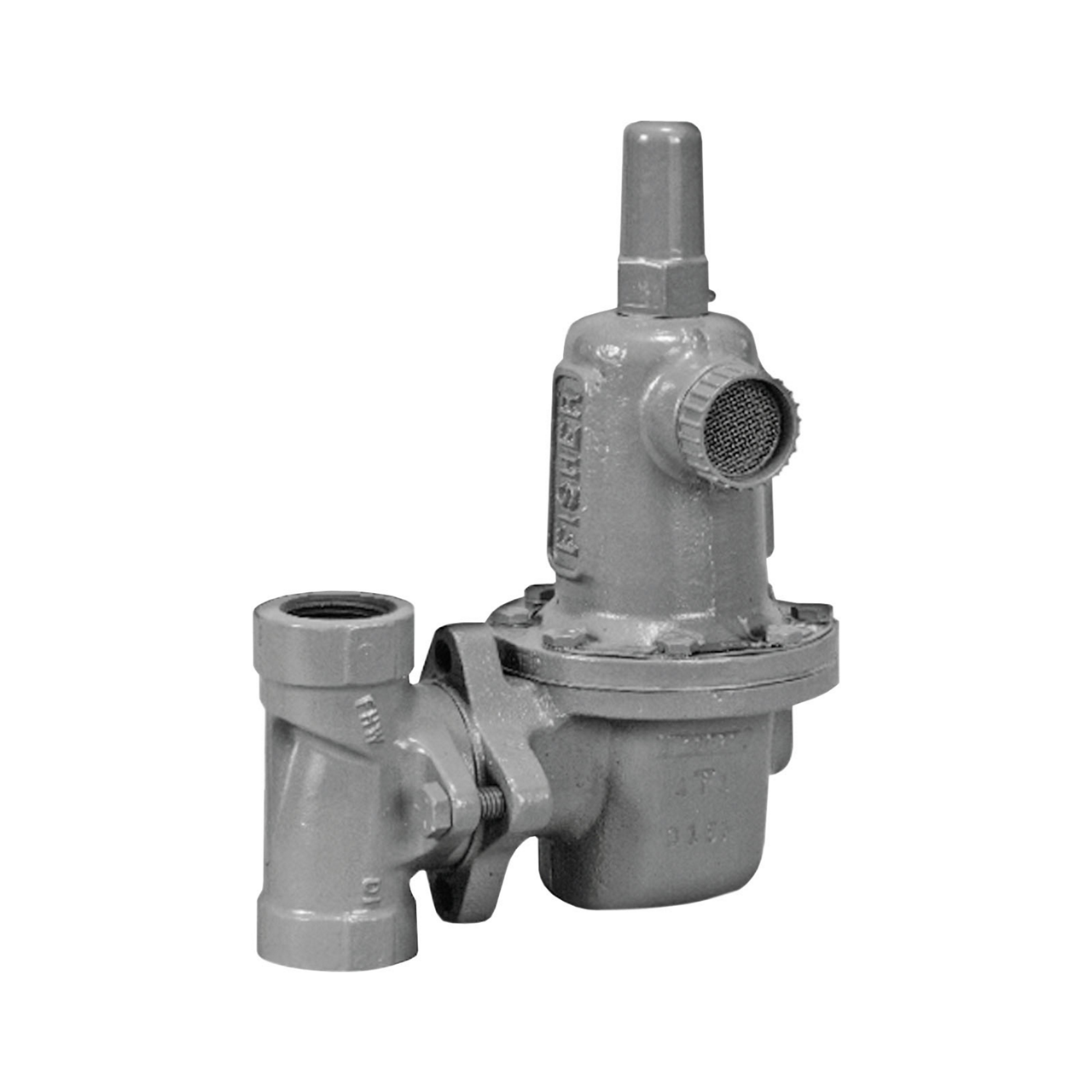
For waterworks and large pilot-operated water service, Cla-Val (90-01 and 690-01 hydraulically operated diaphragm valves) and Singer are reference brands; for building water service, Watts, Zurn Wilkins, Honeywell, and Caleffi supply EN 1567 and ASSE 1003 listed valves. For steam and condensate, Spirax Sarco (BRV71/BRV73 direct-acting, DRV self-acting, and the 25/25P pilot-operated series), TLV, Armstrong, and Forbes Marshall are the established names. For hydraulic and pneumatic pressure reducing, Bosch Rexroth, Parker, Emerson Fisher, and Cashco cover cartridge, in-line, and process regulators. Verify the exact model against the manufacturer datasheet for range, Kv, materials, and certification before committing to a purchase.
Pressure Reducing Valve Manufacturers
Source-backed product routes. Open a company dossier for procurement scope and cited evidence.
HydraForce publishes compact hydraulic cartridge valves for direction, flow and pressure control in mobile and industrial equipment, with valve cartridges used in hydraulic manifolds or integrated circuits.
Published product fact
Cartridge valve routes for solenoid, proportional/electroproportional, directional-control, flow-control, pressure-control and load-holding functions, with HydraForce-published flow rates from 0 to 189 L/min.
Taco documents Accu-Flo fixed-port Venturi balancing valves with calibrated presetting and a tamper-resistant memory stop.
Published product fact
Accu-Flo fixed-port Venturi balancing valves with flow measurement independent of stem and ball position, calibrated presetting and a tamper-resistant memory stop.
Published product fact
KV Series vertical in-line pumps with a close-coupled design.