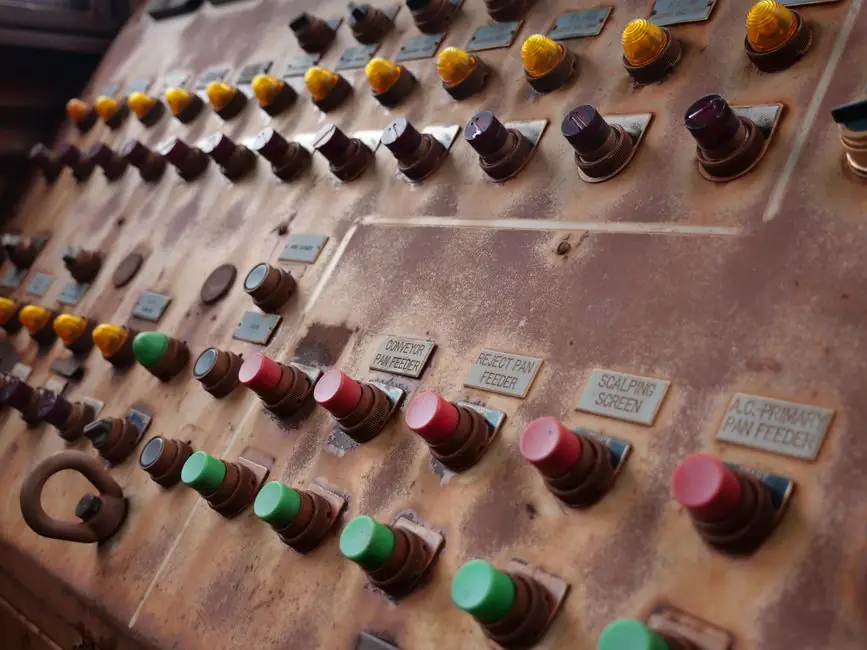
Industrial pressure switch list prices in 2026 cluster in three bands: roughly $20 to $80 for mechanical diaphragm/Bourdon units, $80 to $350 for electronic switches with display and PNP/NPN output, and $350 to $2,000+ for Ex d/Ex ia ATEX/IECEx-certified units with 4-20 mA, IO-Link, or stainless wetted parts [S1].
For a 35-company, 63-product display-pressure-switch catalogue, key selection criteria include factory-set versus adjustable switching points and the choice of electronic pressure switches with a digital display [S1]. Reference design background on sensing elements (single-coil Bourdon tube, diaphragm, capsule, bellows) is summarised in the pressure switch encyclopedia entry.
What you are actually paying for inside a pressure switch
Four bill-of-materials blocks drive the bill: (1) the pressure-sensing element, (2) the switching mechanism, (3) the housing and process connection, and (4) compliance/certification paperwork. The sensing element is the biggest single delta: a sputtered thin-film or piezoresistive silicon cell running to 600 bar (e.g. the EPS202 family, 0.25% FS accuracy, 100 million load cycles) costs materially more than a stamped bronze Bourdon tube with a snap-action microswitch [S1].
Switching mechanism is the second axis. A mechanical SPDT microswitch rated 5 A at 250 VAC is the cheapest architecture; a PNP/NPN electronic output with 0.5% repeatability and IO-Link (e.g. the ZSE20 series, 1.5 ms response, 25 mA current draw) typically adds 3-6x. Explosion-proof designs (e.g. HEDE10-3X with M12 connector, 0-250 bar range) carry additional Ex d/Ex ia certification cost, mandatory in Zone 1/2 hazardous areas. For selection context, the pressure gauge encyclopedia page covers the related analog-display family, while the pressure calibrator encyclopedia page explains the test equipment used to verify switch trip points in the field.
Price tiers compared on four decision criteria
Against four common specifier criteria, the three tiers separate cleanly. (1) Accuracy: mechanical = ±2-5% FS, standard electronic = ±0.5-1% FS, premium electronic = ±0.25% FS. (2) Switching speed: mechanical = 5-20 ms, electronic = 1-5 ms, IO-Link electronic = sub-1.5 ms. (3) Pressure range coverage: mechanical = typically 0.2-16 bar or 0-250 bar, electronic = 0 bar to 1,000 bar (PSD-4), 0.1-2 MPa (ZSE20), -1 to 40 bar (Smart DCM). (4) Output flexibility: mechanical = SPDT only, standard electronic = 1-2 x PNP/NPN, premium = 2 x switching + 4-20 mA + IO-Link [S1].
Price follows the same ladder. A simple mechanical switch costs a fraction of a $400+ electronic unit; adding ATEX/IECEx to the same electronic unit typically adds 60-120% on top, while a -40 to 125 °C PSD-4-ECO variant stretches the upper temperature limit that commodity mechanical switches cannot reach [S1]. Spec-first guidance for the related differential-pressure class is covered in the pressure gauge encyclopedia.
Who each tier is for, and who it is NOT for
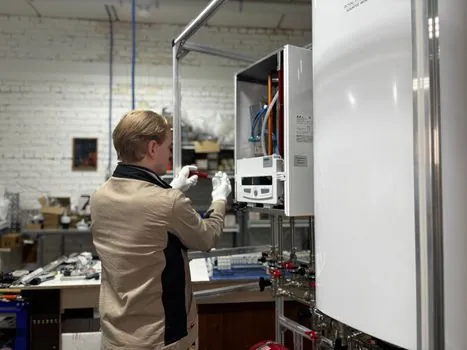
Mechanical diaphragm pressure switches are the right call for pump cut-out, compressor unload, and HVAC water-side applications where trip point rarely changes, ambient stays within 0 to 70 °C, and the operator only needs a volt-free contact. They are not appropriate for hazardous-area Zone 1, for processes with sub-100 ms response demand, or for plants standardising on IO-Link inventory management [S1].
Electronic display switches fit OEM skids, hydraulic test rigs, and process skids where the operator needs to read setpoint vs actual, where trip points change between product runs, and where 4-20 mA into a PLC is preferred. They are not the right pick for tight hazardous-area budgets when a simpler IECEx-certified mechanical alternative exists, nor for ultra-low-cost HVAC or appliance OEM lines where unit cost dominates. Explosion-proof electronic units (Ex d / Ex ia) belong on offshore, refinery, and chemical-plant projects where ATEX 2014/34/EU and IEC 60079-series compliance is contractually required [S1].
Cost drivers engineers underweight
Three cost drivers quietly outweigh the list price. First, wetted material upgrades: standard is 316L stainless or brass; exotic processes (HCl, sour service) require Hastelloy or Monel wetted parts, and that upgrade alone can add 2-4x to the bill. Second, certification stack: ATEX + IECEx + SIL (IEC 61508) on a single electronic switch is not unusual for safety-instrumented functions, and the SIL add-on is a meaningful line item. Third, the process connection: G1/4, G1/2, 1/4 NPT, 1/2 NPT, and flanged (DIN, ANSI) all carry different adapter costs; specifying a non-standard thread can cost more in adapters than the switch itself [S1].
A non-trivial fraction of total landed cost is also process-temperature rating. The PSD-4-ECO at -40 to 125 °C, the EPS202 at -20 to 80 °C, and the HEDE10-3X at -25 to 80 °C all sit in different price points, because the elastomer selection (FKM vs EPDM vs HNBR) and the amplifier drift compensation scale with the temperature window [S1]. For specifiers comparing pressure switches against process-pressure indicators, the pressure gauge encyclopedia entry explains the read-only counterpart.
Order volume, lead time, and aftermarket

At small quantity (1-9 units), distributors and OEM-direct dominate; at 50-499 units, manufacturer authorised channel typically unlocks 10-25% off list; at 500+ units, project pricing plus framework agreement applies, and lead time stretches from 2-4 weeks (stock) to 10-16 weeks (custom certification). Aftermarket: mechanical switches are field-rebuildable (diaphragm and microswitch replaceable), electronic units are typically board-level repair, with spares strategy often driving the TCO choice on large plant builds [S1].
For cross-instrument cost context, the related Ultrasonic Flowmeter Price 2026: Cost Drivers, Tier Comparison, and TCO article walks through the same price-driver framework on flow instruments, and the Ultrasonic Level Meter Price 2026: Cost Drivers, Sourcing Tiers, and TCO piece covers the level counterpart, both of which commonly sit alongside pressure switches on the same control loop.
Limits, failure modes, and what to verify before signing a PO
Mechanical switch failure modes centre on setpoint drift from diaphragm fatigue and microswitch contact welding on inductive loads; users on conveyor or motor-control duty should derate the contact current by 50% or specify a relay buffer. Electronic switch failure modes centre on seal failure at the process connection (especially on hygienic 3-A or CIP/SIP processes) and on surge/transient damage on long cable runs; a 24 V supply with proper surge protection is not optional in plant environments [S1].
Before purchase, verify: (a) the setpoint repeatability and hysteresis specifications under actual operating temperature, not at room temperature; (b) IP rating (IP65 minimum for washdown, IP67 for outdoor, IP69K for food/beverage); (c) EMC conformity to relevant IEC 61000-series levels, particularly for plants with VFDs; and (d) that the cycle-life figure is on the sensing element, not on the housing. The cross-reference pressure switch encyclopedia page lists standard sensor-element architectures for deeper reading.
Standards and sourcing rules of thumb
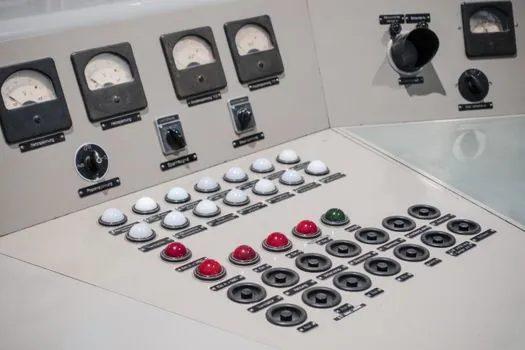
Pressure switches installed in hazardous areas must carry ATEX 2014/34/EU and/or IECEx certification matching the zone, with enclosure marking per IEC 60079-0 and protection concept per IEC 60079-1 (flameproof) or IEC 60079-11 (intrinsic safety). For safety instrumented functions, IEC 61508 / IEC 61511 governs the SIL target, and for oil and gas, NACE MR0175 governs wetted-material selection in H2S service. These standards are not optional add-ons; the PO should reference them by number, not by descriptive prose [S1].
For sourcing strategy, mechanical and electronic switches are widely stocked through industrial distributors; Ex d / Ex ia units are commonly drop-shipped from the manufacturer or regional authorised stockist with traceable certificates. Reference to related measurement categories is available on the linear guide encyclopedia and crossed roller guide encyclopedia pages, which sit in a different metrology family but share the same spec-first cost logic. Two verifiable next nodes for specifiers: the IECEx online certificate database to validate Ex marks on the exact model, and a vendor request for a written setpoint repeatability figure at maximum process temperature, not at 25 °C.