
Protective clothing and hearing protectors sit in two different PPE families under EU Regulation 2016/425: garments shield skin and torso from chemical, thermal, mechanical, and biological hazards, while hearing protectors (earplugs, earmuffs, semi-inserts) attenuate noise reaching the inner ear [S1][S2].
The two product groups rarely substitute for each other on a job site: a Type 4-B chemical suit does nothing for an 110 dB(A) compressor, and an SNR-30 earmuff does nothing for a hydrofluoric-acid splash. Most regulated industrial sites therefore issue both, sourced from different certification schemes and different supply chains [S1][S2].
Definition and Scope of Each PPE Family
Protective clothing covers any garment or accessory designed to shield the body — coveralls, aprons, jackets, trousers, high-visibility wear, chemical suits, flame-resistant (FR) workwear, and cut-resistant gloves are typically grouped with it under a personal-protection program [S1][S2]. Hazard classes include chemical permeation, thermal exposure, arc flash, abrasion, and biological agents.
Hearing protectors are a narrower category: earplugs (disposable foam or reusable elastomer), earmuffs (cup + headband), semi-inserts (band-mounted plugs), and level-dependent or active electronic muffs. They are specified against noise exposure metrics such as L<sub>EX,8h</sub> (daily noise exposure) and peak C-weighted sound pressure, with the goal of reducing effective ear dose below 80–85 dB(A) per occupational-hygiene practice [S5]. The selection, use, care, and maintenance guidance document SANS 50458-2008 frames the topic in 40 pages of structured recommendations [S5].
Governing Standards and Certification Routes
Protective clothing in the EU is CE-marked under PPE Regulation (EU) 2016/425, with category III (irreversible or fatal risks) requiring notified-body involvement. Design standards include EN ISO 13688 (general requirements), EN 1149-5 (electrostatic), EN ISO 11611 (welding), EN ISO 11612 (heat and flame), EN 13034 (limited spray chemical), Type 3/4/5/6 chemical suits (EN 14605, EN ISO 13982, EN 13034), EN 343 (weather), and EN 17092 for motorcycle protective garments with abrasion, impact-cut, and burst tests [S3].
Hearing protectors are evaluated to EN 352 family standards: EN 352-1 (earmuffs), EN 352-2 (earplugs), EN 352-3 (helmet-mounted), EN 352-4 (level-dependent), and EN 352-8 (entertainment audio). High-fidelity attenuation is reported as H/M/L/SNR values in decibels, with laboratory measurement per EN 13819-2. The South African SANS 50458-2008 document explicitly references the EN 352 family and adds selection workflow: survey, estimate exposure, calculate protected L<sub>A,eq</sub>, then re-check at ear [S5]. The pattern is similar for protective clothing selection: identify hazard class, map to standard, verify CE/CR certification, then check wearer fit [S1][S3][S5].
Selection Criteria: Garment vs Ear Dose

For clothing, the dominant decision variables are permeation breakthrough time against the specific chemical (EN 374-3 / EN 16523), mechanical hazard level (EN 388 covers abrasion cycles 1–4, cut index 1–5, tear 1–4, puncture 1–4), thermal arc rating (ATPV in cal/cm² per IEC 61482-1-2), and ergonomic load expressed as moisture-vapour resistance R<sub>et</sub> (m²·Pa/W) [S2]. A Type 4-B chemical suit with taped seams blocks liquid jets but adds heat-stress load; a Class 1 arc-rated coverall at 4 cal/cm² is much lighter but offers no chemical barrier.
For hearing protectors, the dominant variable is single-number attenuation (SNR or NRR) matched to the workplace L<sub>EX,8h</sub>. A common rule of thumb is to subtract 4 dB from SNR (or 7 dB from NRR) for real-world derating, then target 70–80 dB(A) at the ear. Selection against peak sound pressure above 135 dB(C) and against frequency-weighted L<sub>Ceq</sub> for impulse noise follows the HML method in EN 458 / SANS 50458-2008 [S5].
Comparison: Where Each Type Wins
For a chemical-handling operator, only protective clothing enters the spec — earmuffs would be irrelevant. For a press-shop worker at 100 dB(A), hearing protectors are the primary control and a simple cotton workwear is sufficient. For an oil-and-gas driller on a rig, both apply: flame-resistant coverals (EN ISO 11612, EN 1149-5) plus SNR-25 to SNR-30 ear protection, often helmet-mounted EN 352-3. [S1]
For cost and lead-time, the two categories behave very differently. Workwear stock items such as high-visibility jackets and disposable foam plugs are typically available from general PPE distributors with 3–7 day lead times [S4]. Certified chemical suits and arc-rated FR garments with documented EN 943 / IEC 61482 test reports carry longer lead times — often 2–6 weeks for size-specific or Class 2 items — because the supply chain is dominated by specialist manufacturers. Hearing protectors span a similar gap: bulk earplugs ship from catalogue stock, but electronic level-dependent muffs with EN 352-4/8 approvals are project-spec items [S1][S4][S5].
Limitations, Failure Modes, and Cross-Category Pitfalls
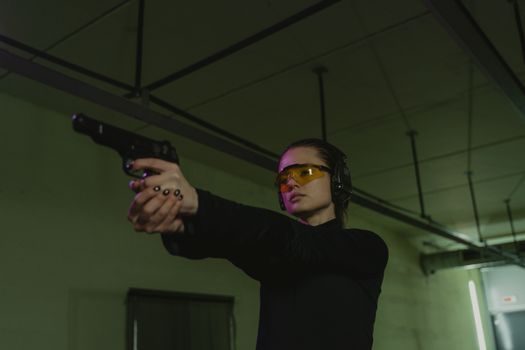
Protective clothing failures usually come from chemical breakthrough, seam failure, or garment degradation. A Type 6 disposable coverall is not a Type 4 spray-suit — selecting the wrong category, or using a worn/reused single-use garment, defeats the certification. For hearing protection, common failures are over-attenuation (the muff blocks too much sound, removing hazard warnings and causing worker removal), poor acoustic seal on earmuffs (eyewear temples and facial hair break the cushion seal, typically losing 5–15 dB), and the so-called "target noise" misconception where workers assume the plug works regardless of insertion depth [S5].
A frequent spec mistake is treating the two categories as interchangeable. A motorcycle protective jacket that passes EN 17092 abrasion and impact tests is not certified as industrial workwear under EN ISO 13688, and an industrial FR coverall is not a motorcycle-impact garment [S3]. Likewise, an EN 352-1 earmuff is not EN 352-3 — helmet-mount versions require a tested helmet combination to keep their attenuation value, an issue our stainless-steel supply chain notes echo in another industrial-spec context where certification pairing matters as much as the part number itself.
Sourcing, Standards, and Trackable Signals
Both product families are mature, with stable EN/ISO standard numbers and a well-developed distributor channel. Trackable signals for the next 6–12 months include the revision cycle of EN ISO 13688 (general garment requirements), updates to the EN 352 sub-parts for electronic/level-dependent protectors, and any tightening of noise-exposure action values in EU Directive 2003/10/EC transposition. For process engineers cross-spec'ing both categories on a single project, the practical move is to issue them on separate purchase orders with separate CE/EN declarations — protective clothing governed by PPE Regulation 2016/425, hearing protectors by the same regulation but a different standard family — and to retain the supplier's test reports and SANS 50458-2008-aligned selection rationale alongside the mill certificates. [S2]
For component-level specifications, see motor protector.