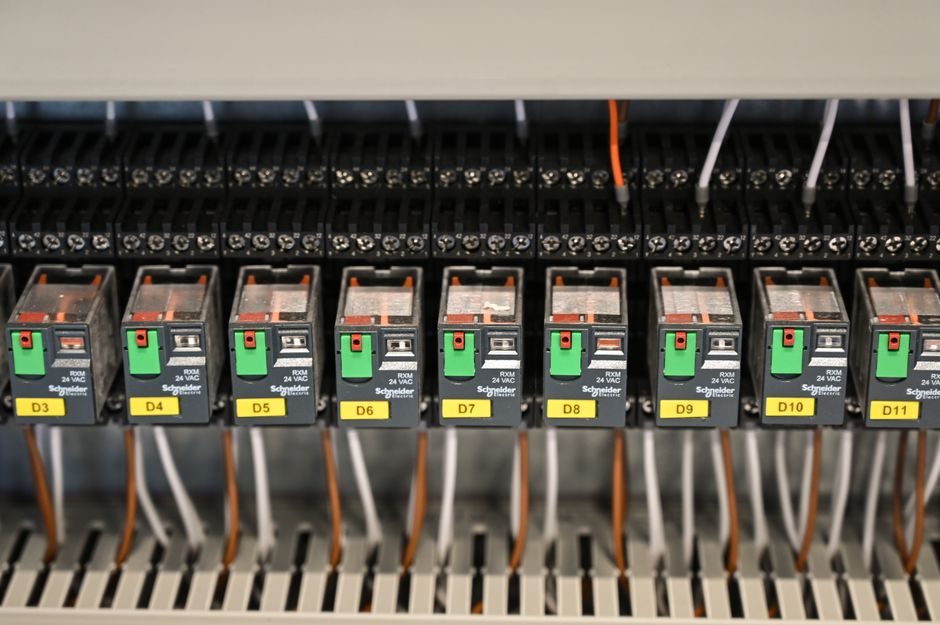
A 22.5 mm modular pushbutton with 1NO contact, 10 A / 250 VAC rating, IP66/69K and IK05 mechanical protection lists at roughly €6.05 per piece in 10-pack quantities on European automation distributors, while a flush-mounting actuator in the same family sells for €60.50 per 10-pack — a 10× spread driven by contact-block content and actuator geometry [S2].
The dominant global product families on the 2026 market remain the 22.5 mm modular line (typified by Osmoz, Harmony, and the 800T/800H series) and the legacy 30 mm round form factor represented by Allen-Bradley 800T and Square D 9001, with hole pitch, depth behind the panel, and NEMA/IEC ingress rating being the three selection gates that override brand preference [S1][S2][S4][S5].
Form Factor: 22.5 mm vs 30 mm Hole Cutout
The 22.5 mm (0.89 in) cutout is the current IEC default, with pilot-light bodies and contact blocks designed for that bore; a 30 mm (1.18 in) cutout remains the installed base in North American heavy-industry panels and is maintained through legacy SKUs such as the Square D 9001W6 white glass pilot light lens and the Allen-Bradley 800TC-U29 potentiometer pushbutton pilot light [S4][S5].
For a greenfield European control panel, 22.5 mm is the pragmatic default; for retrofit into a North American skid built before 2005, 30 mm avoids re-drilling 12 to 40 holes per cabinet [S1]. A compact 30 mm eBay listing of a Square D pilot light lens (Lot of 2) and a 30 mm Allen-Bradley 800TC-U29 potentiometer pushbutton pilot light at US$247.28 confirm that 30 mm spare parts remain a live, stocked product line in 2026 [S4][S5].
Contact Blocks, Ratings, and Electrical Life
Standard 22.5 mm snap-on contact blocks ship at 10 A / 250 VAC with 1NO or 1NC configurations, sold in 10-piece packages priced between €54 and €60.50 depending on colour and actuator type [S2]. E-Stop mushroom heads at D40 mm add a turn-to-reset mechanical interlock and retain 1NO + 1NC at the same 10 A rating, with IP40 finger-safe terminals as a baseline [S2].
Low-voltage DC blocks (24 VDC, 5 A) and gold-flash blocks for low-current analogue signals are separate SKUs in every major catalogue; specifying 10 A AC blocks on a 24 VDC, 50 mA input loop halves mechanical life and burns the gold plating within 50,000 operations. For pilot lights, LED modules at 230 VAC and 12–24 VAC/DC are the only practical choice in 2026 — incandescent BA9s bulbs are delisted across major European catalogues [S2].
When the actuator is a pushbutton pilot light combination — a potentiometer or selector with integral illumination — the same contact block serves the switching function while the LED module is fed from a separate terminal cluster, and the 800TC-U29 part-number pattern confirms that combined devices retain 30 mm cutout, 10 A rating, and front-panel IP65 as standard [S5].
Ingress, Impact, and Industrial Washdown

IP66/69K is the de facto industrial baseline for 22.5 mm actuators in 2026, covering dust-tight, powerful-jet, and 80 °C steam-jet cleaning; IK05 corresponds to 0.7 J impact resistance, which is sufficient for closed-cabinet indoor duty but marginal for cab-front or outdoor unenclosed panels [S2].
For outdoor or food-and-beverage cabinets with high-pressure washdown, step up to IP67 or IP69K with silicone boots over the actuator and a sealing washer (typically EPDM or NBR) on the panel interface; for mining, mobile-equipment, or sub-zero cabinets, the same SKUs drop to IP65 because of gland thermal cycling and you should derate expected seal life to 3 to 5 years instead of 10 [S2].
The IP rating only holds if the supplied gasket is seated on a clean, flat, anodised or powder-coated panel surface; stamped steel, 2 mm panel gaps, or paint runs routinely drop the achieved rating by one or two codes. Safety light curtain interlock circuits that share the same cabinet face should not be co-located with hand-actuated pushbuttons within 100 mm, because incidental palm contact can defeat the curtain's protective field.
Actuator Geometry and Colour Code Discipline
Six colours carry fixed meaning under IEC 60204-1 and NFPA 79: red = emergency stop or stop, green = start or run, yellow = caution or abnormal, blue = mandatory action, white = general, black = off or reset; using a green mushroom for a stop function is a documented audit finding in both EU and US plants [S2].
Mushroom-head diameters in 22.5 mm modular lines are typically D30, D40, and D60 mm; D40 is the ergonomic default for an e-Stop, and D60 is reserved for palm-strike applications on conveyors and presses. Illuminated pushbuttons consume one LED module plus a standard contact block; the LED colour must match the lens cap — using a red lens over a green LED is the single most common field wiring error in new cabinets [S2].
For a panel that needs machine-status indication alongside operator controls, explosion-proof light fixtures are not a substitute for panel-mounted pilot lights; the latter provide the 22.5 mm form factor and the IP66/69K front face required for washdown, whereas the former is a hazardous-area ceiling or wall luminaire governed by ATEX/IEC 60079-x.
Selection Criteria Comparison: 22.5 mm vs 30 mm

Three decision axes separate the two form factors in 2026. (1) Cutout compatibility: 22.5 mm accepts all modern modular series (Osmoz, Harmony, 800T-H), 30 mm accepts legacy NEMA devices (9001, 800T); retrofit cost is 0 if you match the existing pitch, 5–15% of panel value if you re-drill. (2) Depth behind panel: 22.5 mm modular bodies need 45–60 mm of rear clearance for contact blocks and wiring ducts, 30 mm devices need 70–95 mm. (3) Spare-parts stocking: 22.5 mm LED modules, contact blocks, and lenses are 10× more SKUs across European distributors than 30 mm equivalents, and 30 mm is increasingly a price-per-piece of US$50–250 on the secondary market rather than new manufacture [S1][S2][S4][S5].
For a greenfield European build, 22.5 mm is cheaper per actuator (€5.60–€60.50 / 10-pack) and offers more contact-block configurations; for a North American brownfield retrofit into a pre-2005 cabinet, 30 mm eliminates re-drilling. Avoid 30 mm for new builds outside North America — the 10–30% cost premium is not recovered through any single feature, and spare parts are scarcer every year [S2][S4].
Who Should NOT Pick the Default 22.5 mm Modular Line
Three duty profiles break the 22.5 mm default. First, hazardous-area Zone 1 / Zone 2 (ATEX category 2 or 3) panels require certified Ex e or Ex d enclosures with separately certified operators; standard IP66/69K 22.5 mm devices are not rated for explosive atmospheres and substituting them is a regulatory failure under IEC 60079-x [S1]. Second, food-and-beverage washdown with caustic chemical exposure needs IP69K plus stainless-steel actuator housings, not the standard polyamide bodies. Third, emergency light self-contained units and 30 mm pilot devices on legacy machine tools use the 30 mm form factor exclusively — adopting 22.5 mm here forces an adapter ring that compromises the Type 4/4X rating and re-cuts the panel.
If your cabinet sits in a hazardous area, on a washdown line, or inside a pre-2005 North American skid, step outside the 22.5 mm modular default; otherwise the 22.5 mm line remains the lowest-risk, lowest-stock-keeping choice for the 2026 spec year [S2].
What to Verify Before You Buy
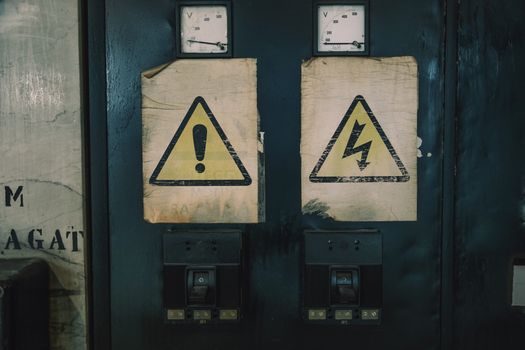
Five fields make or break a pushbutton or pilot-light spec: (1) cutout diameter in mm, (2) ingress rating IP/NEMA, (3) actuator type and colour, (4) contact configuration 1NO/1NC and current rating in A, (5) supply voltage for the LED module in VAC or VDC [S2]. Missing any one of these defaults to a stocked 10 A / 250 VAC / 230 VAC / green configuration, which is rarely the right combination.
Order quantity matters: a 10-pack of pilot lights at €5.60 each versus €5.40 each for red suggests a 4% colour premium; an e-Stop mushroom at €6.05 in a 10-pack compared to €60.50 for a flush-mounting actuator confirms that the contact block and mushroom geometry drive price, not colour or LED voltage. Lead time across the European distribution channel was 28 days on the surveyed SKUs as of 2026-07-18, with no short-form stock SKU under that lead time [S2].
Track these signals in the next 6 months: (a) delisting of remaining 30 mm new-manufacture SKUs as the installed base ages out, (b) ATEX/IECEx-certified 22.5 mm operators entering mainstream catalogues, (c) 24 VDC LED modules replacing 230 VAC as the new default in EU panel shops — each one will shift the cost table above. linear guide selection logic for cabinet-door slides follows similar SKU-discipline principles, and you can apply the same five-field checklist there.
For related coverage, see Fieldbus Gateway Buying Guide 2026: Protocol, Zone, and Segment Match.