
Pushbuttons and pilot lights form the operator interface between machinery and personnel, with industrial panel devices available in 8 mm, 16 mm, 22 mm, and 30 mm formats.
Selection depends on switching function, indication method, panel cutout, contact arrangement, voltage, enclosure protection, and hazardous-area certification.
Core Functions and Device Families
A pushbutton is a manually operated switch that commands a machine or process, while a pilot light provides visual confirmation of equipment status [S5][S7]. Pushbutton heads may be flush or extended, illuminated, mushroom-headed, momentary, maintained, reset, key-operated, or designed as emergency and machine-stop devices [S1].
Industrial pilot-light families include LED, incandescent, neon, push-to-test, multi-color, and multi-voltage versions [S6].
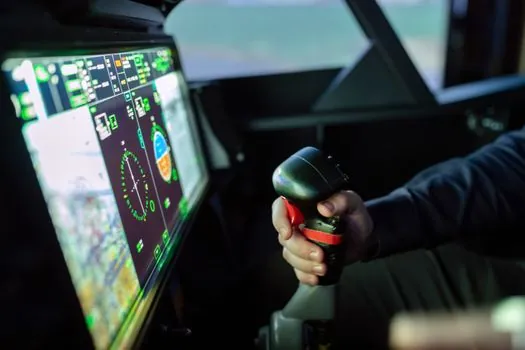
Related operator-control families include selector switches, joysticks, key switches, toggle switches, buzzers, audible alarms, and signal towers [S1][S8]. These are classified as controls when they initiate an action and as signal components when they report status, an established distinction used in control-panel design [S8].
Pushbutton Classification by Operating Principle
Momentary pushbuttons return to their original position after release, whereas maintained pushbuttons remain in the selected position until changed [S4]. Both arrangements can operate single or multiple circuits, so contact-block requirements should be established before selecting the operator head [S4].
Reset pushbuttons, machine-stop pushbuttons, and emergency-stop pushbuttons have different application roles and should not be treated as interchangeable [S1].
For panels requiring alternating operating states, a selector switch provides a rotary means of selecting among functions; a key-operated selector switch adds controlled access [S1]. Toggle switches provide a single-function alternative with a durable form that can reduce accidental activation [S4].
Comparing Pilot Light Technologies
Incandescent and neon pilot lights remain distinct technologies rather than interchangeable performance categories [S6].
Multi-color and multi-voltage pilot lights are listed among the types of industrial pilot lights [S4][S6]. A push-to-test pilot light adds a service function by allowing the operator to verify the lamp and associated indication path [S4].
For comparison, an illuminated pushbutton performs two jobs, one command input and one indication function, whereas a standard pilot light performs indication only [S4][S5]. Signal towers provide 360-degree status identification and are used where visibility must extend beyond the operator position [S4].
Panel Size, Construction, and Installation Options
Common panel-mounting sizes include 8 mm, 16 mm, 22 mm, and 30 mm, with the 22 mm format used across modular pushbuttons, emergency stops, selector switches, and signaling units [S1][S2]. Panel builders should verify the cutout diameter, available depth, and contact-block arrangement before ordering;
Schneider Electric offers plastic or metal versions across three panel-mountable dimensions, while ABB separates its portfolio into modular and compact ranges [S1][S2].
This construction is relevant to periodically operated equipment because it helps maintain contact cleanliness, but it does not remove the need to match contact ratings and electrical load to the application [S1].
Ingress Protection and Environmental Selection

IP65 devices provide dust protection and resistance to low-pressure water jets, making them suitable for standard indoor panels, while IP67 devices address temporary immersion and are used for outdoor or washdown exposure [S5].
That classification addresses explosive-atmosphere suitability and is not a substitute for checking the complete installation, including the enclosure, wiring method, and required approvals.
Contact, Voltage, and Circuit Requirements
A representative selection table lists illuminated pushbuttons at 24 V AC or DC with 1 normally open and 1 normally closed contact, industrial LED pilot lights at 24 V DC or 110/220 V AC, and emergency-stop devices at 250 V AC with 10 A and 2 normally closed contacts [S5]. These are example specifications, not universal ratings, and each selected device must be checked against the actual control circuit.
Emergency-stop devices require particular attention because they are intended to integrate with safety circuits and stop hazardous machine motion [S4]. Their operating function, contact arrangement, and certification must match the machine risk assessment; a red mushroom head alone does not establish compliance.
Connection methods include screw terminals and spring-cage or push-in terminal systems [S4]. Panel installation also requires adequate internal depth for contact blocks, and illuminated or multi-color units add wiring and power-supply considerations that a plain switch does not have [S4][S5].
Who Fits Each Option

Compact 8 mm or 16 mm pushbuttons suit panels where space is constrained, while 22 mm devices provide a broad modular selection for general industrial control [S2]. M30 devices fit applications prioritizing a larger, heavier enclosure, stronger mechanical protection, vandal resistance, or NEMA 4X options [S4].
A standard pilot light suits panels that only need status indication. An illuminated pushbutton suits machines requiring both operator action and visual feedback, while a push-to-test pilot light suits maintenance-intensive panels where lamp failure diagnosis matters [S4][S5].
These devices are not the preferred replacement for a graphical operator interface when operators need continuous process values, trends, or context-rich diagnostics [S4]. Pushbuttons and pilot lights remain the correct choice for discrete commands, recognizable machine states, and panel-level annunciation rather than screen-based process visualization.
Specification Checklist for Procurement
The procurement sequence should start with the function: command, maintained state, emergency stop, reset, status indication, audible alarm, or 360-degree stack indication [S1][S4]. The next checks are operator-head type, cutout size, contact quantity, supply voltage, illumination source, color, mounting depth, and enclosure rating.
For hazardous areas, verify the exact product family and listed classification, such as NEMA 7 and 9 suitability for Class I, Division 1, Groups B, C, and D [S3]. For washdown installations, distinguish IP65, IP67, and IP69K exposure requirements rather than ordering on a generic waterproof claim [S1][S5].
The final review should compare the selected operator device with its associated circuit breaker and contactor architecture. A pilot light indicates a circuit state, but it does not interrupt overload or short-circuit current, and a pushbutton command still depends on the correctly rated control and power components behind it.
Trackable selection signals are the panel cutout, required IP or NEMA classification, supply voltage, and contact architecture. Any change to any one of those four values can change the approved device family and should trigger a fresh certification and dimensional check.