A 1.2 GW turnkey PV module line from Ecoprogetti is rated for 200 modules/hour, with stringer, layup, laminator and flash test stations designed for continuous unmanned flow between buffering points [S1]. At the other end of the scale, ConfirmWare's 150 MW turnkey line ships with 25 operators per shift and 3050 m² of floor space, cycling 45 modules/hour [S9].
Throughput per shift is set by the lamination press and the stringer, not by the nameplate GW, which is why an operator/GW ratio only makes sense once a specific line is named. The same gap shows up between Cliantech's 1.6 GW reference install and Mondragon Assembly's 15 MW to 200 MW per year turnkey range, where the smaller lines are typically built around discrete workstations rather than a continuous buffer chain [S7][S4].
Throughput bands: small, medium, large, and maxi lines
Industry estimates put a small line at about 30 panels/hour, a medium line at about 60, a large line at 90, and a so-called maxi line at up to 120 panels/hour, with the maxi case requiring all front-end processes to be fully automatic to hold that pace [S5]. Ecoprogetti's 1.2 GW specification sits above the 90 panels/hour "large" band, and ConfirmWare's 150 MW line sits between the 30 and 60 panels/hour bands [S1][S9][S5].
The constraint is rarely the cell stringer; it is the laminator queue and the IV/EL test bay, which is why LEAD's GW-level TOPCon "smart factory" reference ties throughput to integrated MES monitoring rather than to a single machine's nameplate [S8]. PV module automation maturity bands correlate closely with the Industry 2.0 to 4.0 split that Sinovoltaics describes for legacy versus new lines, where older lines are "largely a combination of industry 2.0 and 3.0" while newer lines add closed-loop MES and inline QA [S3].
Operators per shift: what the data actually says
The only source that names a headcount per shift is ConfirmWare: 25 operators per shift on a 150 MW, 45 modules/hour line, which is roughly one operator per 1.8 modules/hour at the bottleneck [S9]. AMD Machines gives a battery-module analogue that translates to PV: manual assembly runs 8 to 12 minutes per module with 2 operators, while their automated lines cut that to 42 to 55 seconds with 1 operator monitoring, an order-of-magnitude labour swing driven by tabbing, stacking and final inspection automation [S6].
Sinovoltaics (2024-12) makes the qualitative point that operator density tracks directly with "level of automation and calibration thereof" plus turnover and training, so headcount is not a fixed GW ratio but a function of how much of the cell-to-module flow is closed-loop versus hand-staged [S3]. Manufacturing Execution System coverage on molding and assembly lines is the relevant reference for what counts as a "monitoring" operator versus an active handler, since MES typically reduces the latter to a single shift watcher per bay.
Cost, footprint, and the U.S. build equation
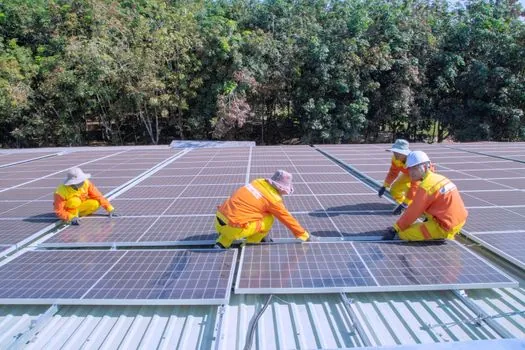
Chintiyansolar states that investment cost for a fully automated U.S. module line depends on capacity, automation level, factory conditions and module technology, with module assembly requiring lower capex and a shorter build cycle than polysilicon, wafer or cell stages [S2]. Their siting guidance (Texas, Ohio/Indiana, Georgia) is paired with a building-readiness checklist covering floor loading, ceiling height, electrical capacity, HVAC, compressed air, fire protection and material flow, all of which materially change the operators-per-GW figure because a constrained HVAC or floor-loading ceiling forces more manual handling around laminator cooldown and racking [S2].
Chintiyansolar also flags IRA Section 45X production incentives and Section 48C investment support as part of the financial model, alongside electricity, logistics and certification cost, which is why two lines with the same nameplate GW can carry different operator counts once UL 61730 and IEC 61215 audit overhead are priced in [S2][S3]. The relevant U.S. certification track is IEC 61215 plus IEC 61730, with annual factory audits for the 5-year certificate window, and third-party QA bodies such as Sinovoltaics add operator-training and calibration audits on top [S3].
Selection criteria: where automation pays back fastest
Four decision criteria separate a 25-operator shift from a 1-operator-monitor shift: stringing and bussing automation (tabber/stringer with auto layup), lamination press count and buffer, inline EL/IV test coverage, and MES/SCADA closure of the cell-to-finished-module handoff. AMD's battery analogue says the labour swing lives in tabbing, stacking and final inspection, which maps directly to stringing, layup and the EL tester on a PV line [S6].
The second tier is footprint and utilities: a 150 MW line at 3050 m² is a useful reference for floor loading and HVAC sizing, while Ecoprogetti's 200 modules/hour rating and LEAD's ≥26.5% TOPCon efficiency figure both assume a larger, MES-integrated hall [S9][S1][S8]. Buyers comparing a turnkey GW line reference against a 150 MW semi-automated line should weight the operators-per-shift delta first, because that line item dominates 5-year opex at typical U.S. industrial labour rates.
What the data does not yet answer
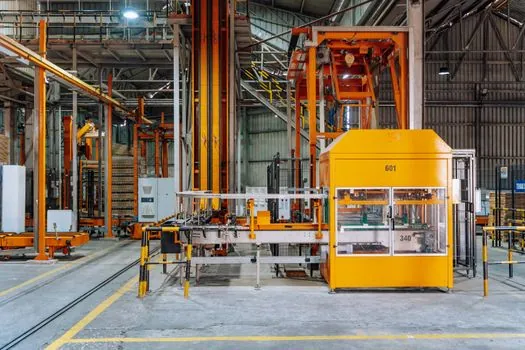
No source in the set names an operators-per-GW ratio directly, because GW nameplate is a function of three-shift operation, module wattage and yield, while the headcount data is per shift on a single named line [S1][S7][S8][S9]. A 1.2 GW Ecoprogetti line at 200 modules/hour and a 1.6 GW Cliantech line are not directly comparable on operators without knowing shift count and TOPCon versus PERC wattage [S1][S7].
For a trackable signal, watch whether next-generation TOPCon lines published by Chinese turnkey suppliers (CETC48, Jinchen, ConfirmWare, LEAD) begin quoting a single-figure operator count per GW at a stated shift count, since current public data is still anchored to per-shift, per-line numbers rather than a normalised operator density [S5][S8][S9].
Related analysis: BESS fire suppression 2026: market size, agent choice, NFPA 855 and UL 9540A spec map.