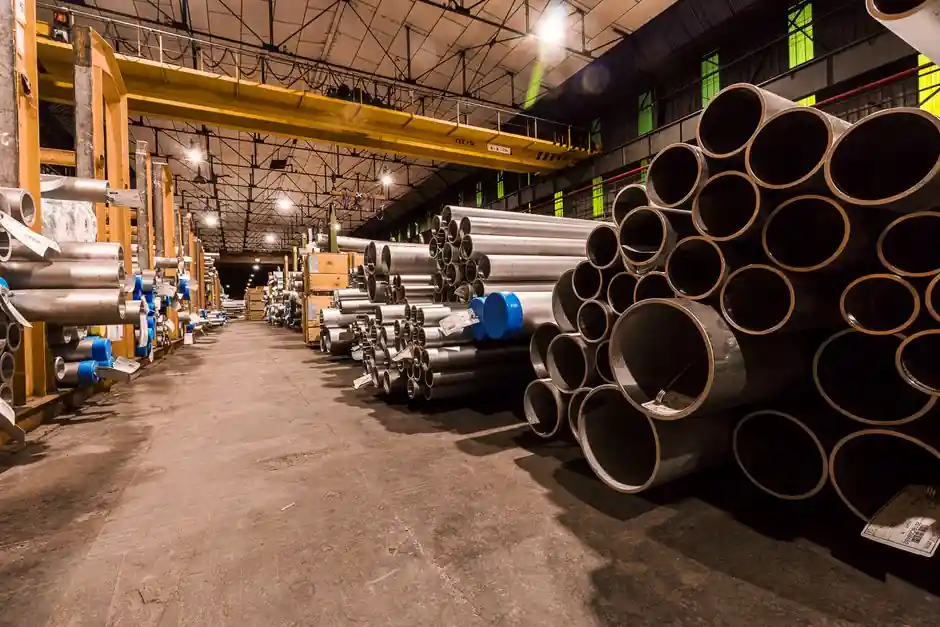
Unplasticised PVC (PVC-U) pipe is the most widely used thermoplastic line for modular and prefab building services, covering drainage stacks, cold-water risers, venting, and electrical conduit across factory-built housing, hotels, hospitals, and schools. Schedules 40 and 80 dominate stock listings in 1/2 to 12 inch sizes, with pressure classes PN6 to PN16 covering typical residential and light-commercial duty [S1][S3].
Specifying PVC-U for off-site builds differs from in-situ work: modules are craned in, not tiled up, so pipe runs need to survive handling shock, low-temp assembly yards (often below 5°C), and 100+ year service life claims now published for buried PVC water mains [S2]. Choosing the right grade and joint system up front prevents the rework that prefab tolerances cannot absorb.
What PVC-U Is, and Where It Stops Being the Right Answer
PVC-U is rigid, unplasticised polyvinyl chloride, polymerised without plasticiser additives, giving high chemical resistance, low weight (about one-sixth of steel), and smooth-bore flow [S1][S3]. Operating temperature is bounded at 0 to 60°C, and the material becomes brittle below about 5°C under impact [S4]. For hot-water distribution, hydronic heating, or any line regularly above 60°C, C-PVC is the correct family, not PVC-U [S3].
PVC-U is well suited to: gravity drainage, soil and waste stacks, cold potable water, sprinkler risers (non-fire-rated), rainwater downpipes, and electrical conduit. It is the wrong choice for: hot-water recirculation, compressed air above 8 bar (risk of brittle fracture), fuel/oil lines, and any outdoor run where impact loads and sub-zero handling are routine. For those profiles, PVC-M (modified) or PVC-O (oriented) earns the spec [S4].
PVC-U vs PVC-M vs PVC-O: Picking the Right Variant
Selection for prefab modules usually comes down to three materials, each with a clear best-fit window. The table below is built from the 2026 SIFFO performance comparison and the four-type taxonomy published by POLYPVC [S3][S4].
On toughness, PVC-M delivers 5 to 10 times the impact resistance of PVC-U, stays ductile down to -20°C, and resists water hammer, which matters for pump-cycled risers and modules dropped onto rocky site pads. PVC-O offers high-strength, thin-wall pipe used for high-pressure water mains and trenchless installation, but is over-spec for most in-module drainage [S3][S4].
Pressure class: PVC-U ships in PN6 to PN16 with a 10 to 12.5 MPa design stress; PVC-M extends to PN10 to PN25 at 15 to 17.5 MPa, with 40 to 50 percent higher burst pressure and 20 to 30 percent thinner walls for the same pressure rating [S4]. That weight saving is meaningful in prefab: lighter pipe racks let the craning envelope shrink, and the larger inner diameter (5 to 8 percent over PVC-U at the same OD) reduces pumping energy for the building's life.
Cost: PVC-U runs 10 to 15 percent cheaper than PVC-M up front. PVC-M recovers the premium through thinner walls (less material, less freight) and fewer field failures. For prefab, weigh the saving against the cost of a cracked riser returned from site.
Schedules, Pressure Ratings, and What to Write on the Drawing
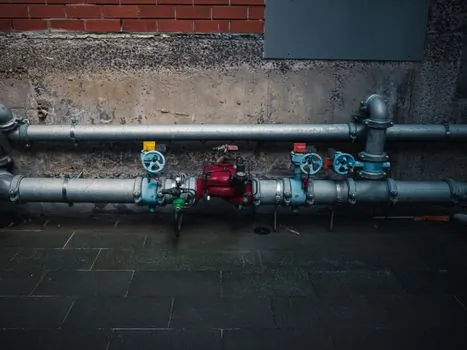
Schedule is a North American wall-thickness series, schedules 40, 80, and 120 being the most common in underground and industrial use [S6]. For prefab building services, schedule 40 is the default for drain-waste-vent and cold water; schedule 80 is specified where higher working pressure or mechanical abuse is expected (plant rooms, below-slab water mains, modular mechanical risers).
Pressure class (PN) is the metric equivalent and is the easier cross-reference for international prefab supply chains. PVC-U PN12.5 covers the majority of cold-water risers in 4 to 10 storey modular blocks; PN16 is the ceiling for standard PVC-U before jumping to PVC-M or PVC-O [S4]. Always verify the design stress and service factor against the local code (e.g. UK Water Supply Regulations, EN 1452 for PVC-U pressure pipe) rather than trusting the printed class alone.
For jointing, solvent-cement (primer plus cement, quarter-turn insertion) is the prefab default for drainage and cold water because it sets fast, needs no power, and tolerates the small misalignments of a jig-built module [S1]. For larger diameters and any line that may be disassembled, specify gasketed bell-and-spigot joints, which are the standard for municipal water PVC and now the basis of the PVCPA installation certification course [S2].
Factory-Friendly Installation Practices
Modular lines reward the same best-practice sequence used on site, just executed in a controlled jig. Cut square with a miter box or plastic-pipe cutter, deburr, dry-fit to confirm a one-third-depth engagement under hand pressure, prime both surfaces, then cement with a quarter-turn and hold for several seconds [S1]. A diagonal cut drops the bonding area and is the most common cause of solvent-joint failures in audit reports.
Trenching depth is irrelevant inside a module, but the equivalent rule still applies: protect the line from impact and point loads. Where PVC-U passes through a steel frame, sleeve it or add a rubber grommet; bare contact on a module lift will crack a cold pipe. The 18-inch / below-frost-line backfill guidance is for buried runs, not factory modules, but the principle (bedding, side-fill, no sharp aggregate) maps to any concealed chase [S1].
For fittings, spec structural or furniture-grade components in exposed locations (caravan chassis, modular furniture, outdoor service units) where UV and impact resistance are required. Standard plumbing-grade PVC-U is not UV-stabilised; prolonged exposure will chalk and lose impact strength, which is why PVC-M and PVC-O typically need added UV stabilisers for outdoor service [S4][S5].
Certifications, Codes, and Sourcing Realities
For drinking-water lines, require documentation against the local potable-water standard (NSF/ANSI 61 in the US, WRAS in the UK, ACS in France, DVGW in Germany). For buried pressure mains, the PVC Pipe Association's 6th Edition Handbook and the Water Main Break Study by Utah State University are the current primary references, with the latter confirming PVC as the most widely used water-pipe material in the US and Canada with the lowest break rate [S2].
China remains the dominant manufacturing base for PVC pressure pipe, and unit cost for international buyers can land 20 to 40 percent below domestic sourcing in many markets, but the variance in raw-material quality and certification is wide [S4]. When sourcing offshore, require mill test reports for each batch, third-party inspection of socket dimensions and wall thickness, and a documented long-term hydrostatic pressure test (typically 1000 hours at 20°C per ISO 1167 for the relevant SDR). The pipe-clamp and pipe-fitting accessory lines from suppliers like FORMUFIT illustrate how broad the US accessory market is, but prefab volume is almost always sourced direct from mill or large converter, not retail [S5].
For deeper context on how PVC pressure pipe demand is tracking against competing materials in 2026, the extrusion line build pipeline tracker is a useful cross-check on capacity. Procurement teams comparing PVC-U against ductile iron for below-grade modular services can also review ductile iron pipe lead times in October 2026, where the 4 to 12 week window is one of the strongest arguments for staying with PVC-U on tight prefab schedules.
Limits, Failure Modes, and Trackable Signals
PVC-U fails in three predictable ways: brittle fracture from impact below 5°C, creep rupture under sustained pressure above the design stress, and UV-driven surface chalking on exposed runs. The first is mitigated by handling protocols and, where winter yard work is unavoidable, by switching to PVC-M [S4]. The second is a design problem, not a material problem: PN16 PVC-U run continuously at 12 bar will fail in months, run at 8 bar will last decades. The third is fixed with paint, sleeving, or a UV-stabilised cap stock.
Trackable signals to watch: the 53rd PVCPA Annual Meeting (April 19 to 21, 2027, Hyatt Regency Grand Reserve, Puerto Rico) and the on-demand PVC Water Pipe Installation Training and Certification course are the two best forward indicators of where US municipal specification is moving, and prefab projects that follow municipal code will inherit those changes within one or two model-code cycles [S2]. Fittings and joint accessories are catalogued under pipe fittings and pipe clamps for specifier convenience, while PE pipe and construction tools round out the material choices for any hybrid plastic-heavy modular MEP package.