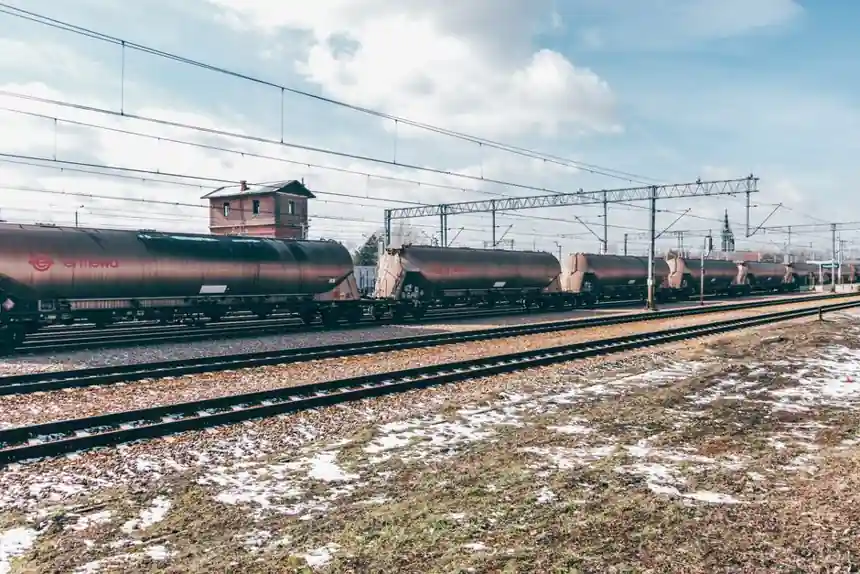
Rail operators now source chemicals across three distinct workflows: exterior/interior rolling-stock cleaning, OEM-spec coating systems, and tank-car cargo compatibility, and a reagent that works in one is routinely disqualified in the next [S3][S5][S7].
Freight rail is a top-volume chemical customer, with 99.9% of hazmat chemicals shipped by rail arriving safely, which raises the bar for any cleaning or coating reagent that touches in-service equipment [S2]. Annual U.S. Class I rail shipments run in the hundreds of millions of tons, with chemicals, plastics resins, fertilizers, and caustic soda representing core commodity groups [S1].
Selection Axes: Cleaning vs. Coating vs. Tank-Car Cargo
Three decision criteria separate acceptable from unacceptable rail reagents, regardless of brand: OEM written approval, substrate compatibility (paint, rubber seal, stainless, or polymer liner), and regulatory class under FRA / PHMSA / TSA [S2][S5]. A fourth axis, environmental discharge at the depot, increasingly decides the bid because wastewater from graffiti and degreasing operations must be captured before it hits track ballast [S3]. Reagent chemical buyers in the rail supply chain have built dedicated tank-car equipping facilities, including a 36,500 ft², 6,155-lineal-foot-rail repair project planned in Indiana, to handle this volume [S4]. chemical reagent purchasing is therefore split between depot consumables (cleaners, degreasers, paint strippers) and cargo-side commodities (acids, caustics, resins) routed in lined tank cars [S1][S7].
Rolling-Stock Cleaners: What OEM Approval Actually Filters
OEM approval, not label marketing, is the binding filter for exterior and interior rolling-stock cleaning chemistry, because the manufacturer has already cleared the product against the cab's aluminum, polycarbonate, and elastomer set [S5].
Two failure modes dominate the rejection list. First, pH excursions: alkaline degreasers above the OEM ceiling will attack anodized cab fittings and anti-graffiti topcoats. Second, solvent residues: any cleaner that leaves a film interferes with the adhesion of subsequent topcoat repair, a known driver of repaint cycles on bogies and wheelsets [S3]. For interior cab hygiene, neutral or near-neutral surfactant blends are now the default because they do not pit the polycarbonate side windows common in modern EMUs. The same OEM-approval logic drives the marine and rolling-stock overlap, where a low-foam, salt-tolerant neutral cleaner is specified for both bridge-wing and locomotive cab use, a parallel covered in marine reagent selection work [S5].
Coating Reagents: Isocyanates, Solvents, and Surface-Prep Chemistry
Two-component polyurethane topcoats contain isocyanates, and any coating reagent that disturbs them during maintenance (solvents, strippers, blast media) is itself a regulated chemical under occupational-hygiene rules [S3].
The railway coating stack is built on four reagent layers: zinc-rich or epoxy primer, high-build epoxy intermediate, polyurethane topcoat (the isocyanate-bearing layer), and a graffiti-resistant clear in some fleets. Surface preparation uses abrasive blast media (aluminum oxide, garnet, or steel grit) and chemical pre-treatments, including phosphoric acid etches for aluminum bodies and silane coupling agents for composite cab modules. Solvent-borne primers are still specified where shop temperature is below 10 degrees Celsius, but waterborne epoxy intermediates have largely displaced them above that threshold on U.S. and EU production lines because VOC capture is simpler. Service lives of 30 to 50 years are routinely expected from a railway vehicle, which means the chosen chemistry must survive continuous vibration, summer cab interiors above 50 degrees Celsius, and pressure-wash cleaning chemicals used in depots [S3]. Material choice here is a chemical material decision as much as a paint decision, because the substrate, the prep chemistry, and the topcoat must age as a single system.
Tank-Car Liner Chemistry: Where the Cargo Side Lives
Tank-car linings exist to internally protect the tank asset against corrosion and degradation from the broadest range of chemicals, including aggressive acids and hot caustic service, and a liner that passes one commodity often fails another [S7].
Three liner families dominate rail hazardous-service cars. Rubber linings (natural or bromobutyl) handle hot caustic and certain acids, with a temperature ceiling that is reagent-dependent rather than a single number. Epoxy-phenolic linings are the workhorse for food-grade, pharmaceutical, and many solvent commodities, qualified to a documented cargo list. Perfluorinated or PTFE-modified linings carry the most aggressive acids (concentrated sulfuric, hydrofluoric) and high-purity solvents where extractables must stay near zero. Cross-compatibility matters: a car that hauled hot caustic under a rubber liner must be fully decontaminated and re-qualified before switching to an epoxy-phenolic service, because residual alkali embrittles the next liner. Lining selection is therefore a chemical anchor decision, pinning a car to a defined cargo envelope for the lining's full service life.
Limits, Hazards, and What Gets a Reagent Disqualified
The disqualification list is short and absolute: any reagent that cannot demonstrate OEM written approval, cannot be tracked on a Safety Data Sheet, or cannot be captured under the depot's wastewater or VOC system is excluded from a Class I rail maintenance contract [S2][S3].
Three documented failure modes drive most rejections. Isocyanate exposure during topcoat repair has been linked to occupational asthma in spray painters, so two-component polyurethane work is increasingly moved to robotic cells with closed-loop ventilation rather than open booths. Heavy metals in legacy coatings disturbed during sandblasting generate a hexavalent-chromium hazard that requires negative-pressure enclosures and HEPA capture. Solvent flammability on hot work in the same shop rules out any cleaner with a flash point below the shop's heated-bath ceiling.
Decision Map: Matching Reagent Family to Rail Workflow
Four workflow buckets, with their binding spec, give a procurement-ready comparison: (1) exterior cleaning, neutral surfactant with OEM letter, pH 6-9, no solvent residue; (2) interior cab cleaning, low-foam neutral, polycarbonate-safe, EPA-registered disinfectant where required; (3) coating system, primer-intermediate-topcoat matched to substrate and service life (zinc/epoxy/PU for steel, silane/PU for aluminum, gelcoat for FRP cabs); (4) tank-car cargo, liner-family pinned to commodity envelope with documented change-of-service decontamination [S3][S5][S7].
The comparison sharpens at the decision gate. Exterior cleaning tolerates the broadest reagent set but is gated by anti-graffiti topcoat compatibility. Interior cab cleaning is the most pH-constrained because polycarbonate windows craze above pH 10. Coating chemistry is the most spec-stacked because four layers must age together for 30+ years. Tank-car liner selection is the most cargo-specific because rubber, epoxy-phenolic, and PTFE families do not interchange without re-qualification, and a 36,500 ft² equipping facility is the kind of capital commitment that only makes sense when the liner-to-cargo matrix is locked [S4][S7].
Sourcing, Standards, and the 2026 Watchlist
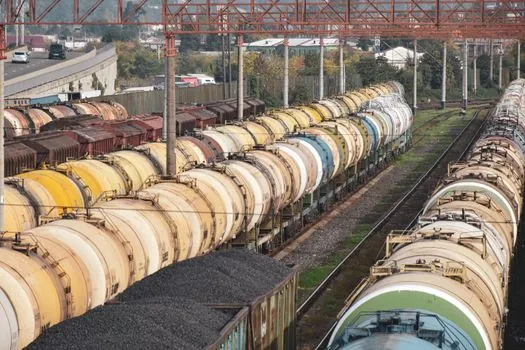
Three sourcing signals are worth tracking through 2026. First, OEM-approval letters from major rolling-stock builders (Alstom, Siemens, CRRC, Stadler, Wabtec) are tightening the acceptable-cleaner list year on year, and suppliers that have not refreshed letters in the past 24 months are being despecified [S5]. Second, FRA Safety Advisories and PHMSA tank-car rulemakings post-East Palestine are pushing the U.S. fleet toward higher-spec tank cars, which expands the lining and commodity-chemistry market for new builds and the retrofit market for the existing fleet [S2]. Third, waterborne and high-solids coating adoption is increasing under depot VOC caps, with the practical effect that solvent-borne primer SKUs are being phased out of EU and California depots on a 3-5 year horizon, a shift that will respec the rail chemical reagent catalog more aggressively than any single rule [S3].
Watch for the next ACD Responsible Distribution update and the FRA's next Safety Advisory cycle as the two near-term triggers that will force a re-bid on depot cleaning and coating reagent lines, and check whether any Class I tender specifies lined-tank-car minimum lining-chemistry documentation alongside price.