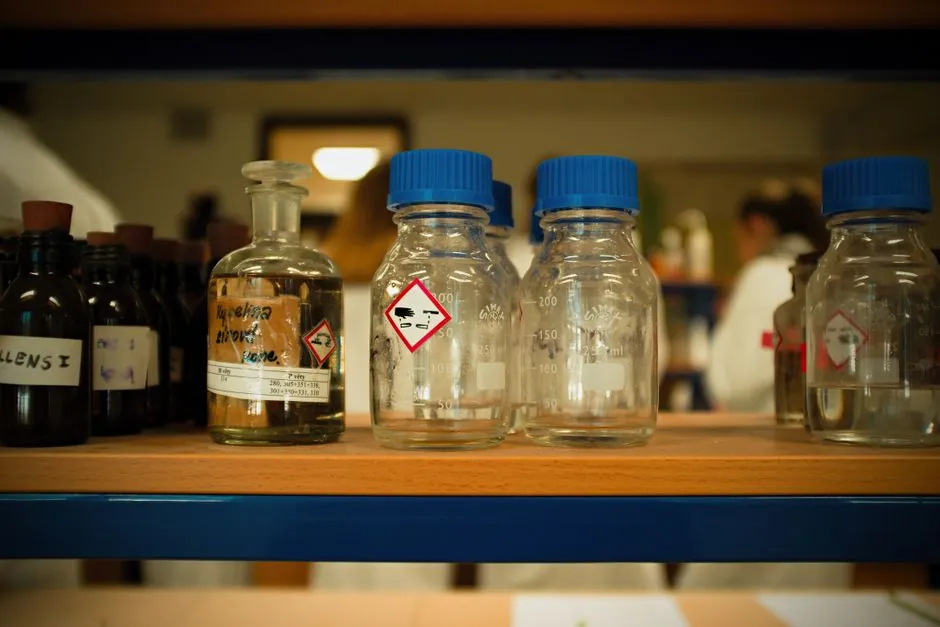
Specifying chemical reagents for marine work is a substrate-first decision: acetone (CAS 67-64-1) is the default for fiberglass prep and coating work, while acetic acid is preferred for descaling and corrosion-control passes where chloride-bearing acids would pit stainless [S3][S9]. The four practical families that cover 80-90% of shipboard use are solvents, acid descalers, alkaline degreasers, and dropper-reagent test chemistries for water and fuel monitoring [S4][S5].
Selection also has to satisfy the regulatory perimeter set by the EU Marine Strategy Framework Directive Descriptor 8 and parallel regional sea conventions, which together govern 276 sea-based contaminant substances inventoried in the Tornero and Hanke review [S1]. Picking the wrong reagent is rarely a paperwork problem: it is typically a galvanic, coating-adhesion, or waste-stream problem visible within one drydock cycle [S4].
Solvents for Hulls, Fiberglass and Coatings
Acetone (CAS 67-64-1) is widely used as a fast-evaporating surface-prep solvent for hull cleaning, fiberglass repair, and resin thinning in marine coatings, with documented roles in dissolving legacy resin, degreasing prior to antifouling application, and improving topcoat adhesion [S3]. Its flash point sits at -20 °C (closed cup), which is why deck-store handling mandates bonded-and-grounded drums, intrinsically safe ventilation, and an ATEX-classified store; these constraints are not optional even on warm-climate routes [S3][S4]. For cold-climate or confined-space work, low-aromatic solvent blends or aqueous alkaline cleaners are the safer functional substitute, and they avoid the VOC and flammability burden that pure acetone imposes in engine rooms [S4].
Acetone is also flagged in marine-infrastructure datasheets as a process aid in dock fender elastomer surface prep and in anti-corrosion coating application around offshore structures, where the same fast-evaporating, residue-free profile is required before elastomer bonding or topcoat laydown [S7]. On composite repair, the green-composites review notes that chemical dissolution reagents allow recycled fibre to retain mechanical properties when re-incorporated into marine matrices, so the solvent choice on a repair bench also drives downstream recyclability of the patch [S2].
Acids, Alkalies and Descalers for Engine Room and Boiler Loops
Acetic acid (CH3COOH) is the marine-preferred weak acid for descaling heat exchangers, condenser tubes and bilge-line mineral deposits where chloride-induced stress-corrosion cracking rules out hydrochloric or hydrochloric-sulfuric blends [S9]. It is effective for rust-stain removal on copper-nickel and aluminium-bronze surfaces, and is listed alongside acidic corrosion-control chemistries in the marine-and-nautical datasheet portfolio, with the typical pass concentration in the 5-15% v/v range, contact time 15-60 min, and a neutralizing rinse with fresh water plus a corrosion-inhibitor additive [S9].
For heavy rust and tenacious mill scale, the SEDA portfolio includes dedicated rust-and-scale removers that pair acid with a wetting surfactant and an inhibitor package, and engine-room degreasers that pair sodium hydroxide or potassium hydroxide with sequestrants at pH 11-13 [S4]. Boiler-water treatment chemicals and cooling-water treatment chemicals are a separate category: they are formulated around phosphate, sulfite and polymer dispersant chemistry rather than free acid or free alkali, and are dosed at ppm levels into the feed loop rather than applied as contact cleaners [S4]. Mixing any acid degreaser with a hypochlorite-based sanitation cleaner liberates chlorine gas, which is the single most common dangerous-gas incident on commercial vessels and is explicitly called out in the SEDA safety note [S4].
On-board Test Reagents for Water, Fuel and Lube Monitoring
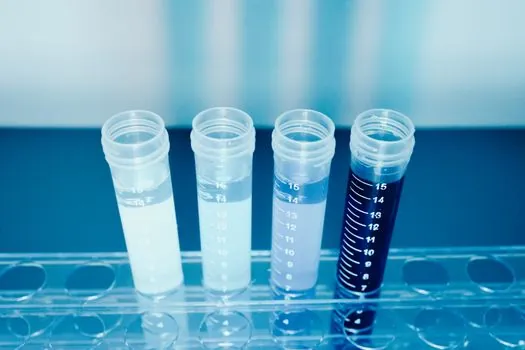
Dropper-format titration reagents are the workhorse for daily on-board water and fuel quality checks, with bottle sizes typically 30 mL or 65 mL and product codes published against each test parameter [S5]. Standard chemistries in the Marine Testing Solutions line include BC1/CC1 potassium chromate indicator (65 mL, B103243) for chloride titrations, BC2 chloride HR titrant (65 mL, B100070), FCL1 free chlorine buffer plus FCL2 free chlorine LR titrant for residual halogen monitoring, FE5 iron LR reagent (65 mL, B100543) for corrosion-product tracking, TH4 hardness HR titrant and TH5 total hardness indicator for boiler-feed hardness control, and DEHA Reagents 1 and 2 for dissolved-oxygen scavenger verification in closed loops [S5].
These dropper reagents are paired with matched test kits covering cooling water, boiler water, fuel quality, ballast water (IMO BWM and USCG compliance), and lube-oil condition, and are designed to deliver consistent endpoint colours under the vibration, temperature swing and lighting conditions of an engine control room [S5]. A practical procurement note: alkalinity HR titrant (mPA2, B100029) and nitrite titrant (mN2, B103233) frequently run out faster than the chromate and hardness reagents on a multi-cylinder vessel, so shelf-life and replenishment lead time, not unit price, tend to drive total annual spend on this category [S5].
Selection Criteria and a Reagent-by-Task Comparison
Reagent selection on a vessel reduces to four decision criteria, applied in this order: (1) substrate compatibility (aluminium, copper-nickel, GRP, coated steel, elastomer), (2) contaminant type (oil/grease, mineral scale, rust, biological fouling, free chlorine), (3) safety class (flammable, corrosive, oxidizing, marine-pollutant) and ventilation envelope, and (4) downstream waste handling and regulatory discharge limits under the EU MSFD Descriptor 8 framework [S1][S4].
Lining the four main reagent families against these criteria gives a usable working map. Solvents (acetone, low-aromatic blends) score high on oil/grease removal and fast dry-time, low on scale removal, carry a flammability burden, and are acceptable for discharge only via approved slop-tank routes. Acid descalers (acetic acid, inhibited hydrochloric blends) score high on mineral scale and rust, are aggressive on aluminium and high-zinc brass, and require neutralization before discharge [S4][S9]. Alkaline degreasers (NaOH/KOH with surfactants) score high on hydrocarbon soils, low on mineral scale, are safer on aluminium than strong acids, and must never be mixed with acidic or hypochlorite products [S4]. Dropper test reagents are a separate, low-volume class, dominated by accuracy and reagent-shelf-life rather than cleaning power, and they map to IMO BWM and USCG ballast-water compliance rather than to maintenance [S5].
Failure Modes, Storage and What NOT to Specify
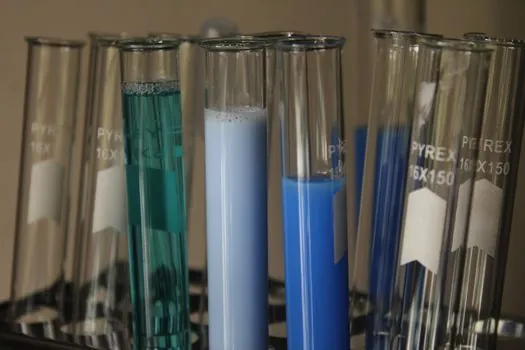
Three failure modes dominate marine reagent mis-selection: under-concentration leading to repeat cleaning and labour cost overruns, over-concentration or wrong-chemistry attacks on aluminium-bronze propulsive components, and uncontrolled mixing during tank-changeover that liberates chlorine or hydrogen sulfide [S4]. The SEDA technical note flags that incorrect concentration can damage surfaces, that certain products require controlled storage with segregated acid and alkali lockers, and that chemical residues may trigger special-disposal requirements under port-state rules [S4].
On the test-chemistry side, expired indicator reagents (typically 12-24 month shelf life depending on formulation) drift in endpoint colour and produce false-pass results, which is the most common way on-board titration monitoring fails quietly between drydocks [S5]. For solvent work, acetone's -20 °C flash point disqualifies it for any application near a hot-work boundary or a non-ATEX store, and water-based alkaline cleaners are the functional substitute wherever the substrate tolerates a longer contact time [S3][S4]. The wider marine-contaminant literature also reminds specifiers that 276 substances are inventoried as sea-based sources under EU MSFD, so any new reagent introduced on board should be cross-checked against Descriptor 8 and the relevant Regional Sea Convention annexes before procurement, not after [S1].
For adjacent engineering-plastic and composite work on the same vessel, the green-composites review documents that the choice of matrix-and-fibre system, and the choice of dissolution reagent used during recycled-fibre recovery, directly set the marine durability of any subsequent patch or bonded repair [S2]. Two trackable signals to watch through the rest of 2026 are IMO BWM test-kit revision updates (which flow through to dropper-reagent specifications) and any tightening of port-state discharge limits under MSFD Descriptor 8, both of which historically move the marine reagent shelf within 6-12 months of publication [S1][S5].
Component reference pages worth checking: engineering plastic, and marine hvac.
This topic is covered further in Air Pick Selection for Interior Finishing: Bore, Shank, Vibration and Use-Case Limits.