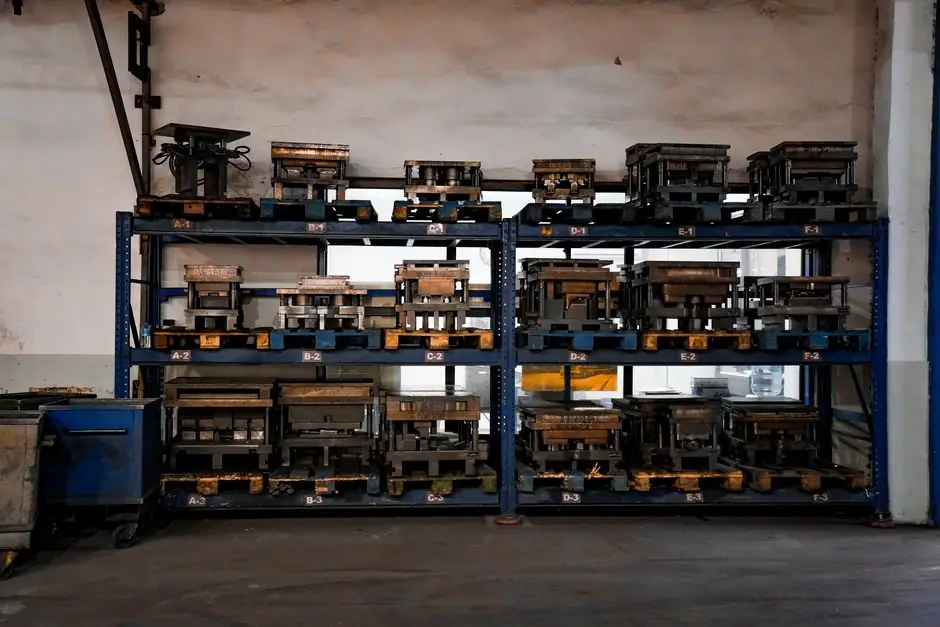
Mold and die shops spec two distinct reagent streams at once: the release agent or sealer that touches the part, and the tool steel that touches the release. Getting either one wrong cascades into scrap, downtime, or a die that fails before its design cycle count.
The release-agent decision is a four-way matrix of mode (sacrificial, semi-permanent, internal), carrier (solvent, water, carrier-free), silicone presence, and sealer duty, while the steel decision is governed by volume, abrasive filler content, and surface-finish targets. The two streams interact: H13 at 50-60 HRC after heat treatment [S3] demands a release chemistry that will not pit a polished cavity, and a 65-75% machinability P20 prototype tool [S3] does not justify a $200/L semi-permanent system.
Release-agent families: sacrificial, semi-permanent, internal
Sacrificial release agents form a barrier between the mold surface and the part and must be reapplied every cycle, so they are favored where film formation and ease of release outrank cycle time, including complex geometry and high-gloss finishes [S1]. Solvent-based sacrificial agents evaporate fast and lay down a high-quality surface, while water-based sacrificials cut volatile organic compound (VOC) emissions and are the default in regions with strict air permits [S1].
Semi-permanent release agents bond chemically to the mold surface and deliver multiple releases per application, so they cut reapplication stops, lower product use per shift, extend mold up-time through better mold protection, and improve cosmetic appearance on the part [S2]. They are the workhorse in high-output automotive composites, aerospace, rubber molding, and rotational molding shops [S1].
Internal mold release agents are compounded directly into the resin, so the release function is uniformly distributed through the part and no surface spray step is needed, which is useful in thermoplastics, polyurethane, and thermoset systems where surface aesthetics matter [S1]. The hard constraint: internal release chemistry must be compatible with the base resin and with every post-molding step (painting, coating, bonding), since slip additives can defeat adhesion [S1].
Carrier chemistry and silicone-free options
Carrier choice drives drying time, residue, environmental compliance, and post-process compatibility; solvent-based, water-based, and carrier-free systems cover the three main regulatory profiles a shop will face [S1][S2]. Conventional (sacrificial) agents are offered as ready-to-use or dilutable, can be sprayed through standard shop equipment, and are tailored in dilution to the slip demand of the geometry [S2].
Silicone-free release agents are specified when downstream painting or coating is on the route sheet: they leave less oily residue, cut contamination risk on adjacent work, and remove a cleaning step that conventional silicone-bearing sprays force on the line [S2]. Chem-Trend and other tier-one suppliers now market silicone-free systems explicitly as a sustainability and productivity play, not a niche [S2].
A practical rule: if the part will be painted, plated, adhesive-bonded, or laser-marked, silicone is a contamination source and silicone-free is the safer pick; if the part is a release-coated commodity with no downstream chemistry, silicone systems still give the lowest reject rate on complex pulls.
Sealers and the porous-model problem
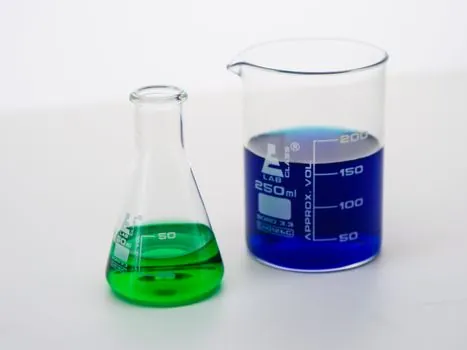
Sealers are a separate reagent class from release agents: they seal small pores and pinholes in the model so liquid mold rubber cannot penetrate the surface, and they fall into permanent, semi-permanent, and removable categories [S4]. On a porous master (wood, plaster, 3D-printed resin without a surface treatment), a sealer is mandatory; skipping it locks release chemistry into the substrate and wrecks the master within a few pulls.
The Polytek selection matrix illustrates how sealer duty stacks with release duty. Poly PVA Solution is water-soluble and alcohol-based, doubles as a barrier coat when casting into cured molds, and is approved for use with liquid polyurethane and liquid silicone rubber, but only over cured polyurethane molds [S4]. Pol-Ease 2350 is white petrolatum in mineral spirits, semi-permanent, and can serve as sealer and release on models for liquid polyurethane and liquid silicone rubber [S4]. PolyCoat is a semi-permanent silicone-based sealer and release that works on models for polyurethane and platinum-cured silicone rubbers, but is not recommended for tin-cured silicone rubbers, a real-world gotcha that bites shops that switch cure systems without re-qualifying the chemistry [S4].
For casting concrete or plaster into cured polyurethane rubber molds, the spec sheet splits again: Pol-Ease 2601 is water-based and approved, while Pol-Ease 2650 is silicone-free and oil-based, and both are explicitly limited to cured polyurethane rubber molds [S4]. Pol-Ease 2500 is the right pick when the casting will be painted, since it washes off and avoids silicone-contamination defects in the coating step, though it can shorten the life of cured polyurethane rubber molds [S4].
Tool-steel side of the spec: P20, H13, S7, D2, 420
The steel decision is independent of, but tightly coupled to, the release decision. P20 is a pre-hardened chromium-molybdenum low-carbon mold steel with machinability of 65-75% of 160 Brinell B1112 steel and no required heat treat, which makes it the default for low-to-medium volume production of polypropylene, polyethylene, and similar non-abrasive resins, typically in 1-4 cavity, single-face, cold-runner tools [S3].
H13 is a chromium-molybdenum-vanadium hot-work steel, the workhorse for high-volume tooling, with as-shipped hardness of 35-42 HRC and 50-60 HRC after heat treatment, and machinability around 45% of 160 Brinell B1112 steel [S3]. H13 stays dimensionally stable through the heating-and-cooling swings of an injection cycle, which is why it is the go-to for filled or high-temperature engineering plastics running into the millions of cycles, including 35% glass-filled PEEK at 720 deg F [S3]. The cost: H13 rusts, so surface treatment and disciplined mold maintenance are part of the spec, not optional.
D2 is a high-carbon, high-chromium cold-work tool steel that the mold-and-die community uses outside traditional injection tooling, especially for dies, cutting tools, and punches where wear resistance dominates [S3]. S7 sits in the shock-resisting family, fitting both cold and hot work and giving high impact resistance where brittle grades would chip. 420 stainless and copper alloys round out the common picks: 420 where corrosion rules out P20 or H13, and copper alloys (typically beryllium-copper inserts) where local heat extraction is the bottleneck. The release-agent spec must follow the steel pick, not lead it: a polished D2 or 420 cavity cannot tolerate a release that etches or residues, and an H13 tool that runs hot needs a carrier chemistry that flashes clean at operating temperature.
Decision matrix: which release agent for which tool and resin
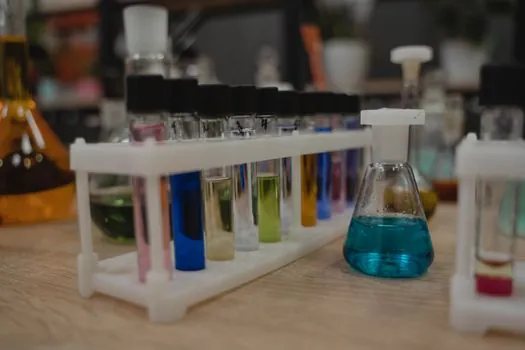
Stack the picks on the four criteria that drive most rejections: cycle time, post-process compatibility, geometry complexity, and tool-steel grade. Sacrificial solvent-based release fits sacrificial use on complex geometry with a polished P20 or 420 cavity where finish trumps cycle time [S1][S2]. Sacrificial water-based release fits the same geometry class but on a line with VOC limits or worker-exposure targets [S1][S2]. Semi-permanent water- or solvent-based release fits high-output H13 or S7 tools where multiple releases per application, lower scrap, and longer mold up-time pay back the higher per-litre cost [S2]. Internal release agent fits thermoplastic, polyurethane, and thermoset runs where the surface cannot tolerate a spray step and where downstream painting, coating, or bonding is qualified against the additive package [S1]. Silicone-free release fits any tool grade when painting, coating, or bonding follows, and silicone-based release fits commodity parts with no downstream chemistry [S2].
For the sealer side, the rule is shorter: a porous master needs a PVA or petrolatum sealer before any liquid rubber is poured, and the sealer must be on the supplier's compatibility list for the specific mold rubber (polyurethane, platinum-cured silicone, or tin-cured silicone) or the bond will fail at the sealer interface [S4].
Limits, failure modes, and shop-floor signals
Every family in the matrix has a known failure mode. Sacrificial agents add downtime because of frequent reapplication, which becomes the bottleneck on long unattended shifts [S1]. Semi-permanent agents bond to the mold and to whatever is on the mold, so a contaminated surface gives a contaminated release film and the first sign is part-to-part drift in release force, not a hard stop. Internal release agents interfere with post-molding painting, coating, and bonding if the additive package is not pre-qualified [S1]; the failure shows up at the paint line, not the molding press.
Tool-steel failure modes are equally concrete. P20 wears fast on highly abrasive, high-temperature plastics, so the signal is a rising reject rate tied to flash or short shots before the cavity is dimensionally worn [S3]. H13 demands surface treatment and maintenance; skip the rust-prevention step and the cavity pits, the release film breaks, and parts start sticking in the slides. D2 is the right pick for dies, cutting tools, and punches where wear resistance beats toughness; choose it for an impact-loaded slide and chipping is the predictable outcome [S3]. For shops running aggressive resins like 35% glass-filled PEEK at 720 deg F, only the H13 class of hot-work steel with a semi-permanent release system has the thermal and wear margin to hit design cycle counts [S3].
For shops that also pour sand or investment castings, the sand casting mold selection map for hardware and the sand casting mold selection map for aerospace components carry the complementary binder, sand, and coating spec data that no release-agent datasheet covers. Background on the broader reagent families used in toolroom chemistry, including etchants, pickling acids, and rust preventives, sits in the chemical reagent encyclopedia entry, and the chemical material encyclopedia entry covers the polymer-side counterparts (silicone rubber, polyurethane, epoxy) that every sealer and release spec must be qualified against.
What to verify before signing a spec
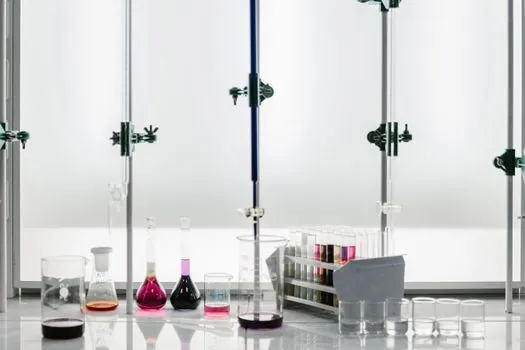
Three checks separate a working release-and-steel spec from a tender that will be re-issued. First, match the release-agent carrier to the resin and the post-mold process: water-based where VOC is regulated, silicone-free where painting or bonding follows, solvent-based where the cavity finish is the priority and air permits allow [S1][S2]. Second, match the steel grade to the cycle count, abrasive filler content, and surface-finish target: P20 for low-to-medium volume non-abrasive resin, H13 for high-volume abrasive or high-temperature resin (35-60 HRC window after heat treat), S7 for impact-loaded tools, D2 for dies and punches, 420 stainless for corrosive resin or wet environments, copper alloys for local heat extraction [S3]. Third, run the sealer-release-rubber triple against the supplier's compatibility matrix before any production pour, and re-qualify if the rubber chemistry changes, including the platinum-cure versus tin-cure distinction that the Polytek guide flags explicitly [S4].
Trackable signals to watch over the next two quarters: tier-one release-agent suppliers expanding silicone-free and water-based SKUs into higher-temperature semi-permanent grades (the 720 deg F PEEK class is the proving ground), and tool-steel distributors publishing updated machinability and hardness bands for additive-manufactured H13 and P20 inserts as 3D-printed mold inserts move from prototype to bridge tooling. The reagent spec is no longer a one-line entry on a tool drawing; it is a paired decision with the steel, the resin, and the post-mold process, and the shops that treat it that way hit cycle count on the first build.
Component reference pages worth checking: casting mold.