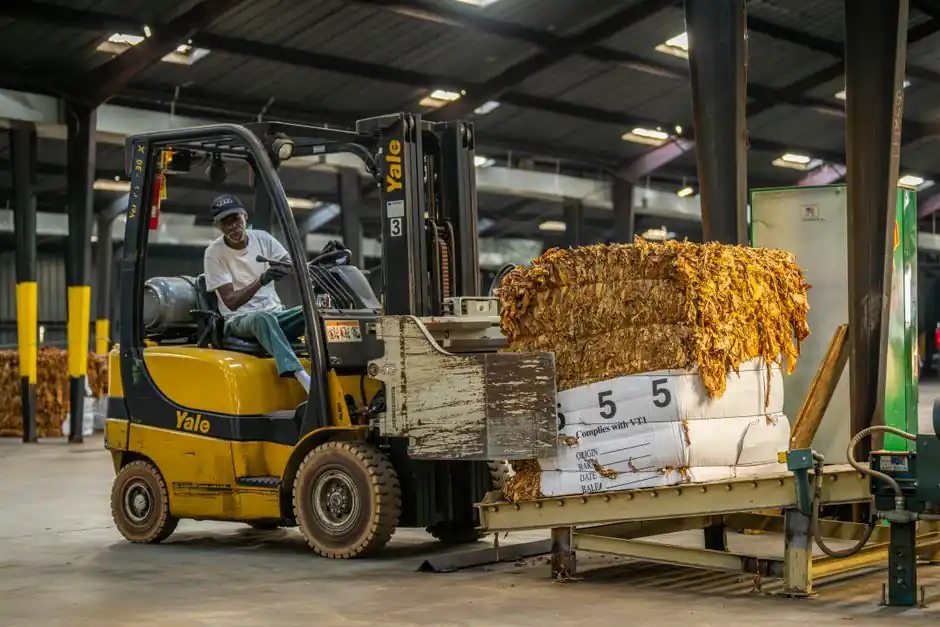
Reach trucks are narrow-aisle electric lift trucks engineered for high-density pallet racking, pairing a pantograph reach mechanism with outrigger base legs to extend loads into rack bays without the external counterweight used on conventional forklifts [S3][S2].
Typical reach truck envelopes land at 8-10 ft aisle width, 20-40+ ft lift height, and 3,000-6,500 lb capacity, all-electric, indoor-only operation, while counterbalanced forklifts cover 11-13 ft aisles, 15-25+ ft lift, and 3,000-36,000+ lb loads in indoor/outdoor service [S4]. Automated reach truck platforms such as the Linde R-Matic extend those envelopes into AGV/AMR-style pallet transport workflows [S1].
Reach Truck vs Order Picker vs Stand-Up Forklift
A reach truck moves full pallets in and out of rack bays; an order picker lifts the operator with the forks for piece/case picking from rack faces; a stand-up forklift retains a fixed vertical mast on a compact chassis optimized for cross-docking and frequent dock/trailer work [S1][S2].
Capacity and reach separate the three: reach trucks commonly lift around 5,500 lb with high mast reach [S5], order pickers trade lift height for elevated-operator ergonomics on case-level picks, and stand-up forklifts typically top out at 20-25 ft lift height against the 45+ ft reachable on a reach truck [S2]. For a deep dive on electronics-handling variants with ESD and aisle constraints, see reach truck selection for electronics handling.
Selection Criteria: Aisle Width, Lift Height, Capacity
Match aisle width first, capacity second, lift height third. Reach trucks fit 8-10 ft aisles and 8.5-9.5 ft per the narrower spec band, while stand-up forklifts need 10-11 ft and counterbalanced units need 11-13 ft [S4][S2].
On capacity, most reach trucks stay below 5,500 lb, with the broader class running 3,000-6,500 lb; counterbalanced forklifts scale from 3,000 lb to 36,000+ lb, so anything over 6,000 lb typically pushes the spec toward counterbalance [S4][S5]. Lift height of 20-40+ ft on a reach truck enables 20-40% storage cube gains versus a counterbalanced layout in the same footprint, which is the single largest economic argument for the reach truck in greenfield narrow-aisle builds [S4].
When Reach Trucks Are the Right Choice
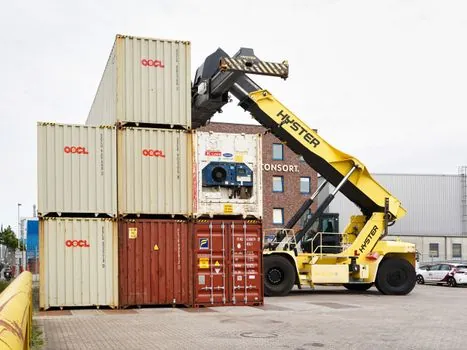
Reach trucks are the right pick for high-density selective racking, indoor smooth-floor operations, structured put-away/retrieval cycles, and vertical storage above 20 ft [S4].
They also fit cold storage and pharma distribution centers where predictable pallet cycles, indoor-only duty, and tall selective racking dominate, as mapped in Reach Truck Spec Map for Pharmaceutical Distribution Centers. For pharmaceutical DC duty in particular, sealed batteries, temperature-rated hydraulics, and validated telematics are common adders on top of the base 3,000-6,500 lb / 20-40+ ft envelope [S2][S4].
When Reach Trucks Are the Wrong Choice
Reach trucks are the wrong choice for outdoor yards, loading docks with frequent trailer work, rough or uneven floors, and heavy-pallet duty above ~6,500 lb, all of which favor counterbalanced forklifts [S4].
Dock and trailer loading specifically is a stand-up or counterbalanced domain: reach trucks are described as having limited suitability for frequent dock work due to their outrigger stance and narrow-aisle geometry [S2]. Mixed-environment fleets (indoor/outdoor transitions, multi-zone duty) almost always end up with a counterbalanced workhorse paired to a reach truck, not a reach truck alone [S4].
Automation, Telematics, and the 2026 Product Cycle
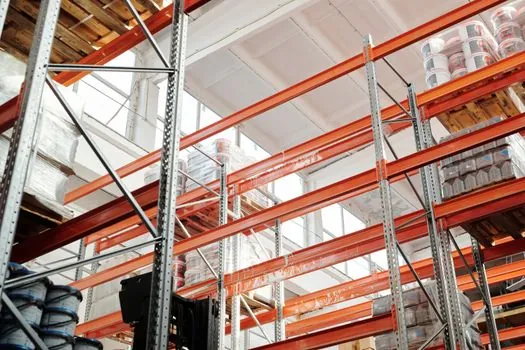
Connected lift trucks with telematics, environmental sensors, and autonomous navigation are now treated as the baseline spec for new fleet buys, with the lift truck framed as a connected and intelligent platform for warehouse operations [S7].
In May 2026 Linde broadened its warehouse positioning with the new 1121 reach truck series, a product-line move that signals a wider reach-truck segment beyond the previous premium-only tier [S6]. Automated reach trucks (e.g., Linde R-Matic) are now positioned alongside AMRs as flexible pallet transport and storage solutions rather than fixed-path AGVs, which lets specifiers treat automation as a software/retrofit layer over a conventional reach truck base [S1].
Limitations, Failure Modes, and Operator Risk
Reach truck risk concentrates at the rack interface and during tight-aisle maneuvering, with elevated fall risk largely absent because the operator stays at floor level; order pickers invert that profile, putting elevated-operator fall protection at the top of the risk register [S1].
Load-capacity discipline is the most common spec failure: 5,500 lb is the upper end of the typical reach truck envelope, and exceeding it without derating is a frequent route to rack and mast incidents [S5]. Typical equipment lifecycle runs 5-7 years, which sets the natural replan window for capacity, automation, and battery upgrades on a reach truck fleet [S4].
Sourcing, Standards, and Decision Checklist

Build a sourcing shortlist around three documents from the OEM or dealer: the truck data plate (model + serial), the rated capacity chart at the planned lift height and load center, and the aisle-width requirement for the planned racking system [S3].
Cross-check that rated capacity against the heaviest pallet plus its load center at the highest planned pick face, since reach truck capacity derates sharply as lift height and load center climb. Confirm aisle width against the racking OEM's quoted net aisle, not the nominal rack bay width, and validate floor flatness, gradient, and joint tolerances against the truck maker's spec sheet before signing the PO [S2][S4].
Trackable signals over the next two quarters: new Linde 1121 reach truck variants entering regional dealer rental fleets, and incremental automated reach truck retrofits on conventional 3,000-6,500 lb bases, both of which will reset the 2026 used-fleet price band for high-capacity, 30+ ft lift reach trucks [S6][S1].
Detailed specification references: reach truck, electrical automation, and dump truck.