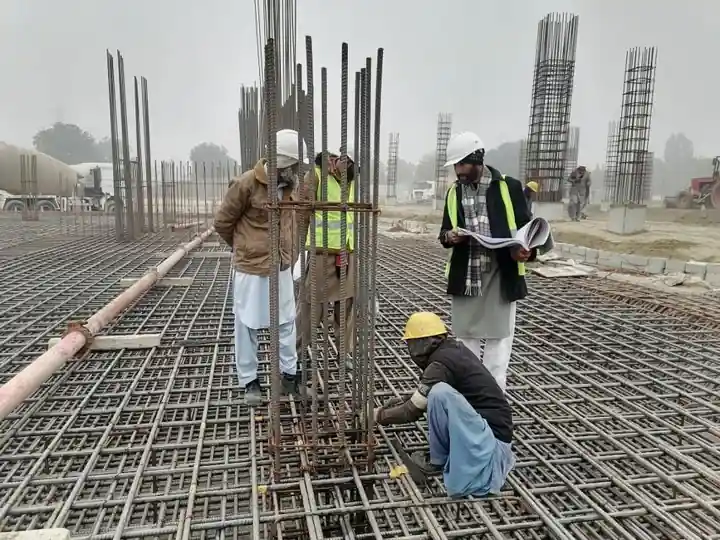
ASTM A706/A706M Grade 60 is the controlling spec for welded and seismic-force-resisting reinforcement, with a mandated ultimate-to-yield ratio fu/fy ≥ 1.25 and 14% minimum elongation, compared with A615 Grade 60's 1.50 ratio and only 9% elongation [S3].
A615/A615M remains the lowest-cost general-purpose carbon-steel bar in Grades 40, 60, 75, and 80; A706 is restricted to Grade 60 (and Grade 80 per some producer data) and carries stricter chemistry plus a carbon-equivalent cap [S5][S2]. The trade-off is roughly 10–25% price premium for A706 over A615 of the same diameter, paid for predictable weldability and ductility [S8].
Chemistry: Where the Two Specs Actually Diverge
ASTM A615 limits phosphorus only and places no cap on carbon, manganese, sulfur, or silicon, which is why "one bar can weld fine and the next can crack, and you cannot tell which is which by eye" on a typical A615 heat [S7]. ASTM A706 controls C, Mn, P, S, Si and adds a carbon-equivalent (CE) ceiling so the heat-to-heat weldability is consistent, and the same controlled chemistry is what gives A706 its longer yield plateau under cyclic seismic strain [S5][S3].
That chemistry gap is also why drawings in seismic zones read "A706 where welding or seismic detailing is required, A615 otherwise": A706 lets the engineer rely on the bar's mill chemistry rather than on procedural weld qualification for every heat [S5]. The bar size range is the same (#3 through #18, deformed) for both specs, so the decision is purely about material properties, not geometry [S2].
Mechanical Properties: fy, fu, and the Ductility Reserve
The minimum specified properties for the two common grades are: A615 Grade 60, fy = 60 ksi, fu ≥ 90 ksi, fu/fy = 1.50, elongation ≈ 9%; A706 Grade 60, fy = 60 ksi, fu ≥ 80 ksi, fu/fy = 1.33 (spec floor 1.25), elongation = 14% [S3]. A615 Grade 75 reaches fy = 75 ksi and fu ≥ 100 ksi (ratio 1.33) at the cost of 7% elongation; A615 Grade 80 hits fy = 80 ksi and fu ≥ 105 ksi but only 6% elongation, putting it well outside seismic detailing regardless of code [S3].
The decisive metric is the fu/fy gap, which is the energy-absorbing plateau between yield and rupture. A615 carries a wider absolute gap (90-60 = 30 ksi) but on a shorter plateau, while A706 trades absolute fu for a much longer flat plateau and 14% elongation, exactly the behaviour seismic codes look for in energy-dissipating members [S3]. For a #6 bar (As = 0.44 in²) the design yield force is 26.4 kip and the ultimate is 39.6 kip under A615; under A706 the ultimate drops to 35.2 kip but the warning deformation before failure is roughly 55% greater [S3].
Yield Strength Control: Min and Max, Not Just Min
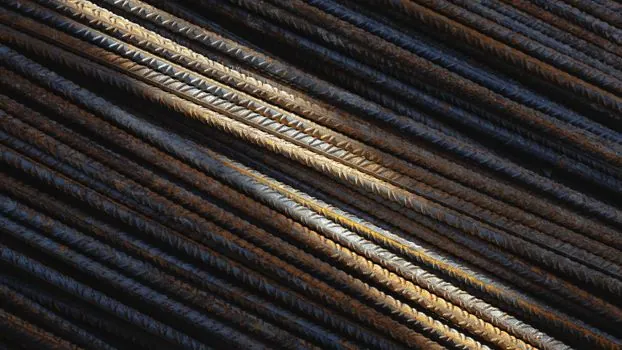
A615 specifies only a minimum yield (e.g. 60 ksi for Grade 60), so a mill can ship bar at 75 ksi or higher and still be in spec, which drives higher mode of failure risk because the surrounding concrete and splices are designed for 60 ksi [S1]. A706 sets both a floor and a ceiling, currently fy between 60 ksi and 78 ksi for Grade 60, which forces the yielding to be distributed across more bars rather than concentrating in the strongest one and forcing a brittle mechanism [S1].
This min-and-max band is the single most under-appreciated reason structural engineers pay the A706 premium: the upper cap prevents over-strength bar from changing the plastic-hinge location in a beam-column joint, which is the failure mode ACI 318 and AISC seismic provisions are designed around [S1]. For non-seismic members where capacity design does not govern, the A615 upper-yield excursion is not a safety problem, and the spec is perfectly adequate [S2].
Welding: AWS D1.4 and When You Should Not Weld A615
AWS D1.4 (Structural Welding Code, Reinforcing Steel) governs welded rebar splices, and the code effectively requires A706 because no preheat/procedure table can compensate for an unbounded CE on an A615 heat [S7]. If a drawing calls for a welded splice, lap-welded headed bar, or any welded anchorage to structural steel, the callout is A706 plus a mill cert showing the actual CE value; A615 is not accepted for those locations regardless of which bar is in the yard [S7].
Mechanical splices (coupler-based) change the picture: a rebar coupler meeting ACI 318 Type 1 or Type 2 seismic performance carries the load through the bar rather than through a weld, so A615 can be used with the right splice hardware in non-seismic members and in many seismic members under recent code editions [S5]. For projects where bending and cutting dominate, a rebar cutter and rebar bender work identically on either spec, since both are deformed carbon-steel bar in the same size range; the difference is metallurgical, not in how the bar is handled in the shop [S2].
Decision Matrix: A615 vs A706 on the Four Real-World Criteria

A706 commands a higher price premium than A615 due to its superior ductility, which is a key commercial reason A615 remains the most commonly used reinforcing bar standard in the United States for general, non-seismic construction [S2, S4, S8]. On weldability, A706 wins unconditionally because of the CE cap; A615 is not reliably weldable heat-to-heat and the engineer cannot verify weldability from the bar face [S7]. On seismic ductility, A706 Grade 60 is the only one of the two that meets the fu/fy ≥ 1.25 + 14% elongation envelope required by modern seismic codes, while A615 Grade 80 (fu/fy 1.31, 6% elongation) fails on elongation alone [S3]. On availability, A615 is the mill-default stock bar in sizes #3 to #18 across most North American service centers; A706 is typically a mill-order item in Grade 60 and may carry 6–10 week mill lead times on large diameters [S2].
Use A615 Grade 40 for light residential slabs, A615 Grade 60 for general beams/columns/foundations where no welding and no seismic detailing applies, A615 Grade 75 for high-load columns and bridge girders in low-seismic regions, and A706 Grade 60 for everything in Seismic Design Category D and higher, for all welded splices, and for any hoop, tie, or spiral in a special moment frame or special structural wall [S1][S2][S7]. For straightening field-bent bars or re-certifying bent material, rebar straightener processing is identical for both specs, but only A706 should be re-bent in seismic-critical locations, and many EORs forbid field bending of either spec for Grade 75 or higher [S2].
Verification and Common Buyer Mistakes
Per current procurement guidance, three ASTM standards should be cross-checked on every mill cert before release: A615 (or A706) for the bar itself, A955 if stainless is involved, and the applicable splice standard (ASTM A1034 for mechanical splice testing in seismic applications) [S9]. A typical buyer error is reading "Grade 60" as a tensile strength; Grade 60 means a 60 ksi minimum yield, while the ultimate tensile is 90 ksi under A615 and 80 ksi under A706, a 10 ksi swing driven entirely by which spec the mill rolled to [S3].
A second common error is welding A615 "because it was on the truck": AWS D1.4 does not allow that path for structural splices, and the failure mode is hydrogen-assisted cracking at the heat-affected zone typically within 48 hours of the weld, well after the inspector has left [S7]. The fix is procedural rather than metallurgical: insist on the A706 mill cert and a CE value printed on the test report before any welded splice is made [S7].
Standards Reference and Sourcing Notes

The controlling documents are ASTM A615/A615M (carbon-steel bars, current revision cited in [S5] and [S9]) and ASTM A706/A706M (low-alloy, weldable, seismic bars, current revision cited in [S5]), with AWS D1.4 governing welded splice procedure and ASTM A1034 covering mechanical splice qualification in seismic-force-resisting systems [S5][S7][S9]. Chemistry control follows the A706 CE cap, and the fu/fy ≥ 1.25 floor plus 14% minimum elongation on Grade 60 are the A706-specific numbers an engineer should see verbatim on the mill test report before acceptance [S3][S7].
Trackable next signals for specifiers: watch the next A706/A706M revision for any tightening of the 78 ksi upper yield ceiling and any movement on a formally adopted Grade 80 variant, and watch the next ACI 318 main cycle for whether the splice provisions expand the list of acceptable rebar tool and coupler systems that allow A615 in seismic members without a weld [S5][S7]. For adjacent guidance on welded-wire reinforcement specified to ASTM A1064 (the common companion to either rebar spec), a separate decision checklist applies and is documented at the standards reference linked from [S5].
See also our earlier report, Cab-Over vs Conventional Cab Dump Truck: Spec Decision Map.