
Standard high-speed roll-threading machines cover 16mm to 40mm rebar, while heavy-duty chaser machines extend the working range from 8mm to 65mm, which directly bounds the equipment class a demolition crew can specify [S1][S5].
The global rebar threading machine market is valued at $173.34 million in 2026 with a 7.5% CAGR through 2034, and three machine classes serve demolition-scale work: portable, stationary, and hand-held, each with a different power and throughput envelope [S1][S2].
Bar Diameter Range and Thread-Rolling Mechanics
Thread-rolling, not cut-threading, is the standard industrial process because cut dies fail on ribbed TMT bar surfaces, producing torn, weak threads; the working sequence is rib-stripping first, then thread-rolling dies that preserve core diameter and push material outward to form clean, uniform crests [S1][S3].
Reference spec for a typical 16mm to 40mm station: 5 HP motor at 1440 rpm, 415V three-phase 50 Hz, 100mm threading length, 440 kg machine mass, semi-automatic feed and return, internal coolant circuit, per the MIRTM-02 product data sheet [S5].
For diameters below 16mm or above 40mm, a chaser or heavy-duty threading head is required, and the practical upper limit on common industrial chasers is 65mm, which covers most pile-cap and bridge-deck splices encountered during selective demolition [S1].
Machine Class Comparison: Portable, Stationary, Hand-Held
Portable threading machines are designed to move between job sites, plug into site power or generator, and process standard 16mm to 32mm bars, making them the default for demolition crews working across multiple openings in a building being gutted [S2].
Stationary threading machines are bench- or floor-mounted, draw 415V three-phase at 5 HP or higher, and deliver the cycle-time consistency required for high-volume production yards, but they lose out on mobility because they need a fixed feed position and dedicated operator [S2][S5].
Hand-held threading machines cover small-diameter bars and tight-access locations where a stationary head cannot be positioned, but they trade away throughput and thread consistency, and are not specified for primary structural splices in seismic or high-load zones [S2].
For demolition cuts where the rebar must be re-threaded for a couplered splice to a new slab or wall, a portable or stationary roll-threader is the typical choice; hand-held units are reserved for non-structural tie bars [S2][S3].
Thread-Rolling vs Cold Extrusion for Demolition Splices
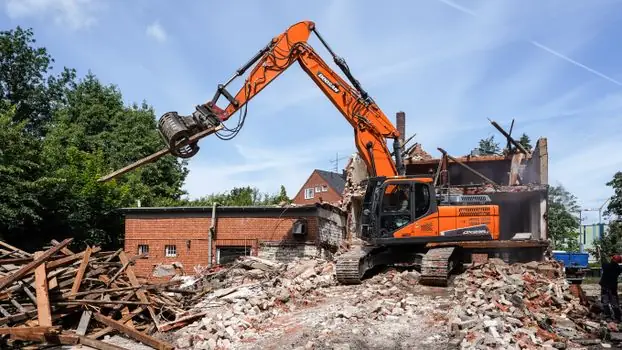
Thread-rolling produces a splice with no heat-affected zone, since the bar is deformed cold, and the joint strength equals or exceeds the parent bar tensile rating when a matched coupler is used, which is the reason roll-threading dominates rebar splicing specifications [S4].
Cold extrusion (cold-forged) splicing upsets the bar end into a sleeve under hydraulic pressure, which avoids any thread-cutting step entirely, but requires higher tonnage hydraulic tooling and is more sensitive to bar straightness, so its place on a demolition site is limited to heavy civil work where couplers are pre-stocked [S4][S6].
Selection rule: if the demolition contractor is producing threaded ends on existing rebar to receive new couplers on site, specify a roll-threader sized to the bar range; if the work is heavy civil with pre-engineered sleeve connections, specify a cold extrusion press [S4][S6].
Power, Cooling, and Site Constraints
Most 16mm to 40mm industrial threading machines draw 415V three-phase at 5 HP and weigh 440 kg, so a demolition site needs a 6 kVA three-phase feed per machine, plus an internal coolant loop to manage die heat at sustained 1440 rpm spindle speed [S5].
When threading hard TMT bar above grade 500, die life drops noticeably if coolant flow is restricted, and rebuild or replacement cost per thousand threads becomes a measurable line item, which is why the cooling circuit, not the spindle, is the most common failure point on demolition-site machines [S5].
Threading Length, Cycle Time, and Production Sizing
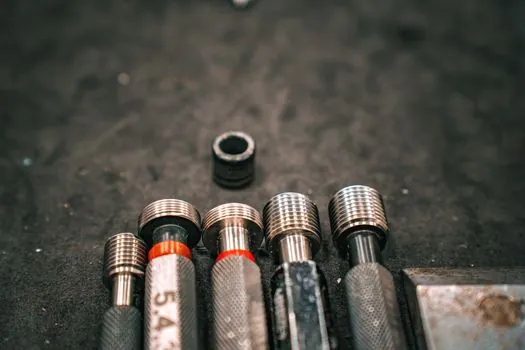
Standard threading length on a 16mm to 40mm roll-threader is 100mm, matching the most common coupler engagement depth; longer-thread models exist for special couplers, but they extend cycle time without changing bar range [S5].
Typical cycle time for a 25mm TMT bar on a semi-automatic roll-threader is in the 15-30 second range per end, which sets the bar-end-per-hour ceiling for a single-head setup and is the primary number to use when sizing how many machines a demolition-rebar prep yard needs [S5].
Coupled to a rebar bender on the same production line, a 5 HP roll-threader can keep pace with a mid-size bender, which is the usual configuration for selective demolition work that re-fabricates bent bar cages on site [S5].
Who Should Use What: Decision Matrix
Demolition contractor working on a multi-story building gut with mixed 12mm to 32mm rebar: portable 16mm to 40mm roll-threader, 415V three-phase with generator backup, internal coolant, semi-automatic feed, and matched rebar stock for threaded couplers [S1][S2][S5].
Heavy civil demo on bridges, tunnels, or pile caps with 32mm to 50mm rebar: heavy-duty chaser machine, 8mm to 65mm capacity, three-phase stationary, and on-site die inventory for the upper diameter range; this class is heavier and less mobile, so machine placement is planned at the start of the shift [S1][S5].
MEP and interior demolition crew doing only non-structural tie-bar threading in tight plenums or shaft risers: hand-held threading machine, single-phase or low-voltage, accepting lower throughput and lower thread consistency, and never used as the primary splice on a load-path rebar [S2].
Adjacent Tooling and Cross-Reference

Rebar threading is only one of three rebar prep steps on a demolition-fabrication line; cutting and bending complete the workflow, and the threading machine's throughput has to match the cut-off and bender cycle time, otherwise the bender becomes the bottleneck and the threading machine sits idle [S3][S4].
For the actual demolition pass that exposes the rebar in the first place, an air pick or demolition hammer sized to the slab thickness and concrete strength is the upstream tool, and its productivity sets how much rebar the threading line must handle per shift [S3].
For deeper selection criteria on the matching bender class and bar-size-to-ram relationship, the Rebar Bender Selection for Concrete Work: Bar Size, Code Radius, and Tool Class reference gives the spec map; for the demolition tool that feeds the rebar prep line, the Tunnel Demolition Hammer Selection: Mass Class, Drive Type, and Site Fit guide covers the upstream side of the workflow.
Limits, Failure Modes, and Inspection Signals
Common field failure on a demolition-site roll-threader: worn rib-stripping blades that leave residual rib geometry, which then produces shallow, incomplete threads and rejected couplers; the inspection signal is visible spiral scoring on the threaded length after rolling [S1][S5].
Overheating from a blocked coolant nozzle is the second most common failure, and it shows up as blued die surfaces and accelerated die wear; scheduled coolant-circuit flushing every 200 operating hours is the usual field countermeasure [S5].
Thread-rolling cannot be used on bars that have been previously cut with a torch, because the heat-affected zone hardens unevenly and cracks initiate at the first thread root; for torch-cut bar ends, the standard practice is to crop back 50mm to 100mm into sound parent metal before threading [S1][S4].
Trackable signals to watch over the next procurement cycle: chaser-machine pricing on the 50mm to 65mm end, since demand from bridge and tunnel demo work is pulling that capacity up; and 415V three-phase availability on inner-city demolition sites, which is the most common reason a portable generator is added to a portable threading rig [S1][S2][S5].