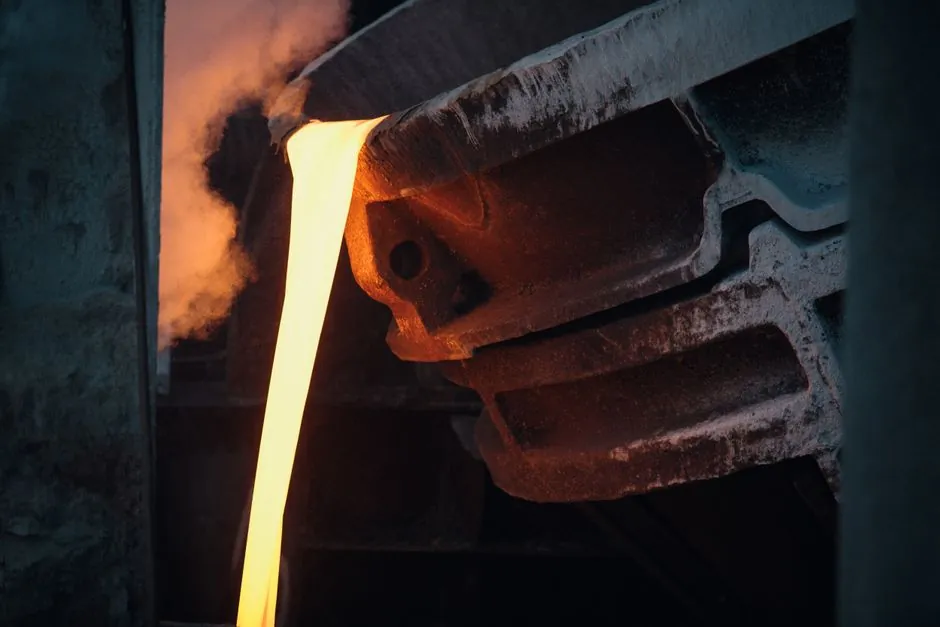
A published rotary media drum installation combined shakeout, sand conditioning, screening, casting cleaning, and cooling, and the reported design had the lowest operating cost per ton [S2].
The saving depends on the foundry, casting mix, sand-to-metal ratio, media specification, labor, maintenance, and downstream remelt quality, not on abrasive price alone.
Where Cleaning Cost per Ton Is Lost
Cleaning expense is driven by sand carryover, media consumption, equipment wear, labor hours, reclaim handling, and disposal, rather than by the purchase price of abrasive alone [S2]. Natural labor productivity for selected metalcasting operations ranged from 3 to 200 hours per ton of castings sold, demonstrating the wide variation between facilities and processes [S1].
For green-sand castings, shakeout is a major dust source because vibration releases fine silica sand from the mold. Sand remaining in pockets, cavities, and corners then enters the shot-blasting operation, where it increases abrasive wear, contaminates reclaimed media, and raises waste-disposal costs [S2].
Large castings are a weak candidate for a simple media-cost reduction. Castings weighing 500 to 10,000 pounds need engineering attention because size, weight, geometry, coring, and mold volume determine material and labor consumption [S4]. Several tons of sand and other mold materials can be required per ton of castings, so a thin casting in an oversized mold can cost more than a heavier part in a compact mold [S5].
Separate Upstream Sand Removal from Blast Cleaning
Effective sand removal before shot blasting is the first cost lever because abrasive mixed with sand wears equipment faster and is carried into the waste stream [S2]. A rotary media drum approach combines shakeout, sand conditioning, double screening, casting cleaning, and cooling in one process, producing cleaner castings while reducing floor-space and equipment requirements [S2].
Temperature control changes the amount of airborne dust generated during shakeout. Sand carryover increases when average sand temperature exceeds 100°C, and convection velocity rises substantially as temperature moves from 100°C to 200°C [S2]. Lower-temperature shakeout therefore reduces the dust load that downstream separation and ventilation equipment must handle.
Sand replenishment is a separate operating variable, not a blasting-media decision. Core sand should be separated from green sand and metered back at a controlled rate rather than added on a hit-or-miss basis [S2].
The mechanical sequence should be reviewed with the foundry before specifying media. A casting mold that retains excess sand will consume more abrasive and labor than necessary, while insufficient separation can reduce cleaning quality. This makes upstream mold release and shakeout performance a prerequisite for a defensible media-cost baseline.
Compare Cleaning Routes by Decision Criteria

A standalone blast system has the lowest apparent equipment count, but it is most exposed to sand contamination, abrasive wear, and downstream reclaim penalties. A combined separation and cleaning route requires more process integration, while the published rotary media drum installation had the lowest operating cost per ton [S2].
For manual cleaning of large or complex castings, the casting ladle and casting geometry determine labor and media access. Cored castings generally require more cleaning and trimming, while unnecessary dimensional and inspection requirements can add production time and reject cost [S4][S5].
The appropriate comparison is therefore: upstream sand removal versus added blast intensity, large stationary equipment versus compact rotary equipment, and low purchase-price media versus higher-value reusable media. A media upgrade cannot compensate for poor sand separation if the abrasive is repeatedly blinded and discarded.
Control Media Consumption Through Workload Matching
Track media consumption as kilograms per ton of castings sold, then separate abrasive loss from reusable media carried out with rejects or returned castings. The Department of Energy report represents an energy benchmark for various metalcasting processes and describes process flows and energy use by fuel type and processes for selected casting operations [S1].
Cleaning media should be matched to casting mass, geometry, surface condition, and production rate. A heavier casting or inaccessible pocket does not justify indiscriminate blast escalation because excess energy can damage usable surfaces and increase media attrition. Conversely, a soft, uniform casting may justify lower-intensity treatment once all loose sand has been removed upstream.
Foundry evidence supports using clean, dry reclaim because dust, dirt, rust, and slag absorb energy and reduce melting efficiency [S6]. Cleaner returns also lower slag build-up and remelt handling, extending the economic case beyond the blast cabinet to overall casting cost per ton [S2].
Build a Total-Cost Baseline
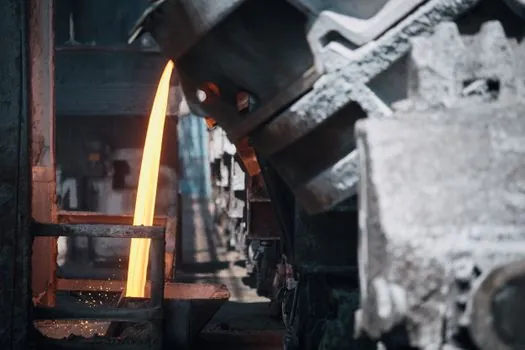
The purchase price of media is only one line in cleaning cost. Installation must include media loading, separator capacity, dust collection, floor space, utilities, and commissioning, while operating costs include labor, abrasives, replacement parts, maintenance, and waste disposal [S2].
Energy is another material component because metalcasting assessments covered heating, ventilation, melting, emission-control equipment, and manufacturing support equipment [S1]. For cleaning systems, compare power and compressed-air demand between the existing arrangement and the proposed route, while avoiding the mistake of counting energy savings twice if sand cooling also reduces remelt losses.
The calculation should divide all attributable costs by finished castings sold, not total metal poured. This denominator can differ substantially because gating and feed heads may account for more than half of the metal charged for some iron castings [S5].
Constraints That Prevent a Universal Media Specification
There is no defensible universal abrasive type, hardness value, or consumption rate for all castings. The evaluated facilities represented multiple processes, including green sand, lost foam, die casting, squeeze casting, investment casting, chemically bonded sand, and centrifugal casting, across ferrous and non-ferrous alloys [S1].
Alloy choice also changes the downstream cost. Alloyed irons can require additional metal in gating and feed heads, while core complexity increases material, labor, cleaning, and trimming requirements [S5]. These variables make a copied consumption target unsuitable for cross-facility comparison.
Foundry processes also differ, so a cost reduction that works in one operation can increase cost in another [S4]. The green sand versus no-bake casting cost decision guide is relevant when the media question is actually driven by a process change in mold and sand handling.
Measure Savings Through a Controlled Trial

Run a documented baseline for at least one representative casting family, recording cleaned tons, media added, media discarded, labor hours, maintenance, disposal, and scrap before the equipment or process change. Then repeat the calculation with the same denominator and casting mix [S1][S2].
Track four signals after implementation: kilograms of media per ton, sand contamination in reclaim, labor hours per ton, and downstream slag or remelt performance. The economic case is strongest when media consumption falls while casting quality and scrap do not worsen, because quality problems can erase a nominal media saving through rework and rejected castings [S1][S2].