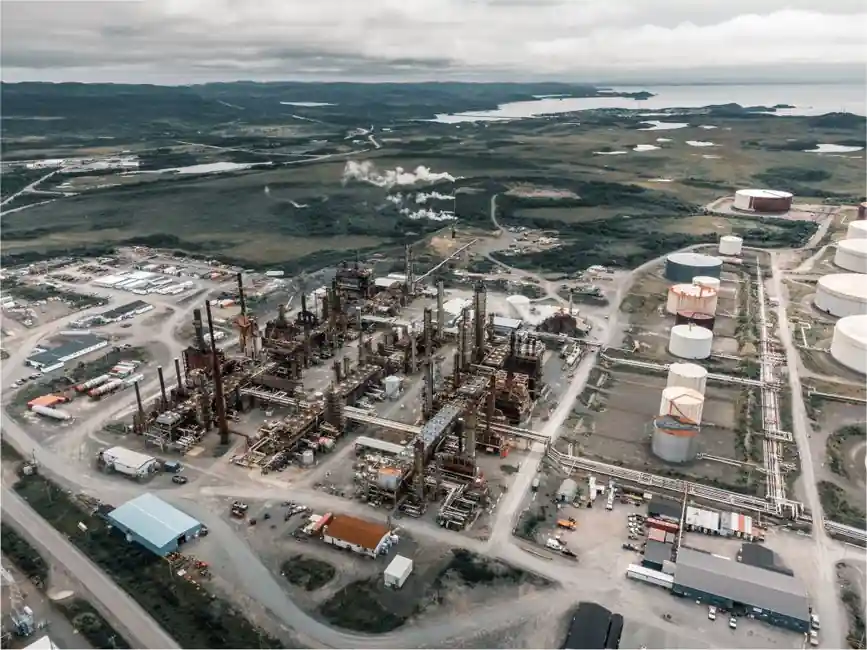
Clariant Catalysts was awarded the catalyst supply contract for what the company describes as the world's largest single-train propane dehydrogenation (PDH) unit, announced on 2026-09-10, with a digital-tooling recognition following on 2026-08-18 [S1].
The PDH award sits inside a refinery and petrochemical catalyst market where the two largest value segments are fluid catalytic cracking (FCC) and hydrotreating, Mainland China and North America lead 2024 world consumption on a value basis, and chemical-processing catalyst demand is projected to track global GDP growth through 2030 [S3].
Where the 2026 catalyst supply activity is concentrated
Clariant's PDH catalyst award on 2026-09-10 targets a single-train dehydrogenation configuration, the propane-to-propylene route that has become a workhorse for on-purpose propylene production as steam cracker yields flatten [S1]. Shell Catalysts & Technologies' portfolio page, dated 2026-07-30, lists parallel coverage across refinery, petrochemical, and environmental catalyst lines, keeping the major integrated suppliers active in hydroprocessing, FCC, and emissions-control chemistries [S2].
Beyond olefins, the S&P Global April 2025 report flags polymerization as the leading chemical-processing catalyst sector by value and volume, with polyethylene, polypropylene, PET, polyurethane, PVC, and polystyrene as the main demand sinks [S3]. For procurement teams, the practical implication is that PDH, FCC, hydrotreating, and polyolefin catalysts now anchor the bulk of long-term offtake contracts, and supply security conversations in late 2026 revolve around qualified-vendor redundancy across those four lanes.
Regional consumption map: who buys, who grows
According to the S&P Global April 2025 update, Mainland China and North America are projected to remain the largest catalyst consumption markets through 2030, while Southern Asia and Africa are flagged as the fastest-growing regions on a percentage basis [S3]. The same report notes that Mainland Chinese refinery capacity growth is expected to slow over the next five years, with EV penetration anticipated to drag refinery capacity in many regions through 2030 [S3].
That regional picture directly affects supply strategy: a refiner in Europe or Northeast Asia facing flat or declining crude throughput will see shorter catalyst cycle life, more frequent partial loads, and a shift toward higher-activity grades that compensate for lower residence time. Engineering teams specifying chemical reagent inputs for hydrotreating reactors should expect supplier focus to pivot toward Mainland Chinese and North American accounts for volume, and toward Southern Asian and African accounts for greenfield build-out of polyolefin and petrochemical capacity [S3].
FCC and hydrotreating: the two anchor segments
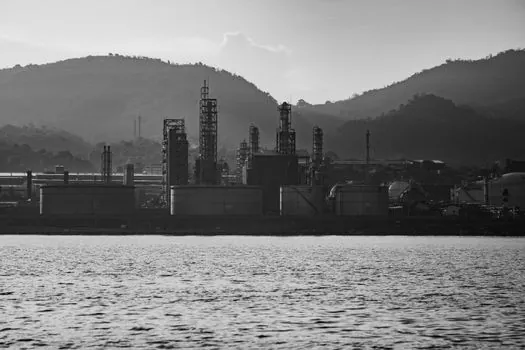
Fluid catalytic cracking and hydrotreating together account for the largest share of the refinery catalyst market by value, the April 2025 S&P Global study shows, with global consumption patterns varying sharply by refinery configuration (cracking-heavy in the U.S. Gulf, hydrotreating-heavy in regions running high-sulfur crude) [S3]. Worldwide environmental rules now mandate lower-sulfur gasoline and diesel, which keeps demand firm for hydrotreating catalysts (CoMo, NiMo, NiW on alumina supports) even where crude throughput is flat [S3].
For an engineer comparing FCC versus hydrotreating catalyst supply risk, the criteria-based read is straightforward. FCC catalyst is a high-replacement-rate consumable (equilibrium catalyst additions measured in tons per day per 100 kbd), so logistics and on-site catalyst management dominate the decision more than the per-pound price. Hydrotreating catalyst is a lower burn-rate, higher unit-value product where grade selection (activity, metal loading, pore structure) drives cycle length, and where chemical material traceability from supplier to reactor bed is the procurement gating item.
Chemical-processing catalysts: polymers pull the volume
Polymerization catalysts lead chemical-processing demand both by value and by volume in the S&P Global April 2025 dataset, with the six workhorse resins (PE, PP, PET, PU, PVC, PS) absorbing the largest share [S3]. Ziegler-Natta, metallocene, and chromium-on-silica systems cover most of that range, and shifts in the polyolefin grade slate (more C8-comonomer LLDPE, more impact copolymer PP) drive incremental catalyst requalification events even when total tonnage is flat.
Procurement engineers at polyolefin plants should treat catalyst qualification as a 12-24 month gated process, and the S&P Global observation that chemical-processing catalyst demand is projected to grow at a rate comparable to global GDP implies that volume, not value capture, is the dominant supply question in this lane through 2030 [S3]. For projects touching adjacent unit operations, the chemical anchor category is the most useful supplier-classification frame when screening qualified vendors.
Failure modes and supply-chain constraints to plan for
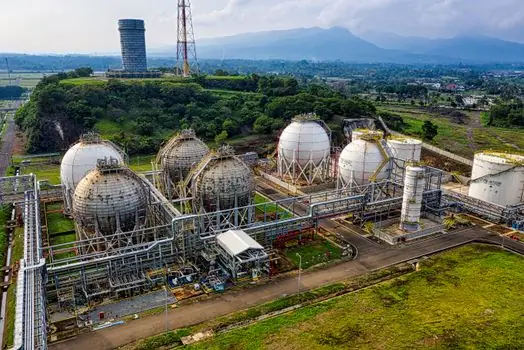
Three failure modes dominate refinery and chemical-plant catalyst supply. First, single-source rare-earth or specialty-metal precursors (lanthanum, cerium for FCC matrices; nickel and cobalt salts for hydrotreating) remain the binding constraint, since the few qualified precursor producers concentrate capacity in Mainland China [S3]. Second, energy transition headwinds mean some Western refiners are deferring cycle extensions, which lengthens the gap between catalyst changeouts and shrinks the supplier's predictable reorder cadence. Third, PDH and polypropylene catalyst requalification cycles on new single-train mega-units (Clariant's 2026-09-10 award being a case point) lock the operator into a multi-year technical service agreement with the awarded supplier, reducing tactical swap-out optionality [S1].
From a specification standpoint, the most concrete levers an engineer can pull in 2026 are: demand supplier disclosure of rare-earth sourcing origin, require dual-vendor qualification for at least one alternate catalyst in each reactor bed, and bake in performance clauses tied to yield-on-feed rather than simple tons-delivered metrics. The Clariant CLARITY digital tool, recognized on 2026-08-18, is one example of vendor-side performance software now entering the procurement-evaluation step [S1].
Standards and sourcing discipline
Catalyst specifications in refining and petrochemical service are governed by a layered standards stack, and procurement should require the supplier to declare compliance at the quote stage rather than at the post-shipment audit. Typical reference frameworks include ISO 9001 for quality management at the manufacturing site, ASTM methods for physical property testing (particle size distribution, attrition index, surface area), and customer-specific performance protocols for activity and selectivity that are negotiated per reactor train. [S1]
For a project team building a sourcing shortlist in late 2026, the disciplined checklist is: (1) confirm the supplier's regional manufacturing footprint and contingency inventory; (2) require the supplier to publish the precursor-metal sourcing chain for FCC and hydrotreating grades; (3) lock performance guarantees against yield-on-feed, not just delivery tonnage; (4) require a written requalification timeline for any grade change in a running reactor. The S&P Global April 2025 baseline is the most credible public reference for segment sizing and regional shares [S3], the Shell 2026-07-30 portfolio update is the most recent supplier-side public statement on integrated offerings [S2], and the Clariant 2026-09-10 PDH award is the most current public evidence of contract-flow direction in the dehydrogenation lane [S1]. Engineers should re-validate these signals at the next quarterly review window, watch Southern Asian and African greenfield polyolefin announcements as the leading indicator for 2027-2028 catalyst offtake, and treat any new single-train PDH or steam cracker FID as the next major catalyst supply event to track.
Background reading: Monolithic vs Multi-Segment Tiled Sputtering Targets for Large-Area Glass.