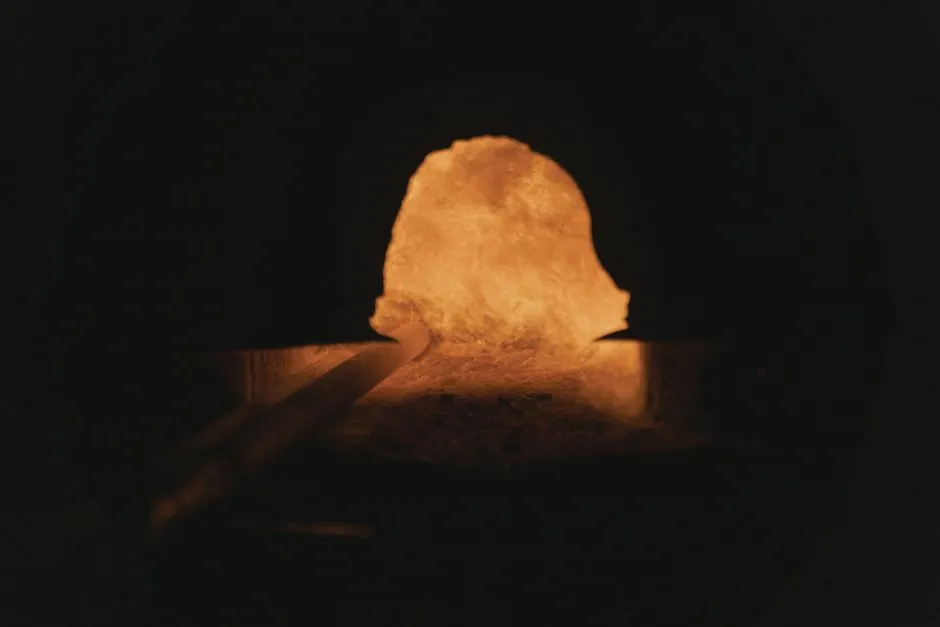
Real shop-floor data puts a dual casting-plus-forging qualification at 6 to 18+ months from PO to approved part number, with the higher end set by hard-metal rotor-grade parts and the lower end by geometry-driven conversion cases [S1].
For programs that require the same drawing released in both a cast and a forged variant, the bottleneck is the longer of the two process paths, and most of the schedule is consumed by tooling build, sample iterations, and the source-approval paperwork that rides alongside it, rather than the metal-forming steps themselves [S1][S2].
What "Dual-Qualified" Actually Means on a Drawing
A dual-qualified casting and forging source on the same part number means two independent suppliers are each approved to the same engineering drawing, one via a casting process route, the other via a forging process route, and the buyer can draw from either without re-validating the design [S1].
U.S. Defense Logistics Agency programs run this through the Aviation Forging and Casting Assistance Team (AFCAT), which sits inside DLA Weapons Support and works with the American Metalcasting Consortium (AMC) and the Forging Defense Manufacturing Consortium (FDMC) to identify foundry and forging sources, interpret contract drawings and specifications, and trim procurement lead time on out-of-production items [S2]. For a defense buyer, the value of dual qualification is supply continuity when one source goes down, not cost reduction.
For an aerospace prime the same logic shows up as risk-mitigation across the casting and forging supply chain, with the explicit warning that the manufacturing process alone can take 6 to 18+ months depending on part, size, metal, and process route [S1].
Where the Calendar Time Goes
The 6-18+ month window breaks down into four recurring blocks: tooling and die build, raw stock and melt, sample iterations including first-article inspection, and source-approval / PPAP-equivalent paperwork [S1][S4].
For a casting route, the longest single block is usually pattern and mold build; sand, clay, and epoxy mold systems need to resist dense, high-temperature liquid metal long enough for the part to freeze, and that physics sets a hard floor on how fast a first casting can be produced [S4]. For a forging route, the equivalent block is die sinking plus die tryout, particularly for closed-die geometries on titanium or nickel-base alloys where forging temperatures sit well below the melting point but well above the tool's tempering range.
Forging process families commonly seen on dual-qualification scopes are drop forging, press forging (open or closed die), and roll forging, and the choice between them changes the tryout cycle, with drop forging capable of momentary forces beyond a similarly sized press and press forging often needing bigger tonnage for thick stock [S4]. Picking the wrong process family for a part on day one of the qualification is the most common reason a dual track slips into the 18-month band rather than the 6-month band [S1].
How the Two Tracks Are Stacked, Not Averaged
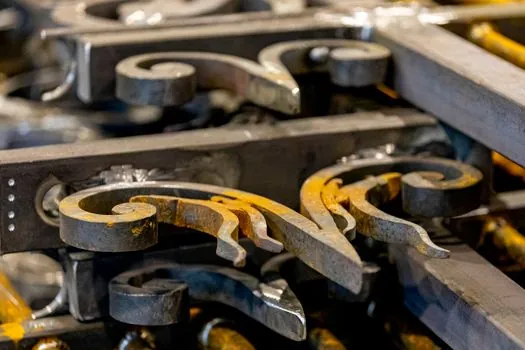
Dual qualification does not run the cast and forged paths in sequence and add them up. It runs them in parallel and takes the longer of the two, plus a final reconciliation step where metallurgical and mechanical properties are checked against the same drawing envelope [S1].
The Steel Founders' Society of America documents this clearly: in a documented casting-to-forging conversion, the casting route reduced the lead-time delivery of the part by 70% relative to the forging route, with the forged route being the binding constraint on the original program [S8]. Translation: if your drawing was originally a forging, the cast track is the "fast" path and the forged track sets the schedule.
Anchor Harvey's own conversion write-ups echo the same physics: forging shapes solid metal with force while casting pours molten metal into a mold, and the two routes have fundamentally different minimum-feature and draft-angle expectations, which is why geometry has to be re-released for the second route rather than copied verbatim [S4]. The reconciliation step is where most first-article failures show up, and it is the step buyers consistently underestimate.
Comparison: Casting vs Forging on the Criteria That Drive a Dual-Qualification Decision
Across the criteria that actually drive a dual-qualification decision, casting and forging line up as follows [S4][S5][S7]:
Geometry and complexity: casting wins for internal cavities, near-net-shape features, and parts that would otherwise need welded sub-assemblies, while forging is constrained to draft-friendly, flow-friendly solids [S4][S5].
Mechanical performance: forging carries a directional grain-flow advantage that matters for fatigue and impact, which is why rotating aerospace and defense parts are overwhelmingly forged; casting trades some of that isotropy for shape freedom [S7].
Lead time on a single part: casting is the faster route on most geometries, with documented lead-time reductions up to 70% when converting a forging design to a casting [S8].
Tooling cost and life: forging dies are more expensive per cavity and shorter-lived on high-temperature alloys, while casting tooling (patterns, cores, molds) scales with part size and is the dominant cost driver on large castings [S4].
Defense and aerospace buyers typically dual-qualify when the part is safety-critical, when the geometry can be released in both routes without redesign, and when the buyer wants the lead-time upside of casting and the pedigree of forging on the same part number; if the geometry forces a redesign to switch routes, the program is no longer a dual-qualification, it is a re-engineering effort and the 6-18+ month window no longer applies [S1][S2].
Standards and Approval Documents That Gate the Calendar

The paperwork layer is what converts 6-18+ months of metal time into the 6-18+ months of program time that BCG reports, and it is the layer that defense and aerospace buyers are most exposed to [S1][S2].
For a casting track, the source-approval stack typically covers material spec compliance, radiographic and UT acceptance criteria, dimensional layout against the drawing, and process-capability data, with the specific acceptance standard called out per alloy family. For a forging track, the same stack covers die-record documentation, forging-ratio evidence, mechanical test results at the spec'd sampling locations, and flow-line documentation. Both stacks need to land before the part number can be released to two approved sources, and that is what AFCAT exists to coordinate at DLA, including drawing interpretation, specification clarification, and Technical Information Transfer Seminars run in Richmond [S2].
Outside defense, the equivalent gating work is typically a PPAP or First Article package aligned to the buyer's quality system, and the calendar cost is the same even if the paperwork label is different [S1].
Where Dual Qualification Is Headed Through 2026
The America Makes Casting and Forging Roadmap, published 2026-02-24, organizes 21 projects across four swim lanes covering 40 material-process combinations, 52 individual components, 25 demonstrations, and 5 production-environment pilots, with the explicit aim of integrating additive manufacturing into the casting and forging supply chain to lower adoption risk and lift labor efficiency [S3]. The roadmap's three stated outcomes are warfighter readiness through cost-effective low-volume production, supply-chain resilience through agile technology-driven solutions, and labor efficiency through streamlined critical process steps [S3].
For a buyer sizing a dual-qualification timeline in 2026, the practical read is that the 6-18+ month floor is not going away, but the variance band is tightening as AM-derived patterns, dies, and process instrumentation move from roadmap projects into production pilots [S3]. Trackable signals to watch: America Makes pilot-to-production conversion rates on the 5 pilots, DLA AFCAT throughput on out-of-production items, and the share of new aerospace part numbers released with a dual cast-plus-forged source-of-supply clause at the point of drawing release rather than as a later requalification [S2][S3].
Across the broader industrial base, the Cobalt end-use demand 2026: batteries dominate, superalloys and hard metals hold the picture matters because hard-metal and superalloy demand sets the queue time at the forging sources most dual-qualification programs depend on, and AFS Grain Fineness Number Selection for Casting Surface Finish is the kind of casting-process knob that drives how many sample iterations a cast track needs before it lands first-article acceptance. On the supplier-pressure side, Supplier Carbon Data Requests: How Buyer Pressure Hits Mid-Tier Manufacturers is now a parallel qualification gate at many buyers, so any realistic 2026 dual-qualification schedule needs a carbon-data deliverable stacked onto the same 6-18+ month window [S1][S2][S3].
Reference: casting mold and forging process reference, casting ladle and melt handling reference, and casting auxiliary equipment reference.