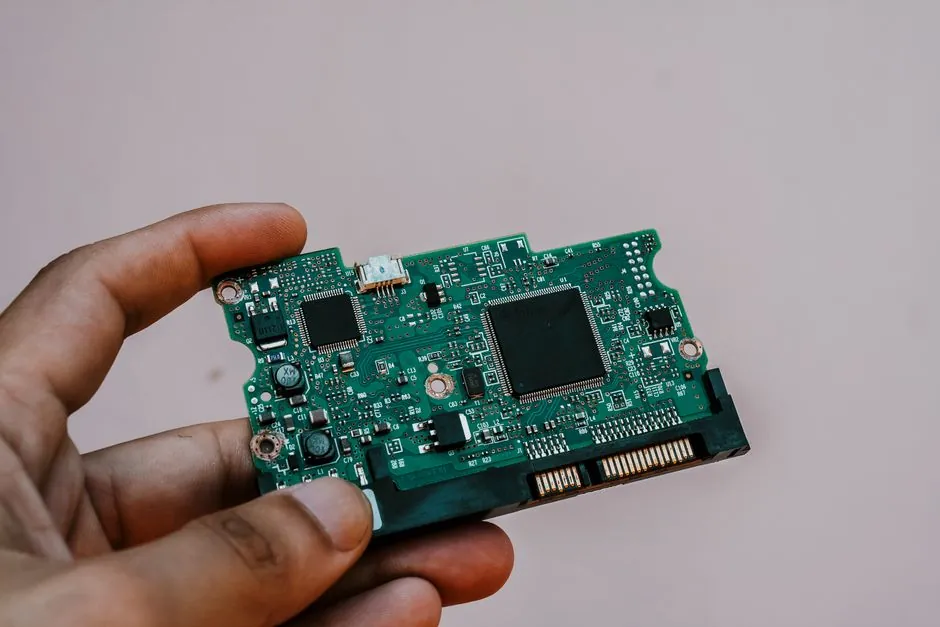
A relay module uses a low-current input to switch a higher-current load while electrically isolating the control and load circuits, making it useful across PLC, automation, appliance, motor, lighting, and protection systems [S2][S3].
The main engineering trade-off is clear: electromechanical modules provide robust isolation and load switching, but their moving contacts, coil, and mechanical return mechanism introduce wear, heat, and a finite switching speed [S1][S2].
Relay Module Scope and Operating Principle
A relay module integrates one or more relays with driver, protection, indicator, and input or output interfaces, allowing a controller such as a PLC or microcontroller to operate a separate load circuit [S2]. The core magnetic structure comprises a coil, armature, spring, and contacts. Energizing the coil creates a magnetic field that moves the armature; removing coil power lets the spring return the contacts [S3].
The module can switch AC or DC loads and can accept control inputs including TTL logic and PLC outputs [S2]. Its isolation is a primary function because the control electronics remain separated from the high-power circuit, reducing electrical coupling and the transfer of load-side interference [S2][S3]. For basic module concepts and terminologies, the relay module reference provides a useful starting point.
Advantages: Isolation, Flexibility, and Serviceability
Strong electrical isolation is the most defensible advantage because the low-power control side is separated from the high-voltage or high-current load side rather than sharing one direct circuit [S2][S3]. In a practical panel, that separation supports safer interface design, reduces the risk of load disturbances reaching sensitive electronics, and allows a small input current to command a larger output current [S2][S3].
Relay modules also offer wide applicability. They are used for DC and AC circuits, lighting, motors, machinery, protective disconnection, alarms, and shutdown functions [S2][S3]. Their standardized construction supports quick replacement and maintenance, while multiple channels extend a control system without redesigning the original controller [S2].
Solid-state relays are described as having fast response [S5]. These benefits matter where an output must remain physically separate from the logic circuit.
Disadvantages: Contact Life, Heat, and Response Time

Mechanical switching speed is the primary limitation of an electromechanical relay module because the output depends on armature movement, coil energization, and spring return rather than electronic state change [S1][S3]. That arrangement can serve motor, lighting, and automation functions, but it is less suitable for high-frequency switching or tasks requiring near-instant output transitions [S1][S3].
Contact wear, contact bounce, mechanical fatigue, and coil heating constrain lifetime and reliability as the number of operations rises [S1][S2]. Compared with a single relay, a relay module typically integrates optocoupler isolation, indicator LEDs, power management, and input/output interfaces [S2].
Relay modules can support alarm and shutdown actions, but a relay is not automatically a safety-rated protective device. The output arrangement must still match the hazard, while overcurrent or overvoltage protection must be coordinated with the connected load [S2][S3].
Electromechanical, Solid-State, and Timing Options
Electromechanical relay modules use moving contacts and provide hard switching with isolation, making them suitable for conventional AC and DC loads that do not require very high switching frequency [S3]. Their disadvantages are mechanical wear, limited switching speed, coil power, and contact-related degradation [S1][S3].
Solid-state relay modules replace moving contacts with semiconductor switching devices [S3]. Their comparison criterion is different: they suit applications needing fast or frequent switching and can avoid mechanical contact wear, but they require heat management and have different leakage, surge, and switching characteristics that cannot be treated as equivalent to relay contacts [S3][S5].
Timer and monitoring relay modules add timing, voltage, current, or temperature functions rather than serving only as a basic binary interface [S5]. A conventional time relay is the more suitable selection when the control requirement is a delayed or timed output, while a monitoring relay adds measurement of a defined electrical or thermal condition [S5].
Selection Criteria for Control Panels
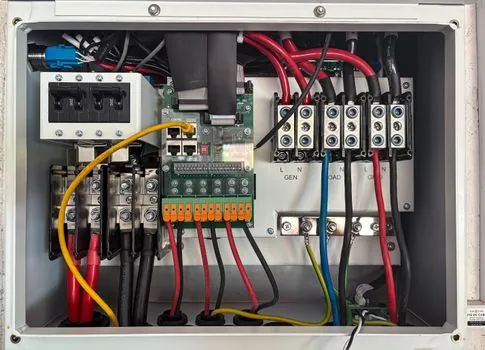
Select the module by the load first: AC or DC, voltage, current, load type, inrush behavior, and switching frequency determine whether a conventional relay, solid-state relay, or a dedicated contactor is appropriate [S1][S3][S4]. The control input must also match the module, including TTL logic, PLC output voltage, common or isolated input arrangement, and whether one or several channels are required [S2].
The second criterion is isolation and interference control. Optocoupler isolation, indicator LEDs, power management, and defined input or output interfaces are common integrated features, but their presence does not remove the need to check the actual isolation and switching ratings for the selected part [S2].
The third criterion is service life and thermal design. Evaluate expected operations, load category, coil voltage, enclosure temperature, and protection requirements rather than relying on generic claims of long life or fast response [S1][S5]. Relay modules are often attractive because they are compact and modular, but channel count, heat, and replacement provisions can change the practical result [S2][S5].
Where Relay Modules Fit, and Where They Do Not
Relay modules fit applications where a low-power controller must operate a separate load with galvanic isolation, including lighting, motor control, machinery, protective disconnection, alarms, and shutdown commands [S2][S3]. They are also practical for PLC and microcontroller interfaces because the module handles the interface hardware instead of requiring the controller to drive the load directly [S2].
They are a poor default for high-speed pulse outputs, very high-frequency switching, or applications where semiconductor efficiency and compactness dominate. A solid-state relay or another electronic switching device is usually more appropriate when mechanical contact life would become the limiting factor [S1][S3].
For low-current monitoring or counting functions, adding a mechanical relay output may be unnecessary. A counter meter can serve pulse counting or metering tasks without the same contact-wear mechanism, while a relay module remains appropriate when the required output is an isolated switched load [S2].
Failure Modes and Commissioning Checks
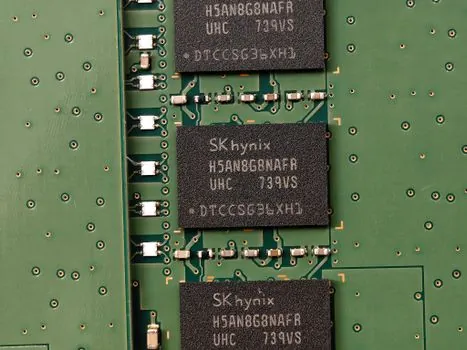
The common failure pattern begins with the mechanical path: coil energization moves the armature, contact bounce follows contact closure, and repeated movement eventually produces degradation [S1][S3]. At the module level, poor terminal arrangement, unsuitable supply voltage, inadequate coil protection, or excessive channel heat can turn a working relay into a panel-level failure [S2][S5].
Commissioning should verify the input threshold, coil supply, contact state with power removed, and the intended NO or NC path for every channel [S3]. Test the actual load category and inrush condition, then confirm that indicator LEDs and protection circuits correspond to the energized and fault states [S2]. High-load switching also requires attention to contact ratings rather than only the module's input voltage [S4].
Relay modules are strongest as an interface between low-energy control and isolated load switching, not as a universal substitute for contactors, solid-state switches, or dedicated safety devices. Track contact operations, coil heat, and protection events during commissioning, and compare the industrial relay advantages, disadvantages, and selection criteria when defining the panel specification.