
Remote I/O module pricing in 2026 is set by three primary levers: fieldbus protocol (EtherCAT, EtherNet/IP, PROFIBUS, PROFINET), point density per node (8 to 32 channels), and hazardous-area certification (ATEX/IECEx vs industrial only). A bare-bones 8-channel digital block with PROFIBUS-DP interface now lists at roughly EUR 40-80 FOB China, while a 32-channel EtherCAT or EtherNet/IP adapter with diagnostics and isolated field power climbs into the EUR 180-450 band [S1][S4].
The ODOT CN-8033 EtherCAT adapter [S1] is a useful anchor: nominal 24 Vdc supply (19.2-28.8 Vdc operating range), 110 mA typical draw at 24 Vdc, internal bus supply of 2 A at 5 Vdc for up to 32 extension modules, and system-to-field power isolation. A spec block at that density sits in the EUR 200-350 band on DirectIndustry 2026 listings [S1]. Used CNC-grade units such as the Fagor RIO5 list at EUR 800-865 on secondary markets [S3], reflecting long-tail support, firmware lock-in and dwindling new-old-stock availability rather than intrinsic hardware cost.
Protocol Tier Pricing: EtherCAT, EtherNet/IP, PROFIBUS-DP, Modbus
EtherCAT adapters carry the highest premium in 2026, with 16- or 32-channel head modules from ODOT, Beckhoff-compatible clones and similar Chinese automation vendors priced EUR 200-450 per unit [S1]. The premium is driven by distributed-clocks silicon (typically ET1100/ET1200 ASICs) and tighter EMC compliance; buyers should expect a 15-30% surcharge versus PROFINET equivalents at identical point count [S1].
EtherNet/IP and PROFINET adapters from ODOT, Hitachi (HX-RIO3 series) [S2] and MEGMEET (MR400 family) [S4] cluster in the EUR 150-350 band. PROFIBUS-DP and Modbus RTU/TCP units are the cost baseline at EUR 40-120 for 8-16 channel blocks, with no real premium for legacy RS-485 Modbus since the PHY and protocol stack are inexpensive [S4]. A useful rule: each tier step up the protocol ladder adds about 50-100% to the head-module price at matched I/O density.
Point Density and Modular Expansion Economics
Point density drives cost more predictably than protocol. An 8-channel digital input slice typically prices at EUR 25-60, a 16-channel at EUR 60-120, and a 32-channel at EUR 110-200, with analog slices commanding a 1.5-2x multiplier over digital at the same channel count [S1][S4]. The CN-8033 supports 32 extension slices on a single adapter [S1]; a fully-populated 32-slice stack of mixed digital/analog typically lands between EUR 800-1500, with the adapter contributing roughly 25-35% of that total.
Isolated vs non-isolated field power is a 10-20% delta. Modules with per-channel isolation, channel-level diagnostics (open-wire, short-circuit, over-temperature) and removable terminal blocks — common in MR400-class hardware [S4] — sit at the upper band. For cabinet builders, the cost ratio of roughly 1:3:6 between a basic 8-channel slice, a 16-channel slice and a 32-channel slice is consistent across 2025-2026 catalogs, which makes slice-by-slice budgeting a reliable method.
Certification, Isolation and Hazardous-Area Premiums
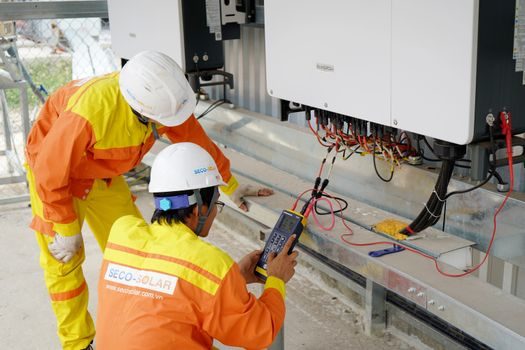
ATEX and IECEx certified remote I/O — required for Zone 1/2 and Zone 21/22 — carries a 40-80% premium over equivalent industrial-grade hardware. The premium funds conformal coating, intrinsically-safe field-side barriers, and the documentation trail. For non-classified areas, IP20 modular blocks (the CN-8033, MR400, HX-RIO3 family) [S1][S2][S4] are sufficient and avoid the certification overhead.
EMC and surge immunity claims also feed pricing. Modules advertising IEC 61000-4-2/4/5/6 compliance and 1.5 kV field-to-bus isolation tend to list 10-15% above entry-level equivalents. For the spec-minded buyer, this is one of the few areas where paying the premium reliably maps to fewer field failures; remote I/O is the link between cabinet and field, and surge events are the single most common cause of unexplained node loss on grounded-metal installations.
New vs Refurbished vs Drop-In Replacement
New OEM modules from Hitachi, Siemens, Beckhoff and Rockwell list at the top of every band. Chinese-OEM equivalents (ODOT, MEGMEET, various Shenzhen makers) deliver comparable specifications at 30-60% lower list price, with protocol-firmware compatibility (EtherCAT, EtherNet/IP, PROFINET) as the principal selling point [S1][S4]. For the engineering buyer, the cost-of-ownership calculation is straightforward: chinese-OEM lists lower but firmware-update cadence, MTBF documentation, and long-term part availability are weaker than tier-1 OEMs.
Refurbished and withdrawn modules — the Fagor RIO5 [S3] is a textbook case — price 2-5x new equivalent on eBay in 2024-2026, driven by CNC machine owners needing drop-in replacements for legacy controls. Budget for a 3-5x multiplier on withdrawn-part numbers; conversely, recently-introduced Chinese OEM parts at 50-70% of major-brand list are usually a rational pick for greenfield installations where long-term support is not the controlling constraint.
Total Cost Levers: Cabling, Sliced I/O, and Cabinet Density
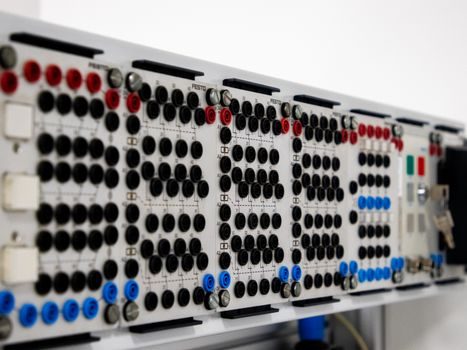
The module list price is roughly half the landed cost of a remote I/O node. Cabling (shielded twisted pair for analog, M12 cordsets for IP67 blocks), marshalling terminals, cabinet space, and surge protection add another 40-80% on top of the module total. A 32-channel mixed digital/analog node with proper wiring and surge protection typically lands at EUR 1500-2800 fully installed in a 2026 European cabinet build [S1].
For buyers comparing block-I/O vs slice-I/O architectures, the trade-off is granularity versus overhead. Block-I/O (e.g. a 16-channel IP67 EtherNet/IP block) is faster to deploy but wastes channels at partial loading. Slice-I/O (CN-8033 head + 8-32 slices) [S1] fits exact point counts and uses cabinet space efficiently, but pays a 10-20% integration-time penalty. For builds with more than 200 I/O per panel, slice-I/O almost always wins on per-point cost; for skid-mounted machines under 64 I/O, IP67 block-I/O wins on install speed.
Standards and Sourcing Discipline
Procurement should anchor every spec sheet to an industry standard rather than a marketing claim. For hazardous areas, ATEX 2014/34/EU and the IEC 60079 series define zone-classified equipment; for general industrial EMC, IEC 61000-4-2/-4/-5/-6 and IEC 61131-2 are the relevant references. Buyers specifying EtherCAT should confirm ETG membership status and ET1100/ET1200 silicon (or compatible) to avoid non-interoperable clones, while EtherNet/IP modules need ODVA conformance to be safely mixed with Rockwell and Schneider masters [S1][S2][S4].
For sourcing, 2026 price bands in this guide are FOB China and assume order quantities of 10-50 units. Below 10 units, expect a 15-25% surcharge; above 100 units, expect a 10-15% discount. related sourcing reference for industrial buyers: Industrial sourcing cost levers 2026. For the spec-curious, the remote I/O module encyclopedia page covers protocol and pinout basics in more depth; for adjacent control hardware, the relay module reference is worth a bookmark when sizing output switching.
Track three signals through Q3-Q4 2026: (1) EtherCAT-slice pricing from ODOT and similar Chinese OEMs as the ET1100 ASIC supply normalises post-2024 chip squeeze; (2) ATEX/IECEx certified head-module price moves as the 2014/34/EU-aligned catalog matures; (3) PROFINET slice availability from MEGMEET MR400 and competing lines, since PROFINET remains the dominant installed-base protocol in European machinery [S4]. A 5-10% list-price drop on EtherCAT slices is plausible by end-2026 if ASIC supply loosens; certified-zone pricing is more likely to hold flat given the documentation overhead.
For component-level specifications, see o ring.