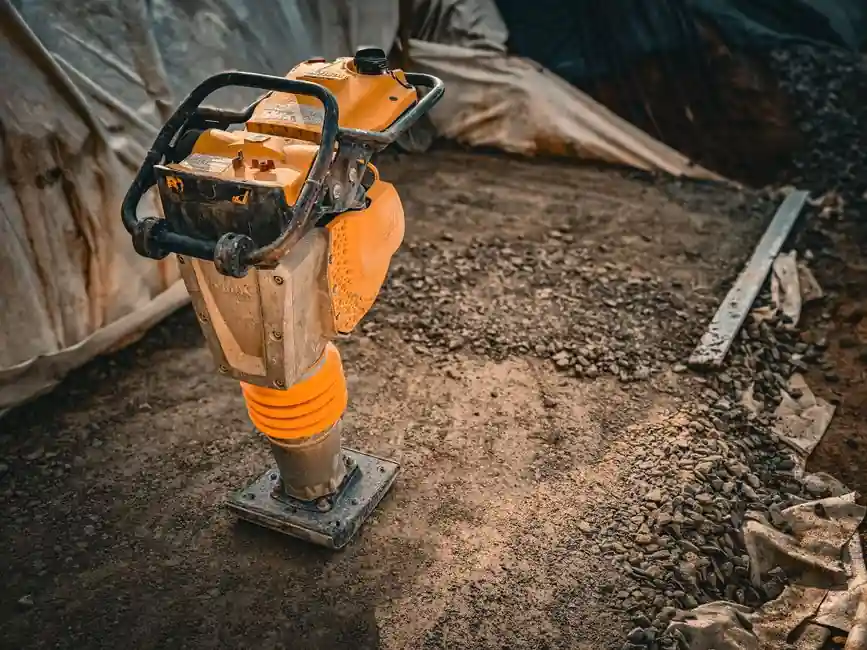
For a short project, renting is usually the stronger choice when a machine will be used less than 60% to 70% of the year, while buying becomes attractive when utilization, availability and long-term work justify ownership [S1][S2].
The decision should compare total rental cost with purchase price, depreciation, maintenance, storage, insurance, financing and transport, then test whether a hybrid fleet of owned core machines and rented specialty assets fits the project pipeline [S1][S3][S5].
Use utilization and duration as the first decision filter
The practical utilization threshold is 60% to 70% of the year. If a machine operates below that level, renting should be considered; if utilization exceeds it and future work remains predictable, ownership becomes more defensible [S1][S2].
Duration matters as much as percentage utilization. A machine needed for days or weeks does not need to pass a full-year ownership test, particularly if it would stand idle during winter months or only support a seasonal operation [S1].
Renting is generally more suitable for equipment used less than 60% to 70% of the year or needed for specialized, infrequent tasks. Buying becomes stronger for daily-use machines with high annual utilization and a predictable project pipeline.
Compare ownership cost against the complete rental bill
Purchase price is only one ownership input.
Owners should calculate the true ownership costs of equipment, including depreciation, maintenance, storage, insurance, and the opportunity cost of tied-up capital. Used-equipment savings and rent-to-purchase options can alter the initial comparison, but they do not remove ongoing ownership costs [S5].
For a simple first-pass calculation, multiply the quoted rental cost by the expected number of chargeable uses, then compare that result with the purchase price and ownership expenses. A second calculation should compare the total projected cost of ownership against the rental rate over the same period, including the value of guaranteed machine availability [S5].
Match the acquisition method to operational control
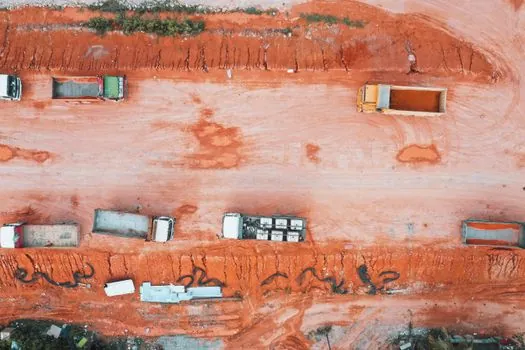
Short-term rental converts a large capital purchase into a controllable operating expense and can preserve liquidity for hiring, marketing, emergency reserves or other time-sensitive needs [S1]. It also allows an operator to evaluate productivity, fuel use, work quality and machine versatility before committing to a new model [S2].
Ownership provides direct control over dispatch, operator familiarity, maintenance scheduling and equipment availability. That advantage matters when a late rental can idle a critical machine, stop a service truck lacking welding or generator capability, or delay the project schedule [S2].
A rental does not automatically include every cost. Contracts should clarify delivery, fuel or power, operator, attachments, damage, cleaning and maintenance responsibility. These provisions affect the comparison more than the headline daily rate because two apparently similar machines can carry different exclusions and utilization conditions.
Use a four-criterion comparison before approval
Rental scores best on capital exposure, flexibility and low-frequency specialty access, while purchase scores best on long-term cost per productive hour, dispatch control and readiness for recurring work. The better option therefore depends on the project duration, expected annual utilization, machine availability and total cost of ownership, not on the sticker price alone. [S1]
For a short project, rent when the equipment is needed for only a limited number of days or weeks, utilization is below 60% to 70%, or the task is specialized and infrequent. Buy when utilization is high, the work repeats across multiple projects, delayed availability would materially damage production, and the expected ownership period allows fixed costs to be spread over productive hours [S1][S2][S5].
A mixed fleet is often the cleanest compromise: own core machines with stable workloads and rent peak-demand or specialized equipment. This approach limits capital committed to low-utilization assets while preserving control over the machines that directly support recurring operations [S1].
Account for transport, storage and the work won by availability

Transport must be compared as a delivered cost. A rental company may provide a trailer or delivery for a stated charge, while an owner may need to purchase a truck and trailer or rent transport for each movement [S5]. Machines such as wheel loaders may travel under their own power, whereas excavators and dozers generally require dedicated transport arrangements.
Storage is a second site-specific cost. Owned equipment needs secure space when it is not working, and rented storage may be available at the rental lot. If storage space must be leased, that cost belongs in the ownership total rather than being treated as an incidental expense [S5].
Availability can affect revenue as well as cost. If comparable rental units are regularly unavailable, owning the machine may improve bid certainty and allow work to start sooner [S5]. For fleet-level planning, calculate depreciation for a mixed construction equipment fleet to test whether the projected ownership mix matches the project pipeline.
Set approval conditions before mobilization
Record the expected duration, utilization percentage, rental rate, delivery charge, operating exclusions and estimated productive hours for every machine. This creates an auditable basis for comparing a rented excavator with an owned excavator instead of relying on general equipment preferences. [S1]
For a purchase, require an estimated resale value, annual depreciation, maintenance reserve, insurance rate, storage cost and financing charge. For a rental, require the contract term, delivery date, operator policy, attachment list, service responsibility and applicable damage terms.
Two trackable signals should govern the next acquisition decision: whether the machine reaches 60% to 70% annual utilization, and whether rental availability remains reliable at the dates and location required. If both improve, ownership deserves a full cost comparison; if neither does, rental remains the lower-risk choice for a short project [S1][S2].