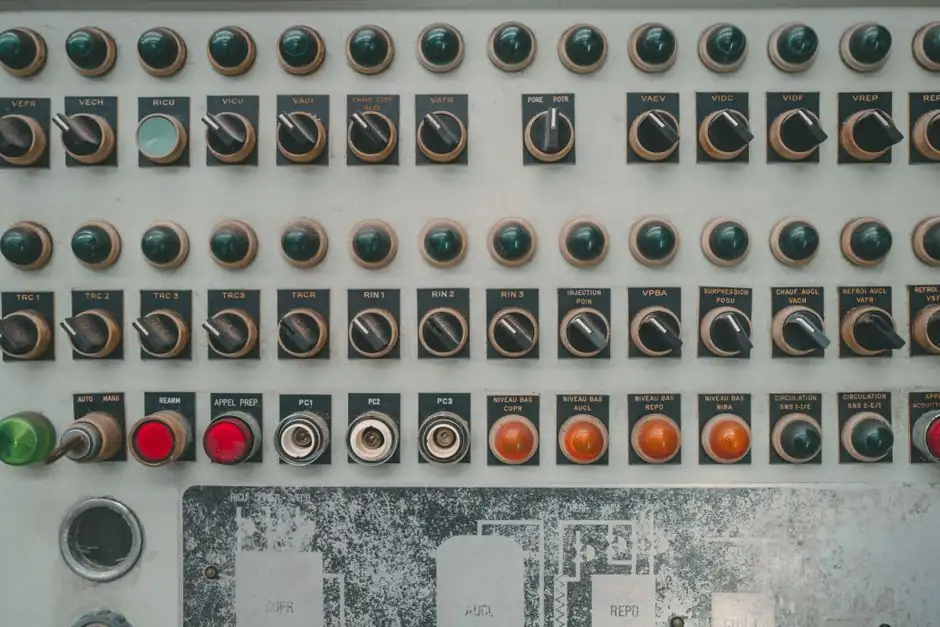
A failing stability-control pressure sensor typically costs between $200 and $550 to replace, depending on the vehicle type and whether an aftermarket or OEM-grade component is used [S1].
The correct decision depends on whether the sensor head is independently replaceable, whether the controller remains serviceable, and whether replacement requires calibration, software work, wiring changes, or process shutdown [S2].
Separate Part Price From Total Replacement Cost
A sensor-head quote is not an installed-cost estimate. The total installed cost for a stability-control pressure-sensor replacement typically ranges from $200 to $550 and includes the sensor, diagnosis and installation labor, and incidental parts or fluids [S1].
That distinction matters because the full replacement decision must include procurement, shipping, mounting, electrical connection, calibration, commissioning, spares, software, and contingency for unscheduled downtime [S2]. A replacement-head decision should therefore be compared with the complete system on an installed and lifecycle basis, not by catalogue price alone.
Replacing an oxygen sensor can cost $20–$300 per sensor, depending on the vehicle's make and model [S3].
Decision Matrix for the Three Replacement Paths
Choose a complete sensor assembly when the sensing element, housing, connector, or calibration data are integrated and cannot be separated without manufacturer procedures.
Choose a full sensor-and-controller replacement when the controller has failed, its firmware or configuration cannot be verified, the interface is obsolete, or system diagnostics indicate that replacing only the head will not restore required performance.
Across four criteria, the head-only option usually wins on hardware cost and shutdown time when compatibility is proven; a complete sensor assembly wins when the head is inseparable from calibration or protective hardware; a full system wins when controller health is uncertain; and retaining the controller is not economically defensible when labor and calibration dominate.
Compatibility Gates for Sensor-Head Reuse
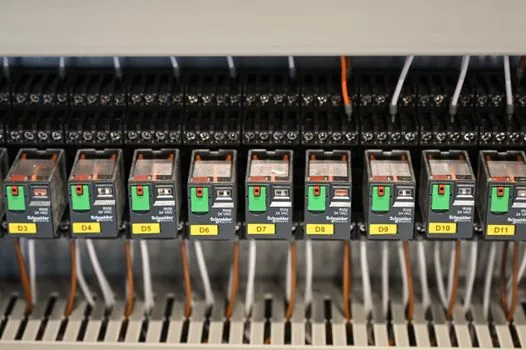
A low-cost head is not a valid substitute unless the retained controller accepts its electrical output and operating range. Record the sensor model, supply voltage, signal type, output range, polarity, connector keying, cable pinout, response behavior, overpressure rating, sealing arrangement, and mounting orientation before ordering [S2][S5].
Environmental compatibility also needs verification. The replacement head must meet the original process conditions, including fluid compatibility, temperature, pressure or flow range, ingress exposure, corrosion exposure, and required wetted-material construction. A controller that reads the old head correctly does not prove that a different head has equivalent accuracy, response time, hysteresis, drift, or fail-safe behavior [S2].
For safety-related systems, add diagnostic equivalence to the acceptance test. Confirm that fault detection, signal plausibility checks, output fail-safe state, connector keying, and calibration identifiers remain compatible. If the controller stores calibration coefficients or serial-number data, the replacement process must restore them before the installation is accepted [S1][S4].
Installed Cost and Calibration Exposure
Sensor-head replacement can require only the removal and installation time associated with the sensor location.
Calibration-heavy systems carry a different cost profile. ADAS repairs can require body-panel removal, software reprogramming, static calibration, and dynamic road-test calibration.
When replacement is part of an industrial installation, include commissioning and QA activities in the comparison. Position-sensor ownership costs can include in-house or contractor installation, calibration-equipment rental, third-party quality certification, operator training, documentation, preventive maintenance, recalibration, and factory recalibration under an ISO 9001-type quality program [S2].
A controller replacement adds engineering and reconfiguration work, not merely a larger part price. Verify output compatibility, parameter loading, fieldbus or network integration, alarms, fail-safe logic, and acceptance testing. For smart irrigation equipment, identify whether the replacement controller supports the chosen sensor's digital output before committing to either component [S5].
Lifecycle Cost, Spares, and Downtime Exposure
The lowest acquisition cost can be reversed by unplanned downtime, emergency freight, repeated troubleshooting, and repeated calibration. Sensor systems should therefore be evaluated through four cost categories: initial acquisition, installation, maintenance and repair, and contingency [S2].
Contingency includes the cost of unscheduled production interruption, replacement lead time, procurement and expedited shipping, removal of the failed unit, and installation plus recalibration of the replacement [S2]. For a critical line, those costs can exceed the sensor's purchase price even when a spare is held on site.
Spare strategy should reflect failure behavior. A sensor with a demonstrated reliability history may not justify duplicate inventory, while a wear-prone device with a long replacement lead time may justify a spare or an extended warranty [S2]. A spare that cannot be calibrated into the retained controller is not operational capacity.
Compare service life using the same operating basis: years in service, calibration interval, repair rate, replacement labor, spare quantity, and expected downtime hours per failure. Do not combine the sensor-head purchase price with a full-system downtime estimate, or the full-system price with a head-only maintenance assumption.
Use Cases and Failure Modes
Sensor-head replacement is appropriate for a confirmed field failure when the controller passes its own tests, the replacement matches the approved interface, and the head can be isolated without invalidating system calibration [S1][S2]. It is also appropriate for scheduled replacement when the sensor is documented as consumable and the controller is still within its service condition.
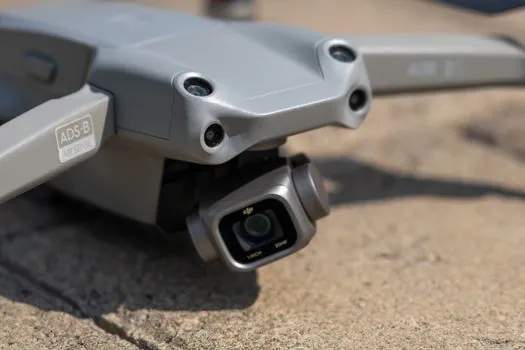
Full sensor replacement is appropriate when the head and housing are factory-calibrated together, the sensor has sustained impact or fluid damage, or required accuracy and protection cannot be demonstrated after repair. Complete ADAS camera and radar assemblies are practical examples because they combine sensing hardware with mounting and calibration-related constraints [S4].
Full sensor-and-controller replacement is appropriate when both are at end of life, replacement parts are unavailable, the controller interface is unsupported, or fault isolation shows correlated failures. It may also be necessary when a new head requires a different signal type, supply, diagnostic protocol, or safety function that the old controller cannot provide.
Do not replace a complete system solely because one diagnostic code names the sensor. Connector corrosion, damaged harnesses, contaminated fluid, incorrect calibration, or controller failure can mimic a failed sensing element [S1]. Confirm the fault through manufacturer-specified checks before defining the replacement boundary.
Procurement and Acceptance Checklist
Build the comparison around a fixed scope: one sensor head or complete sensor assembly, one controller or retained controller, installation labor, calibration, software work, ancillary hardware, disposal, spares, and expected downtime [S1][S2].
Use three written quotations for each viable path and separate part, labor, calibration, and contingency amounts. Obtain vehicle or site-specific quotations because published ranges span aftermarket versus OEM-grade components and budget versus premium applications [S1][S4].
Verify model, revision, and electrical compatibility against the retained controller before release. A useful acceptance record should document calibration results, fault-response tests, output values under static and operating conditions, connector sealing, and controller acceptance of the replacement [S2][S5].
Track one decision signal for each repair: diagnostic hours, repeat failures after replacement, calibration hours, spare fill rate, and downtime hours. If head-only replacements repeatedly require full calibration or controller troubleshooting, compare the next failure against the full-system installed cost. If the controller remains reliable and the head is independently serviceable, retain the controller and replace the head.