
The TR10-0 resistance thermometer has a sensor range of -196 to +600 °C and is available with a spring-loaded replaceable measuring insert or a fixed welded measuring insert [S1].
The assembly is used in chemical, petrochemical, oil and gas, power, machinery, tank, pulp and paper applications, where the sensor must fit the thermowell and connection head without compromising insertion depth or thermal contact [S1].
What the replaceable assembly contains
The Model TR10-0 resistance-thermometer assembly separates the measuring insert from the connection head, neck tube, thermowell connection and optional transmitter, creating six identifiable components in the assembly drawing [S1]. The spring-loaded measuring insert is replaceable, while a fixed, welded measuring insert is also offered for configurations where removal would compromise the installation [S1].
The available Pt100 resistance thermometer element must therefore be specified as more than a nominal sensor type.
For a replacement, the specification should separately identify the sensor element, insert construction, insertion length, neck length, thermowell connection, connection head and transmitter. The designation “Pt100, 6 mm” is not sufficient by itself to ensure reliable replacement because insertion geometry and thermal coupling also determine performance [S7].
Insert dimensions and thermowell fit
Correct insertion is the central installation requirement when fitting a measuring insert into a thermowell, and incorrect insertion length can leave the sensing element improperly positioned relative to the thermowell measuring zone [S1]. The assembly drawing distinguishes insertion length for tapered threads from insertion length for parallel threads, alongside measuring-insert length, diameter, nominal length and neck length [S1].
Replacement hardware should be checked against at least four controlled dimensions: measuring-insert diameter, insertion length, total measuring-insert length and thermowell connection geometry. The WIKA assembly supports combinations of sensor, connection head, insertion length, neck length and thermowell connection across standard thermowell designs [S1]. A nominal 6 mm insert diameter alone does not establish whether the replacement can enter the thermowell, reach the intended depth and make consistent thermal contact [S7].
The thermowell is the protective and process-isolating component around the sensor, while the insert carries the sensitive measuring element. Insert design also affects heat transfer and bottom contact. A spring-loaded arrangement is intended to maintain contact as thermal expansion and contraction occur, but correct insertion depth remains necessary for reliable transfer of process temperature [S7].
Pt100 accuracy and connection method
This makes lead resistance part of the replacement specification rather than an installation detail.
The Pt100 class A versus class B tolerance selection guide is relevant when an existing thermowell head must retain a specified measurement tolerance. The replacement check must cover element construction, tolerance class, temperature range and cable configuration because changing any one of these parameters can change the assembled system error.
Compare removable and fixed inserts
Replaceable, spring-loaded inserts are the better fit for planned maintenance, damaged-sensor replacement and applications requiring removal of the temperature sensor without replacing the complete thermowell assembly. A fixed, welded insert is better suited to installations where the sensor must remain permanently attached and the thermowell is not intended to protect a removable element [S1].
For a head-mounted transmitter, the installer must follow the applicable electrical wiring diagram and reject damaged devices that could compromise safe operation [S3]. The transmitter arrangement also affects the available temperature head transmitter functions, including digital communication where a FOUNDATION Fieldbus version is specified [S3].
Applications and operating constraints
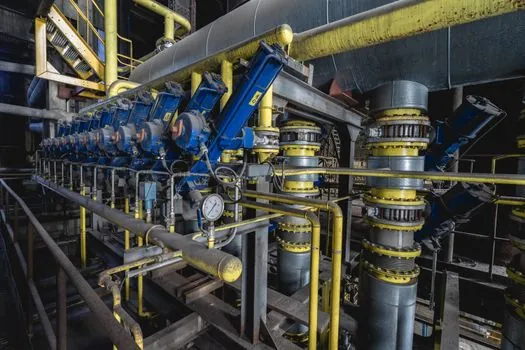
Industrial thermowell assemblies are used across chemical and petrochemical plants, machinery and tank measurement, oil and gas installations, power and utilities, and pulp and paper facilities [S1]. Sanitary applications impose a different constraint: removable Pt100 sensors in thermowell and connection-head assemblies can be used for clean-in-place processes in food, dairy, beverage and biopharmaceutical service [S5].
The Pt100 element alone is not a complete operating limit. Sensor construction, stated temperature range, thermowell material, process pressure, insertion depth, wiring method, head rating and ambient conditions all affect the assembled instrument [S1]. The protection tube or sheath houses the thermocouple or Pt100 either directly or indirectly through an insert, so the sheath must be treated as part of the sensor-and-protection system rather than as an unrelated fitting [S6].
Explosion-protected versions are available for several approval types, including ATEX and IECEx configurations for gas and dust zones [S1]. Any replacement insert and head combination must preserve the certification basis of the installed assembly, and it must not be assumed that an ordinary head, fitting or insert is interchangeable with an approved one.
Verification before replacement
A practical replacement record should capture at least nine controlled items: sensor type, measuring-element construction, tolerance class, insert diameter, insertion length, total insert length, wiring method, thermowell connection and connection-head or transmitter configuration [S1]. Four-wire measurement should be used for long probe and cable runs, while 3-wire operation is limited to an approximately 30 m combined probe and connection-cable length when maintaining the stated accuracy [S1].
Before energizing the assembly, compare the replacement insert against the installed thermowell and head, confirm bottom contact and insertion depth, inspect mechanical damage, and verify the wiring against the transmitter diagram [S1][S3]. The four-wire ohmmeter measurement procedure for Pt100 coils provides a separate method for checking coil continuity and resistance before the sensor is returned to service.
The trackable procurement signal is a complete dimensional and electrical match, not the label “Pt100.” For an existing thermowell head assembly, record the old insert’s diameter, insertion length, measuring length, element construction, tolerance class, cable length and wiring method, then require the replacement line on the datasheet or purchase order to state each value before approval.