
Specifying door hardware for a residence or multifamily building is not a finish-stage decision: ANSI/BHMA A156.x series standards govern hinge, lock, closer, and exit-device testing by grade, and the grade you pick drives both lifecycle cost and ADA lever compliance [S2].
For a single-family home, the focus narrows to handle feel, concealed-hinge geometry, and finish coordination; for multifamily, the same rules scale to building entries, common-area doors, mail rooms, and individual units, with each location mapping to a different grade tier under ANSI/BHMA A156.1 (hinges), A156.2 (bored locks), A156.4 (closers), and A156.13 (mortise locks) [S2].
ANSI/BHMA grading: which grade goes where
ANSI/BHMA grades run from Grade 3 (light residential use) through Grade 2 (moderate, the workhorse of multifamily unit hardware) to Grade 1 (heavy commercial and high-traffic common areas), with cycle-test counts set per product family rather than as a single number [S2]. Grade 1 is the right call for main building entries, mail rooms, amenity-space doors, and any common-area opening that sees daily heavy use; Grade 2 covers residential unit entry doors and most interior unit doors; Grade 3 fits closet doors and low-use interior rooms where the hardware will not cycle heavily [S2].
The financial logic matters for affordable and workforce housing: bumping interior doors from Grade 3 to Grade 2 across a 40-year LIHTC property adds a small per-unit cost but stretches the replacement cycle enough to offset it, which is why most Class A and Class B multifamily unit hardware is specified at Grade 2 rather than Grade 3 [S2]. For a broader cross-trade view of hardware-package coordination in building work, see this architectural hardware spec overview.
Type-by-type spec decisions under the A156 family
Hinges, locks, closers, and exit devices each carry their own ANSI/BHMA standard and their own sizing logic, so a grade number alone does not tell you whether a specific hinge will hold a specific door. Butt, continuous, and concealed (SOSS-type) hinges are sized by door weight and width, and out-swing doors need non-removable-pin (NRP) hinges to prevent the pin being driven out from the outside, per A156.1, A156.7, and A156.26 [S2]. Cylindrical (bored) locks per A156.2 and mortise locks per A156.13 split along function and keying lines, not just along grade. Door closers per A156.4 must meet ADA opening-force limits and may need delayed-action options. Exit and panic devices per A156.3 are split between rim, vertical-rod, and mortise configurations, with separate panic versus fire-exit hardware listings.
The operational rules for hardware are only part of the build process: a residential project also needs the right construction tools to set hinges, drill door blanks for mortise locks, and verify closer backcheck without binding the door.
ADA lever hardware, accessible units, and fire-egress rules
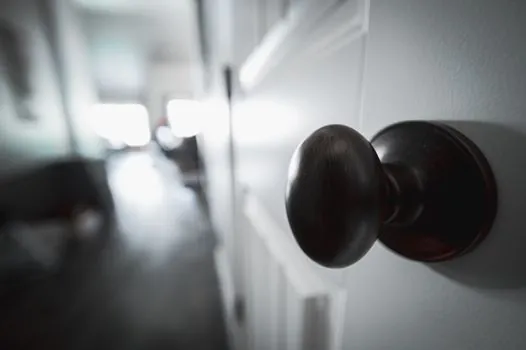
ADA Standards require lever-operated hardware (not knobs) on accessible-unit doors, with operating force that aligns with A156.4 closer limits when a closer is also installed on the same leaf [S2]. Lever versus knob is not a style preference in an accessible unit, it is a code requirement, and the ANSI/BHMA A156.2 lever specification carries the ADA operability test method. Fire-rated assemblies pull in their own constraints, with intumescent seals provided as part of the flush wood door (Section 08 14 16 in the USC HSC guide specification) rather than the hardware set [S4].
For multifamily work, electrified hardware, low-voltage power supplies, electromagnetic hold-opens, and access-control tie-ins sit in Section 08 71 02 alongside mechanical cylinders, and the specifier has to coordinate power and wiring paths with Division 26 and Division 28 from the start [S4]. Pocket doors and concealed hardware add another constraint: pocket-door gear needs cross-trade coordination between the door supplier, the framing carpenter, and the finish hardware installer long before the door is hung, since the cavity and the track geometry constrain the latch and pull choices that can be specified later [S1].
Finish coordination, concealed hardware, and the move toward invisible design
Finish coordination is the single most common source of punch-list complaints at multifamily walk-throughs, and the cheapest place to fix it is in the hardware schedule, not in the field. BHMA finish codes (called out under A156.2) should be specified consistently across lever, knob, hinge, closer, and accessories; mixing polished brass levers with satin nickel hinges on the same floor reads as a defect even when every individual component is in grade [S2]. Trends in single-family residential work have shifted toward matte black, brushed nickel, and aged brass on minimalist lever forms, with customised suites specified door-to-cabinet to keep the visual flow coherent [S3].
Concealed hardware is the second growth vector: concealed closers, concealed hinges, magnetic latches, and flush pulls all support the clean-lines aesthetic driving high-end residential work, but they demand higher joinery precision and tighter installation tolerances, since the visual disappearance is paid for in manufacturing and setup time [S1]. When concealed gear is specified, the related framing and door-prep tolerances belong in the architectural section, not buried in the hardware schedule, since the joiner has to hit them before the hardware arrives on site.
Specification documents, submittals, and what the GC confirms before procurement
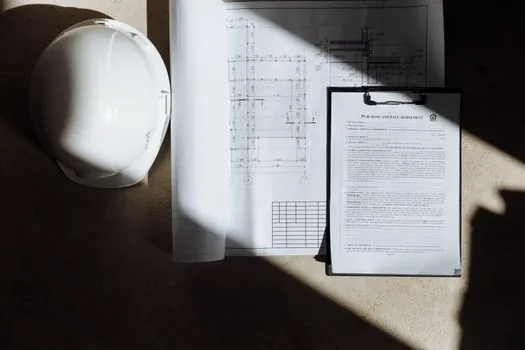
A clean architectural hardware spec (CSI Section 08 71 02) ties product data, material descriptions, dimensions, profiles, and finishes to each opening, and explicitly carves out related sections (hollow metal doors and frames 08 11 13, flush wood doors 08 14 16, automatic entrances, access control in Division 28) so scope is not double-counted [S4]. For a project in California, regional-materials documentation and VOC compliance for sealants, adhesives, and caulks under CALgreen Section 5.504.4.1 and SCAQMD Rule 1168 ride along with the hardware submittal package, not separately [S4]. The general contractor should confirm grade, function, keying, finish, ADA lever compliance, fire-rating compatibility, and electrified-hardware power coordination before any hardware is released for fabrication, since re-keying or re-finishing a 200-unit order is materially more expensive than catching the error on paper [S2].
One signal worth tracking: the 2024 WFM trend piece is the only source here that is now more than a year old (2024-09), and even it flagged the residential move toward matte black, brushed nickel, aged brass, and keyless entry as the dominant direction, which the 2026-04 multifamily spec guide and the 2026-08 architectural hardware design write-up both reinforce without contradicting [S3]. Watch for AHAM/BHMA revisions to the A156.2 lever cycle counts and any updates to the ADA Standards opening-force figures that would shift which closers are acceptable on accessible-unit doors; these are the two documents whose next revisions would most directly change residential hardware shortlists.
Spec-level background on the components involved: building pipe hardware.
Related analysis: PE Pipe Selection for Renovation Projects: Spec-Anchored Guide.