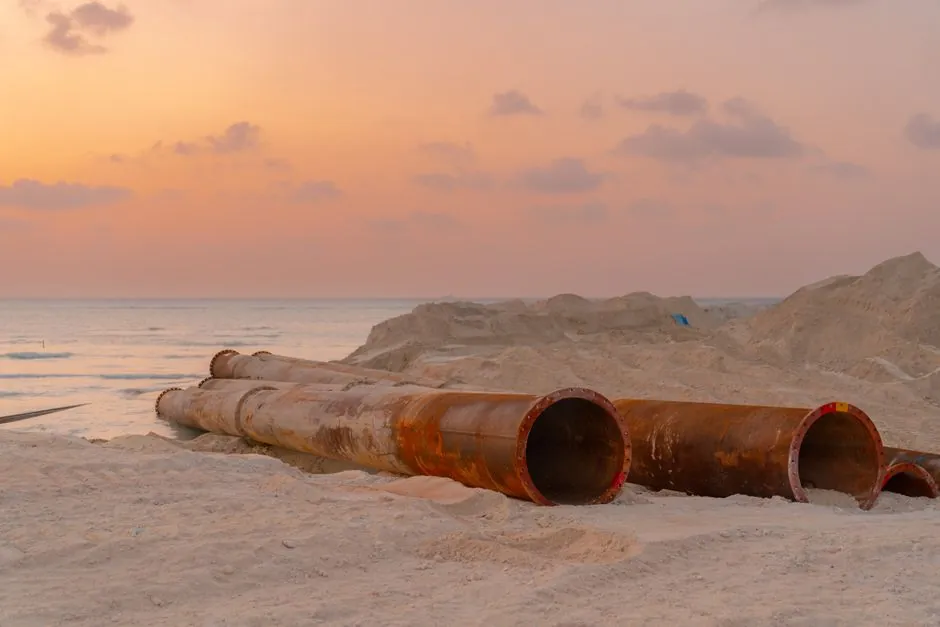
For renovation work, HDPE pipe sized in 1/2" to 24" (with metric equivalents 20 mm to 630 mm) covers the bulk of residential service-line, branch, and main replacement scope, with PE4710/PE100 as the default high-performance material and PE80/PE63 used for low-pressure drainage and irrigation branches [S1][S7].
Standard dimension ratio (SDR) and dimension ratio (DR) are the two numbers that govern wall thickness and pressure class on every renovation: WL Plastics publishes PE4710 IPS sizes from 3/4" to 54" and DIPS from 4" to 36", with FM-approved pressure classes of 200 (DR 13.8), 250 (DR 17.2), and 335 (DR 23.1) as the common renovation bands [S2]. CTS (copper tubing size) and SIDR (standard inside diameter ratio) round out the spec map for service taps and conduit [S2].
Renovation Scope: Where HDPE Wins, Where It Doesn't
HDPE is the right call for potable water service replacement, firewater mains, sewer force mains, slurry bypass lines, mining tailings, and gas distribution service taps because of fused-joint leak-free performance, chemical resistance, and a documented temperature window of -40 to +140 °F (-40 to +60 °C) for pressure service per PPI Handbook Chapter 8 [S3]. For non-pressure service the allowable range extends up to 180 °F (82 °C) [S3]. On renovation sites that demand continuous flow at elevated temperature, HDPE steps out of the picture and CPVC, PP-lined, or austenitic stainless steel take over per the large-project selection criteria [S5].
The economic argument lands in favor of HDPE on most renovation scopes: long service life, no corrosion maintenance, and fused joints that eliminate mechanical-connection leak paths over the asset's lifetime [S1][S4]. Where the renovation is short-duration, low-pressure irrigation-only, or temporary bypass, generic PE (lower-grade PE63/PE80) is the budget call, with HDPE reserved for permanent, high-pressure runs [S7].
Selection Criteria: Flow, Pressure, Fluid, Temperature
Flow rate is the dominant sizing variable, with pipe diameter stepped up to keep velocity in the 1.5 to 2.5 m/s range for typical municipal and industrial water service, while a separate pressure class is selected to sit above the system's maximum operating pressure to prevent failures [S4][S6]. A standard PE4710 IPS chart such as WL 102 (3/4" to 54") and a DIPS chart WL 104 (4" to 36") are the baseline references for renovation specification [S2].
Fluid chemistry drives material choice inside the PE family. Corrosive fluids (crude, seawater, ammonia, acidic process water) point to HDPE or CPVC, while non-corrosive gas and oil service can stay on metal piping [S5]. For above-grade renovation runs exposed to sunlight and seasonal swing, PPI Chapter 8 caps pressure-service temperature at 140 °F (60 °C) and warns that UV, chemical exposure, and mechanical impact each reduce engineering properties compared with buried service, which is why most renovation pipe ends up buried, sliplined, or otherwise shielded even when the original main ran exposed [S3].
Diameter and SDR Comparison for Renovation Duty
Common renovation diameters and pressure classes line up against service duty as follows: 1/2" (20 mm) and 1" (25 to 32 mm) for residential service taps and micro-irrigation; 2" to 6" (50 to 110 mm medium-diameter) for branch replacement, urban potable water mains, and sewer laterals; 12" to 24"+ (above 110 mm large-diameter) for firewater, municipal water, and waste-management force mains [S1][S4]. Within each diameter the SDR/DR value sets the pressure class: DR 11 (heavy) for high-pressure firewater and industrial service, DR 13.8 (FM Class 200, ~13.8 bar) and DR 17 (FM Class 250, ~17.2 bar) for typical municipal renovation, and DR 23.1 (FM Class 335, ~23.1 bar) for lower-pressure irrigation and sewer force mains [S2][S6].
A renovation specifier's quick comparison reads: PE63/PE80 (budget, low-pressure drainage and irrigation, smaller diameters, ~SDR 17 to 33) versus PE100/PE4710 (premium, high-pressure, larger diameters, gas and water, ~SDR 9 to 17) [S7][S8]. For renovation work touching gas service lines, ASTM D2513 governs both IPS and CTS sizing, with WL 129 as the reference chart [S2]. For fire-service renovation, FM-approved PE4710 in Class 200/250/335 carries the listing [S2].
Jointing, Fittings, and On-Site Practicalities
Butt-fusion and electrofusion are the leak-free joint methods that make HDPE the default for renovation replacement, because the fusion zone is stronger than the pipe wall and eliminates the gasket-dependency failure mode of bell-and-spigot systems [S1]. Mechanical fittings and flanged adapters are reserved for tie-ins to existing metallic mains, valve connections, and above-grade transitions, with HDPE pipe fittings selected at the same pressure class as the pipe run.
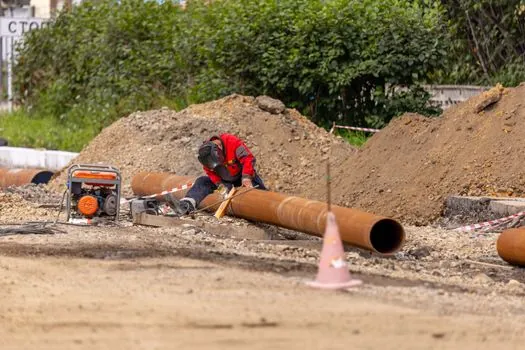
On a renovation site, the practical constraints are: limited excavation footprint (favouring long fused strings pulled through slip-lined or open-cut trenches), restricted shut-down windows (favouring pre-fused assemblies lifted in as single pieces), and tie-in geometry (dictating where PE pipe bends, elbows, and flange adapters go versus where plastic pipe of a different family is needed for chemical or temperature compatibility). For heavy industrial renovation where vibration and mechanical impact are routine, the PPI Chapter 8 guidance on above-grade support spacing and UV shielding applies even if only a short section of the new main runs exposed [S3].
Limitations and Failure Modes to Plan Around

HDPE's three documented weak points in renovation are: (1) temperature ceiling, with pressure service capped at 140 °F (60 °C) and only a few PE grades qualified for 180 °F (82 °C) non-pressure service per PPI Chapter 8 [S3]; (2) UV-driven material degradation on above-grade runs unless the pipe is pigmented, jacketed, or otherwise shielded; (3) lower stiffness than metal, which means long-span above-grade runs need closer support spacing and careful handling to avoid excessive sag or mechanical-impact damage during installation [S3].
Fluid-wise, HDPE handles most corrosive water, slurry, and gas service but is not the right call for high-temperature steam, hot oil above 140 °F, or aromatic solvents that swell polyethylene. A renovation specifier should default to stainless or carbon steel for any run operating continuously above 140 °F, and to stainless pipe or fluoropolymer-lined systems for aggressive hot chemistry. For cold domestic and firewater renovation inside the standard temperature window, HDPE remains the lowest-total-cost-of-ownership option over a 50+ year design life [S4].
Standards and Code Anchors for the Renovation Spec
The key reference documents on the renovation spec sheet are: PPI Handbook of PE Pipe, 2nd Edition, Chapter 8 for above-ground design criteria, including the -40 to +140 °F pressure-service window [S3]; ASTM D2513 for IPS and CTS gas distribution sizing per WL 129 [S2]; FM Approval Class 200/250/335 listings for PE4710 fire-service pipe per WL 130 (2" to 36" IPS, 4" to 36" DIPS) [S2]; and the AWWA C906 / M55 family for PE4710 municipal water transmission, with the IPS chart WL 102 (3/4" to 54") and DIPS chart WL 104 (4" to 36") as the dimension baselines [S2]. Build America Buy America Act compliance (CFR 49 Part 661) is the procurement-side anchor for federally funded renovation projects [S2].
Material classification sits on top of the dimension spec: PE63, PE80, PE100, and PE4710 are the four grades a renovation engineer will see in bid documents, with PE4710 (PE100) as the high-performance default and PE80/PE63 as the legacy or low-pressure option [S7][S8]. For a deeper dive into the polymer families a renovation might encounter across PPR pipe hot-water branches and pipe clamp support spacing, the PPI handbook and the WL Plastics WL 116 standards document give the side-by-side OD and DR tables that drive the final take-off [S2][S3].
Track the PPI Handbook revision cycle and FM Approval listings for any change in the DR-to-pressure-class mapping, and confirm the local AHJ's adoption year of AWWA C906 and ASTM D2513 before locking the renovation spec.
Related analysis: Labeling Machine Selection: Container, Throughput, Label Tech, Environment.