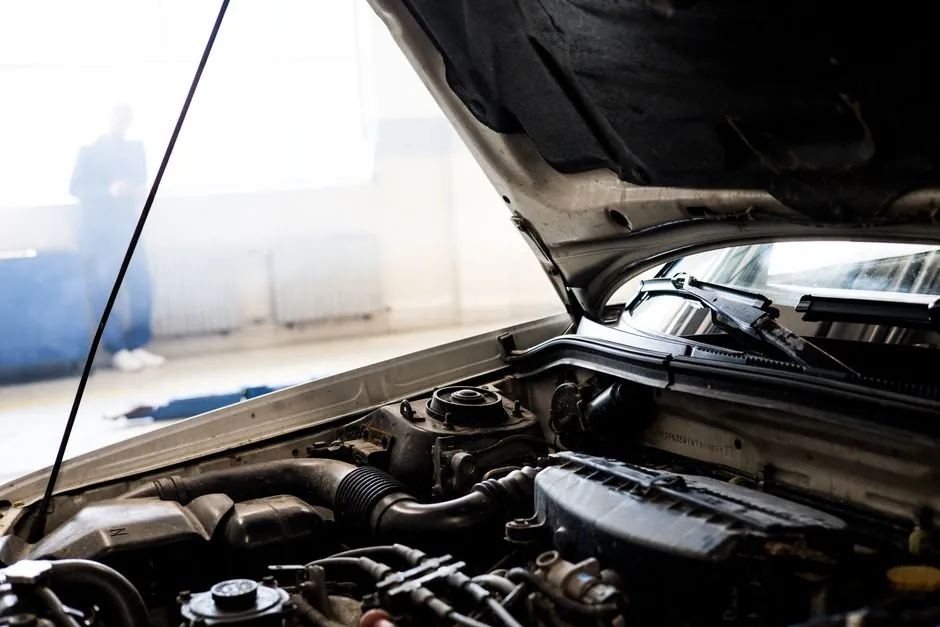
Automotive buyers evaluating a resin sand line should anchor the decision on three quantified inputs: annual order volume per part number, the tighter of the dimensional or hardness specification on the drawing, and the casting alloy (gray iron, ductile iron, or steel). Volumes below roughly 500 pieces per part number rarely justify the amortised cost of a fully automatic flask line; volumes above 5,000 pieces per part number almost always do [S1].
Resin-bonded sand moulds (furan, phenolic-urethane, or alkaline phenolic resin systems) deliver a harder mould than green sand, which translates into better dimensional control, sharper draft-free features, and fewer sand-related inclusions on machined faces, all of which are recurring pain points in automotive crankcases, brake housings, and suspension arms [S1]. The line configuration, however, still has to match the mix of part sizes, weights, and lot sizes that a given foundry actually runs.
Line Types: Manual, Semi-Auto, and Automatic Flask Molding
A manual molding line uses jolt-squeeze or hand-rammed benches with resin sand; it is most competitive on prototype runs, on parts heavier than 500 kg that would need an oversized flask on an automatic unit, and on foundries serving low-mix, high-variability order books [S1]. Cycle times commonly land at 8-15 minutes per mould, and labour content per mould is high.
A semi-automatic resin sand line typically pairs a sand mixer and rollover-rig with manual flask handling; this compresses cycle time to 4-8 minutes per mould and removes the operator from sand compaction, but it still requires a crew to set cores, close flasks, and pour. For automotive brackets, differential housings, and small knuckle-type parts, the semi-auto configuration is the cost-sweet spot for annual volumes in the 1,000-10,000 range [S1].
A fully automatic molding line, the type represented by Sinto, BMD, or DISA horizontal flask units, runs 120-240 moulds per hour on automotive coreset parts and delivers flask-to-flask repeatability inside +/-1.0 mm on a properly maintained machine [S3]. Waupaca Foundry's installation of a Sinto America molding line, paired with an ExOne binder-jetting sand printer for cores, is the clearest 2026 reference point for a North American iron foundry scaling to high-volume auto OEM and Tier 1 demand [S3].
Where Resin Sand Wins, and Where It Loses
Resin sand lines earn their place over green sand on parts requiring tighter dimensional tolerance, smoother as-cast surfaces, and complex internal cavities (because cores set harder and resist metal flow better) [S1]. The price paid is binder cost, fume extraction, and reclaim; modern phenolic-urethane systems (Pepset) and furan systems each have characteristic smell, scrap, and reclamation footprints that the buyer should compare during vendor audits.
Where resin sand loses: short runs where the binder cost cannot be amortised across enough parts, very large castings (above roughly 5 t) where no single flask configuration is justified, and parts whose surface finish requirements are not stringent enough to pay back the harder mould [S1]. On those jobs, a shell mold casting route using rigid resin-coated sand shells can beat a full resin sand flask line, because the shell itself is thin and the per-piece tooling is lighter, even though cycle times are similar.
Buyers specifying a molding line for a 500-50,000-piece automotive program should compare green sand (cheap, soft), resin sand flask (medium cost, hard mould), and shell mold (higher per-piece cost, thinnest wall, tightest tolerance) against four criteria: dimensional tolerance band, surface finish (Ra in micrometres), per-piece cost at the target volume, and lead time on tooling changes. For most iron automotive structural parts, resin sand flask sits in the middle of that matrix, which is why it is the default choice on new Tier 1 sourcing programs in 2026 [S1][S2].
Selection Criteria Mapped to Automotive Sub-Segments
Engine blocks, cylinder heads, and large differential housings: these are best served by an automatic molding line running horizontal flasks, because the volume and the required +/-1.0 mm repeatability on bearing bores cannot be hit on a manual bench at competitive cost [S1][S3].
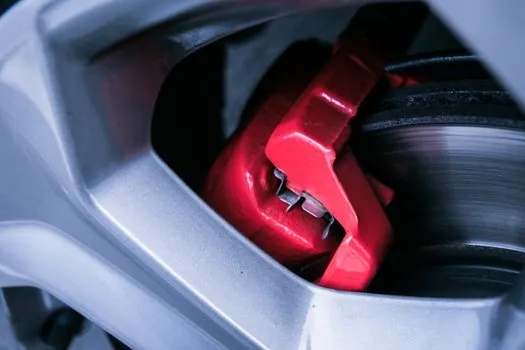
Brake calipers, steering knuckles, and control arms in ductile iron (QT450-10 to QT700-2, i.e., EN-GJS-450-10 through EN-GJS-700-2, with tensile 450-700 MPa): these tolerate semi-auto resin sand on the 1,000-10,000-piece envelope, especially when the foundry also runs an automatic sand mixer that controls resin dosage inside +/-0.3% by weight [S1].
Transmission housings, axle housings, and large structural brackets: at volumes above 10,000 pieces per part number, a Sinto-class automatic line plus a 3D-printed core (binder jetting, as in Waupaca's ExOne install) is the most capital-efficient 2026 solution, because printed sand cores eliminate draft on internal oil galleries that would otherwise force machining [S3].
Prototype and low-volume EV structural castings (under roughly 500 pieces): a manual resin sand bench or a shell mold route is the lower-cost path; automation overhead simply cannot be recovered at these volumes [S1][S2].
Equipment, Materials, and Specs Buyers Should Lock Down
Iron grades commonly sourced from resin sand foundries for automotive use: gray iron HT200 to HT300 (ASTM A48 Class 30A to 40A, tensile 200-300 MPa) for non-pressure housings; ductile iron QT450-10 to QT700-2 (EN-GJS-450-10 to EN-GJS-700-2, tensile 450-700 MPa) for safety-relevant knuckles, control arms, and crankshafts [S1]. Steel castings (low-alloy and carbon grades) are also routinely poured on resin sand lines, with typical pour weights of a few kilograms up to about 10 metric tons on the largest manual stations [S1].
Casting weight range on resin sand lines stretches from roughly 100 g (small brackets) to 10,000 kg on the largest manual or semi-auto stations; the upper bound of a fully automatic flask line is usually constrained by flask size, often 1,200 x 1,000 mm or 1,600 x 1,200 mm on standard Sinto/BMD units [S1]. Buyers should always confirm flask dimensions and maximum mould weight before locking the line spec, because the largest automotive parts (axle housings, large engine blocks) frequently sit at the edge of these envelopes.
Sand system specs that drive casting quality and operating cost: resin addition rate (typically 0.8-1.5% by weight for furan systems, 1.0-1.8% for phenolic-urethane), mould hardness target (typically 85-95 on the Brinell-equivalent mould hardness scale for automotive castings), and sand reclamation rate (well-run lines reclaim 70-90% of system sand, with the remainder being new silica or chromite sand). Buyers should require written data on all three, because they directly drive both scrap rate and binder consumption cost [S1].
Vendor and Standards Signals Worth Tracking
For buyers in 2026, the equipment shortlist for an automatic resin sand line remains Sinto America, BMD (now part of the DISA group), and the Chinese OEMs (Suzhou Mingzhi, Qingdao Jianhua), with capex ranging widely depending on flask size, mixer throughput, and pouring line integration. Waupaca's addition of a Sinto America molding line in 2025-2026 is a useful external benchmark for what a North American iron foundry invests when scaling to high-volume auto work [S3].
Standards to enforce on incoming castings: ASTM A48 for gray iron, ASTM A536 for ductile iron (the EN equivalents are EN-GJL and EN-GJS respectively), and ISO 8062 for dimensional tolerance system on sand castings, with CT8-CT10 the typical range for resin sand [S1]. For surface finish, request Ra data sampled at multiple locations, because resin sand surfaces vary more with sand grain than green sand surfaces do.
Two trackable signals to watch over the next 12-18 months: first, the spread of binder-jetting core printing into more iron foundries, as already deployed at Waupaca, which will further erode the dimensional advantage of machined cores [S3]; second, tighter EU and US regulations on phenolic and furan binder VOC emissions, which will push more foundries toward alkaline phenolic or inorganic binder systems on new molding line investments. Buyers specifying a 2026 line should therefore require a binder chemistry that can be swapped without major capital rework, because the next regulatory tightening is on the visible horizon even if its exact date is not yet fixed in stone.
This topic is covered further in ALC Panel Selection for Prefabricated Construction: Spec Map 2026.