
Energy-equipment buyers specifying resin sand lines for housings, valve bodies, and gearbox cases should anchor decisions on three numbers: tensile grade required (400-700 MPa for ductile iron vs 150-350 MPa for gray iron), annual volume break-even between manual and automatic moulding (typically 800-1500 boxes/year), and minimum wall thickness achievable (3-5 mm with resin sand vs 6-8 mm with green sand).
Resin-bound sand uses a thermosetting binder (typically furane, phenolic, or alkaline phenolic) that cures around heated patterns, producing rigid molds with higher dimensional accuracy, better surface finish (Ra 6.3-12.5 µm), and lower moisture-related defects than green sand molds. For power-generation and oil-and-gas castings, this translates into fewer weld repairs, tighter as-cast tolerances (CT 7-9 per ISO 8062), and faster machining throughput.
Resin Sand vs Green Sand vs Shell Mold: Decision Criteria
Resin sand sits between green sand and shell mold in cost-per-ton and precision, with a clear technical envelope. Resin sand lines produce gray iron ASTM A48 Class 20-45 (150-350 MPa) and ductile iron ASTM 60-40-18 to 80-55-06 (400-600 MPa) for pump casings, valve bodies, and turbine housings; green sand handles higher-volume lower-precision parts; shell mold is reserved for thin-wall precision runs under 50 kg with surface requirements below Ra 6.3 µm [S1][S3].
Sand castings account for over 80% of all castings produced worldwide, and within that volume, resin sand claims the premium-industrial segment where defect-cost avoidance matters more than raw mold price [S2]. For foundries running 200-2000 t/year of energy-equipment castings, a resin sand line typically breaks even on labor and scrap savings within 18-30 months compared with green sand conversion of equivalent parts.
Process Mechanics and Moulding Line Configuration
Resin sand molds form by mixing silica sand (AFS 50-70 grain fineness) with 1.0-1.8% liquid resin binder and 0.5-1.0% hardener, then compacting around a pattern; cure times run 30-90 seconds on automatic lines versus 2-4 hours on manual benches. Automatic moulding lines deliver box sizes from 600x500x200 mm up to 2500x2000x800 mm, with cycle rates of 15-40 molds/hour depending on flask size and sand formulation [S1][S2].
Critical process controls include: sand temperature (20-35°C for consistent cure), bench life (10-20 minutes for furan resin before hardening), and tensile strength of the cured mold (0.8-1.4 MPa for furan, up to 2.0 MPa for alkaline phenolic). Foundries running ductile iron at 700 MPa tensile (QT700-2 equivalent) require tighter moisture control under 0.3% to avoid gas porosity at thin sections [S2].
Material Grades and Energy-Equipment Application Mapping
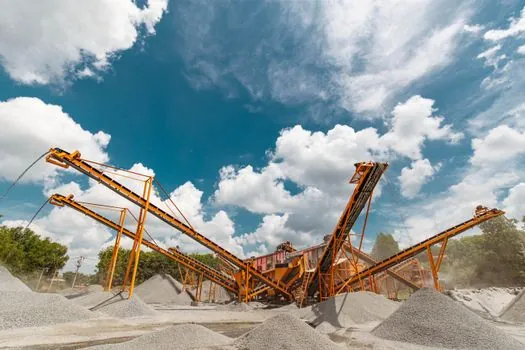
Energy-equipment castings cover a defined alloy-and-grade envelope. Gray iron HT250/HT300 (200-300 MPa) suits motor housings and gearbox cases; ductile iron QT500-7/QT600-3 (500-600 MPa) covers pump casings and valve bodies rated for 1.6-10 MPa working pressure; QT700-2 (700 MPa) handles high-load structural parts in wind-turbine hubs and hydro-turbine runners [S2].
Stainless-steel and high-temperature alloy castings remain outside the standard resin-sand envelope and route to shell mold or investment casting lines [S3].
Automatic vs Manual Moulding Lines: When Each Pays Back
Manual moulding lines remain cost-effective below 800-1500 boxes/year or for parts exceeding 5 t per casting; they offer flexibility for prototypes and short runs but rely on operator skill for mold hardness uniformity.
Energy-equipment buyers with mixed part sizes (e.g., 50 kg motor housings alongside 3000 kg turbine casings) often run a hybrid: one automatic line for the high-volume small-to-medium parts, plus a manual bay for heavy castings. The automatic molding line typically runs flask sizes up to 1500x1200x600 mm at 20-30 molds/hour; heavy castings above this envelope stay on the manual floor with crane-served flasks.
Selection Criteria: Volume, Part Weight, Tolerance, and Surface
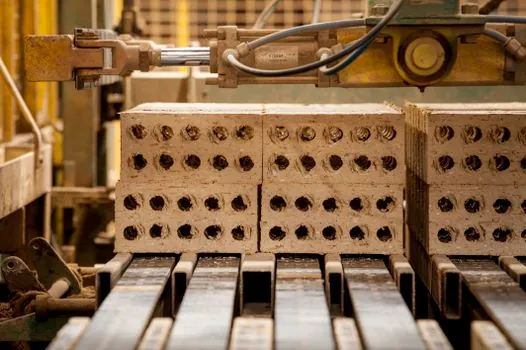
Match the line to four gating variables. Annual volume: under 500 t favors manual resin sand or shell mold; 500-3000 t favors automatic resin sand; above 3000 t favors automatic green sand with resin sand reserved for high-grade castings. Part weight: under 50 kg with tight tolerances routes to shell mold or resin sand; 50-5000 kg routes to resin sand; above 5000 kg requires no-bake floor molding with heavy-flask handling [S1][S2].
Tolerance and surface requirements complete the picture. Resin sand achieves CT 8-10 per ISO 8062 and Ra 12.5-25 µm as-cast, suitable for parts with 3-5 mm machining stock. Shell mold pushes to CT 6-7 and Ra 3.2-6.3 µm, but at 2-3x the mold cost and limited flask size (typically under 600x600 mm pattern plate). Buyers specifying automatic molding lines for energy-equipment housings should request proof of mold-hardness mapping data and pour-rate tracking before locking the purchase order.
Standards, Defect Modes, and Quality Gates
Resin-sand-foundry quality gates follow ISO 8062 (dimensional tolerance), ISO 4990 (steel and iron castings, general requirements), and ASTM A781 (common requirements for castings). Defect modes specific to resin sand include: gas porosity (controlled by venting and bench-life management), veining (controlled by coating thickness and pouring temperature), and hot tears (controlled by riser design and pouring rate) [S1].
Resin sand carries two known limitations operators must price in. Second, reclamation: used resin sand requires thermal or mechanical reclamation to break down cured resin, adding 8-15% to operating cost but recovering 70-90% of sand for reuse. Buyers should request the foundry's reclamation yield and binder consumption per ton of casting as a sourcing metric.
Trackable signals for the next sourcing cycle: foundries running QT600-3 and above at scrap rates under 0.5% with documented mold-hardness mapping, and resin-reclamation loops recovering over 80% of sand, will outpace competitors on energy-equipment casting bids through 2026-2027.