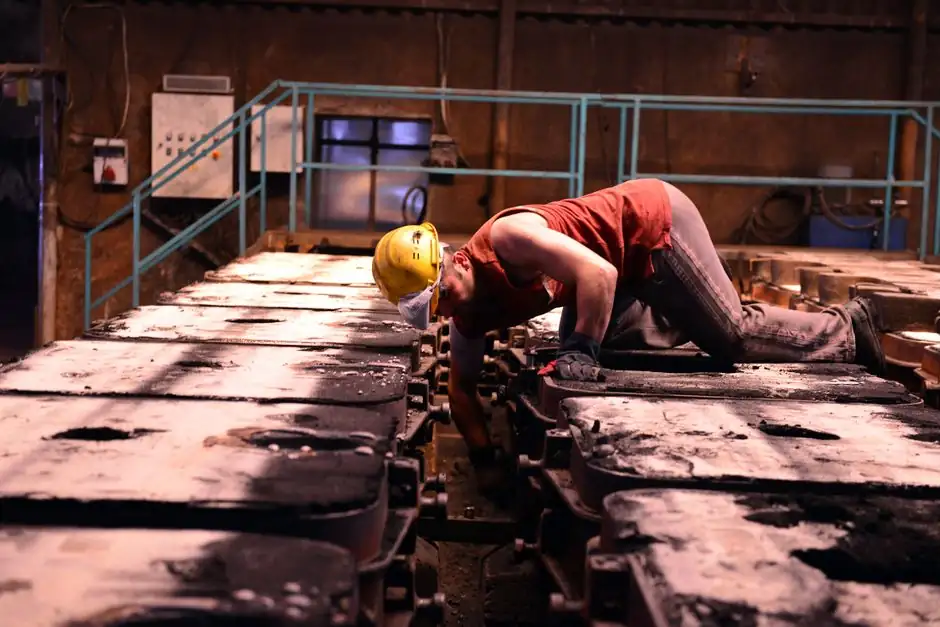
Hardware manufacturers specifying a resin sand line in 2026 are prioritising binder chemistry, mould hardness uniformity, and tolerance grade CT8–CT10 over raw flask size, with phenolic-urethane no-bake and furan-resin systems dominating new builds for iron and carbon-steel hardware [S1][S3].
Hardware foundries producing brackets, hinges, gate hardware, and structural fasteners in 0.05–50 kg shot weights are the primary addressable market for this equipment class.
Process Scope: Resin Sand vs Green Sand vs Shell Mold
Resin-bonded sand moulds achieve dimensional tolerances of CT8–CT10 per ISO 8062-3 and surface roughness of Ra 12.5–25 µm directly from the mould, a measurable step better than green-sand moulds at the same hardness level, because the thermoset binder locks grain geometry before pouring [S1][S3]. For hardware components requiring tighter features, shell molding tightens that band to CT5–CT7 and Ra 3.2–6.3 µm, at the cost of higher per-piece tooling investment and limited maximum part size around 600 × 500 × 400 mm [S2][S3].
Within the resin-sand family, three binder systems compete for hardware work: furan resin (acid-catalysed, lowest cost, used for steel and iron), phenolic-urethane (alkaline phenolic + isocyanate, no nitrogen or sulphur pick-up, preferred for ductile iron and stainless), and shell-mould phenolic resin (applied to heated pattern, used where surface finish is paramount) [S2][S3]. Stainless hardware in grades 304, 316, 316L, 2205, and 17-4 PH is almost universally run on phenolic-urethane to avoid sulphur-induced hot tearing and nitrogen porosity above 1,450 °C pouring temperatures [S3].
Selection Criteria: Volume, Geometry, and Alloys
Above 5,000 pieces per month, automated flaskless molding lines with on-line sand reclamation deliver mould hardness consistency of ±3 Shore A points versus ±8 points on manual lines, directly reducing casting scrap rates by 1.5–3 percentage points in well-run operations [S1].
For ductile-iron and grey-iron hardware (HT200 to HT350 in Chinese designation, or ASTM A48 Class 30A to Class 45 equivalents), furan resin with sulphonic-acid catalyst remains the dominant chemistry in 2026; for stainless and high-chrome hardware, phenolic-urethane is specified because its nitrogen and sulphur content is roughly an order of magnitude lower than cold-set furan [S3][S4]. Sand grain size distribution is graded to AFS 50–65 for hardware castings in the 1–20 kg range, balancing surface finish, permeability, and mould strength [S2].
Comparison: Resin Sand, Shell Mold, and Green Sand on Hardware Workloads

On four decision criteria relevant to hardware buyers, the three expendable-mold processes rank as follows. Dimensional tolerance: shell mold CT5–CT7, resin sand CT8–CT10, green sand CT10–CT12, per ISO 8062-3 [S3]. Surface roughness from mould: shell mold Ra 3.2–6.3 µm, resin sand Ra 12.5–25 µm, green sand Ra 25–50 µm [S2][S3]. Maximum part size: green sand and resin sand reach 10 metric tons, shell mold caps at roughly 50 kg in commercial hardware work [S1][S3].
Hardware procurement teams who already run steel and stainless work typically standardise on a single resin-sand line with phenolic-urethane capability, accepting the higher binder cost to keep one process qualified across the alloy range, rather than running furan and phenolic-urethane in parallel [S3]. For foundries serving both architectural hardware and building pipe hardware end-uses, the no-bake phenolic-urethane route also simplifies sand reclamation because thermal or attrition regeneration works without neutralising residual acid catalyst [S3].
Real Use Cases in Hardware Foundries
Gate and fence hardware, including hinges, latches, and ornamental post caps, is a textbook resin-sand application: medium weight (0.3–8 kg), visual surface requirements that demand Ra 12.5–25 µm, and batch sizes typically in the 2,000–10,000-piece range that justify a flaskless line running one 800 × 600 mm mould every 10 minutes [S1]. For architectural hardware such as door closers, lock bodies, and decorative iron escutcheons, foundries use resin-sand moulds to capture the draft-free geometry and fine textural detail that green-sand cannot, with a typical surface allowance of 0.5–1.5 mm per face for finish machining [S1][S3].
Stainless pipe fittings and valve trim in the 0.05–50 kg range go through phenolic-urethane resin-sand lines to keep sulphur below the 0.02 wt% threshold where hot tearing becomes a reject mode in austenitic and duplex grades; this is the same hardware segment covered in adjacent procurement guides such as resin sand molding line selection for pump and valve production and the automatic molding line reference, both of which emphasise binder-system matching to alloy [S3].
Limitations and Failure Modes
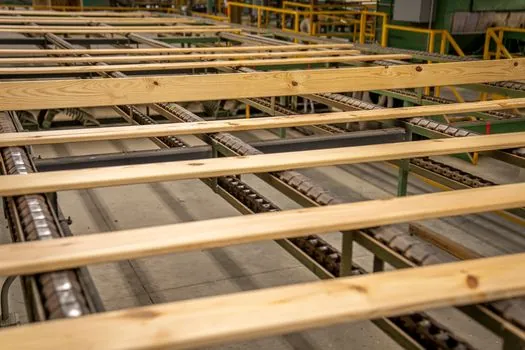
Resin-sand lines are not the right answer for every hardware job. Wall thickness below 3 mm is difficult to fill in resin-sand moulds because the rigid thermoset skin cools the pour faster than the same geometry in green sand; thin-wall hardware (under 3 mm) is normally routed to investment or shell-mould processes [S3]. Lead time for a new flaskless additive-manufacturing-material print or pattern set is 3–6 weeks, against 1–2 weeks for a conventional wood or aluminium pattern on a manual line, which matters when hardware launches are tight [S1].
Resin-sand foundries also have to manage three recurring defect modes: gas porosity from inadequate venting of the thermoset shell, sand burn-on when resin decomposition exceeds 1,100 °C at the metal-sand interface, and peel-back at sharp corners where mould strength is anisotropic [S3]. Pouring temperature windows for stainless hardware in resin-sand shells sit at 1,450–1,600 °C; outside this band, the resin binder either degrades (above) or fails to cure the surrounding sand (below) [S3].
Sourcing, Standards, and Trackable Signals
Hardware buyers verifying a foundry's resin-sand capability should request ISO 9001 certification and the ASTM or EN material standard being poured to; for stainless hardware, ASTM A351, A743, A744 and EN 10283 are the four standards most commonly cited in 2026 supplier declarations [S3][S4]. Dimensional acceptance per ISO 8062-3 (CT grade) and surface roughness per ISO 4287/4288 (Ra) are the two metrics that distinguish a properly tuned resin-sand line from a marginal one, and a foundry that cannot quote both in writing is not ready for precision hardware work [S1][S3].
Three signals to track over the next two quarters: phenolic-urethane binder pricing, which has moved with crude-tar derivative inputs; induction furnace capacity additions at hardware-focused foundries, with 150–500 kg heat sizes the most common scale-up tier; and published pricing for SS 316 resin-sand hardware, currently around US$ 11.50 per kilogram FOB India for indicative 2026 baseline volumes [S3]. Buyers cross-checking resin sand molding line selection for automotive parts will see the same alloy-and-binder matching logic, confirming the procurement playbook is converging across hardware, pump, and automotive segments.