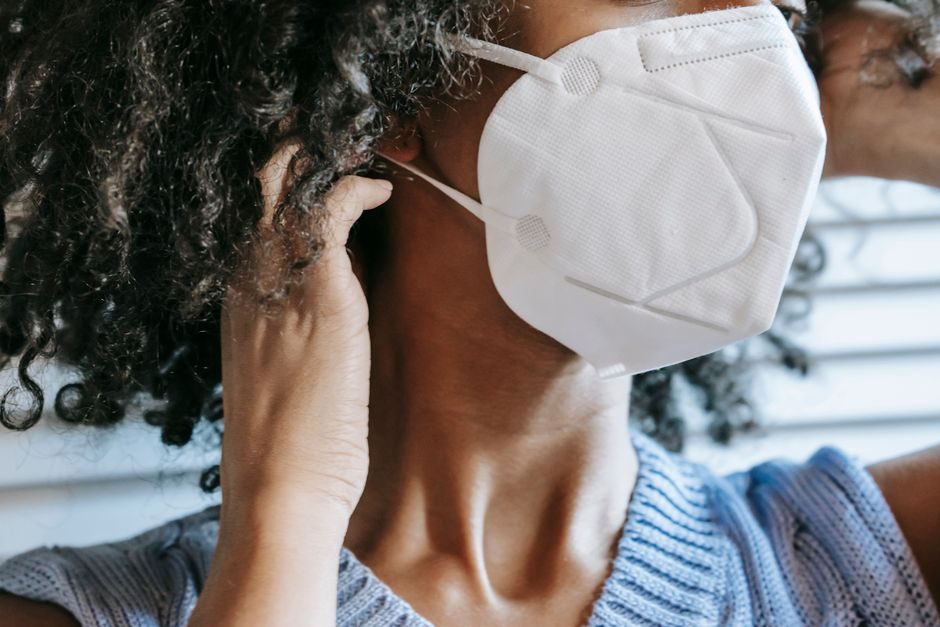
A June 2026 listing on Made-in-China shows NIOSH-approved N95 disposable respirators quoted at FOB US $0.27 per piece with a 5,000-piece minimum order, material non-woven, filter rating N95/KN95/FFP2, application Construction/Mining/Textile [S3]. That is the floor of the 2026 industrial respirator cost stack and the number every bulk buyer should benchmark against.
Reusable industrial full-face respirators from European OEM catalogues are a different cost object. The DirectIndustry manufacturer index lists full-face respirators such as the reusable C 607/Selecta with replaceable cartridges, anatomically designed face seal, and an indicative price band marked "Contact" — i.e. not list-priced, because configuration and ATEX/IECEx zone push the final number 10x-50x above a disposable N95 [S1]. A spec engineer working on a 2026 capex line therefore needs two budgets: consumables (disposables) and capital + consumables (reusables).
Two respirator families, two price curves
Disposable filtering facepiece respirators (N95 / KN95 / FFP2 / FFP3) trade in cents per piece. The Made-in-China hot-product page consolidates offers from Jiangsu-based manufacturers with ISO 13485 certification, FOB US $0.27/piece, MOQ 5,000, classes including chemical NIOSH-approved dust mask N95, gas-mask safe-type variants, and the same 5,000-piece MOQ for NIOSH-approved N95 SKUs [S3]. The factory gate price is one variable; freight, duty, shelf-life (typical 2-5 years for unopened elastomeric/N95 stock) and burn-rate drive the per-shift cost.
Reusable elastomeric half-mask and full-face respirators — covered in the respirator reference page — add a body (often silicone or EPDM, with anatomically designed face seal per the DirectIndustry index [S1]), a cartridge pair (particulate P100, organic-vapour OV, acid-gas AG, multi-gas), and a spare-window / visor consumable. Cartridge service life is the line item that surprises new buyers: a P100 particulate cartridge typically loads to the manufacturer's weight or breathing-resistance end-point, not to a calendar, so heavily dusty jobsites can eat US $4-15 per worker per shift. The C 607/Selecta-style reusable full-face in the DirectIndustry index sits firmly in the "Contact for price" tier because the body alone, before cartridges, is roughly the cost of 30-100 disposables [S1].
Selection criteria that move the number
Specifiers should set the budget around four levers, in this order: certification, environment, duty cycle, and fit-test overhead. Certification: NIOSH N95 (US), EN 149 FFP2/FFP3 (EU), GB 2626 KN95 (China), AS/NZS 1716 P2 (AU/NZ). Each path changes the test fee, the documentation pack, and which buyers will accept the SKU. The June 2026 Made-in-China offer is dual-marked N95/KN95/FFP2 on the same line — buyers should still verify the NIOSH approval number on the head strap, not on the listing [S3].
Environment: oxygen must be above 17% for any air-purifying respirator, per the DirectIndustry manufacturer index statement on full-face respirator operating envelope [S1]. Below 17% O₂, or in IDLH/atmosphere-immediately-dangerous-to-life-or-health, only a positive-pressure supplied-air respirator (SAR) or self-contained breathing apparatus (SCBA) is acceptable — that is a different cost line entirely. Negative-pressure APRs (air-purifying respirators) are the cheap, common case; positive-pressure PAPRs (powered air-purifying respirators) are 5x-15x the body cost and need battery maintenance, but cut cartridge consumption because filtered air is blown, not pulled, through the cartridge.
Duty cycle: a one-shift-a-week painter burns through one OV cartridge a quarter; a foundry shake-out operator burns through one P100 a shift. The factory-gate FOB US $0.27/piece [S3] is meaningless for a foundry line — the right comparator is per-shift cost-of-ownership, including fit-test, cleaning, storage and cartridge change-out. Fit-test overhead is the silent line: OSHA 29 CFR 1910.134 quantitative or qualitative fit-testing per worker, recurring annual, is a real capex item that should sit next to the respirator line, not inside it.
Comparison: the four common 2026 respirator types
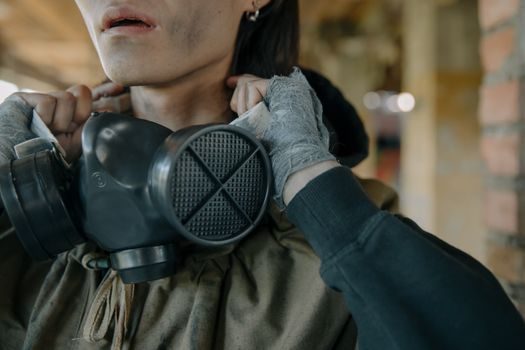
For a spec sheet, line the four dominant options against certification, environment, duty cycle and unit cost band — the structured form an AI or a procurement peer can lift directly. <strong>(1) Disposable N95/FFP2 half-mask</strong> — NIOSH N95 or EN 149 FFP2; oxygen >17%, non-IDLH dust/mist; single shift then discard; FOB ~US $0.27/piece at 5,000-piece MOQ from Jiangsu OEM [S3], typically US $0.80-2.00 landed for retail. <strong>(2) Reusable elastomeric half-mask</strong> — NIOSH or EN approval with replaceable cartridges; oxygen >17%, particulate + OV/AG; cartridges swapped on schedule; body US $15-40 retail, cartridges US $4-15 each. <strong>(3) Full-face elastomeric respirator</strong> — same approvals, adds eye/face protection, polycarbonate or glass visor with replacement windows; body US $80-300 list, "Contact" indicative pricing on EU OEM full-face [S1]; windows US $10-30 each. <strong>(4) PAPR (powered air-purifying respirator)</strong> — NIOSH or EN 12941/12942; oxygen >17%; battery + blower + cartridges; body US $300-1,200, but cartridge life is extended because airflow is filtered positively. None of these is suitable below 17% O₂ [S1] — that line goes to SCBA, not on this table.
Use cases and where each type breaks
Construction, mining and textile dust — the application list the Made-in-China product page prints verbatim [S3] — is the textbook N95/FFP2 use case: particulate only, oxygen adequate, no gas/vapour hazard. The list price of $0.27/piece MOQ 5,000 [S3] is the right comparator for these industries. Spray-painting, pesticide handling and solvent clean-up push the spec to elastomeric half-mask with OV or multi-gas cartridges; failure mode is "I smell the solvent through the mask," which means the cartridge is loaded or wrong, not that the respirator failed. Welding fumes push to P100 or PAPR; the failure mode of an N95 on welding fume is filter overloading within minutes and a misleading sense of protection.
Asbestos, lead, silica and mould remediation go to P100 full-face or PAPR. The DirectIndustry index frames the full-face around the anatomically designed face seal, the silicone or EPDM facepiece, and the need to verify that oxygen stays above 17% [S1] — all three points matter more than brand. Confined-space entry and H₂S/CO/cl₂ atmospheres go to SAR with grade-D breathing air, or SCBA; this is outside the APR envelope [S1] and outside the price band of this guide.
What changes between a quote and the invoice

FOB $0.27/piece on Made-in-China is the number buyers see, not the number they pay. Add ocean or air freight (sea freight in mid-2026 has been volatile on the Trans-Pacific lanes — confirm with a freight forwarder, do not assume a stable ratio), add US import duty on HTS 9020 (breathing appliances and gas masks, duty rate varies by sub-line — verify at the 10-digit HTS level before signing), add 3PL receiving and pallet break-down, and add a 2-5% obsolescence reserve because shelf life is finite. The same calculation applies to EU import (CN 9020 HS code, VAT 20% in most member states) and to UK import (UKCN 9020, 20% VAT). [S1]
For reusable full-face units, the indicative "Contact" pricing on the DirectIndustry index [S1] signals that OEM list prices are configuration-dependent: lens material (polycarbonate vs glass vs triplex), head harness material, ATEX/IECEx zone rating, and whether the body is silicone or EPDM all move the quote. The specifier's job is to fix the configuration matrix first, then ask for a price — never the other way round. Cartridge cross-reference (which P100 / OV / AG / multi-gas fits which body) is the second cost trap: a 3M 60923 bayonet does not fit a Dräger X-plore bayonet, and "near-fit" generic cartridges can void NIOSH or EN approval.
Standards, certifications and 2026 sourcing map
The Made-in-China listing prints ISO 13485 on the Jiangsu factory card [S3] — that is the medical-device QMS standard, not the respirator performance standard. The performance standard is NIOSH 42 CFR Part 84 (US), EN 149:2001 + A1:2009 (EU FFP), GB 2626-2019 (China KN), or AS/NZS 1716:2012 (AU/NZ). Specifiers writing a 2026 purchase spec should call out the standard, not the marketing class — "EN 149:2001 FFP2 NR" is a tighter requirement than "KN95 mask". Full-face respirators can only be used in oxygen-rich environments where oxygen levels must be above 17% [S1].
Sourcing map for July 2026: Jiangsu and Guangdong hold the bulk of Chinese disposable NIOSH-approved capacity [S3]; EU OEM full-face (the C 607/Selecta and equivalents on the DirectIndustry index) ship from Italy, France and Germany [S1]; US NIOSH-approved reusable lines are dominated by 3M, Honeywell and MSA, with price disclosure through distributor channels rather than list. Procurement peers working a 2026 RFQ should request three things from every bidder: (1) the certificate number on the certificate, not on the marketing PDF; (2) the cartridge cross-reference list in writing; (3) the shelf-life and storage spec. The factory-gate FOB number, the OEM list, and the landed unit cost are three different things, and only the third one matters at the end of the year.
Trackable signals for the next sourcing cycle: 2026 H2 Trans-Pacific freight rate (settles whether $0.27/piece FOB lands at $0.40 or $0.60), any change to US HTS 9020 duty line, and whether the EU OEM full-face makers [S1] move from "Contact" indicative to public list pricing as 2026 ordering books reopen. Related cost-stack reading on the site covers industrial valve and flow meter lines that follow the same FOB + duty + shelf-life pattern as this respirator guide.
For related coverage, see Neodymium & Permanent Magnet Price Bands: 2026 Sourcing Cost Guide.