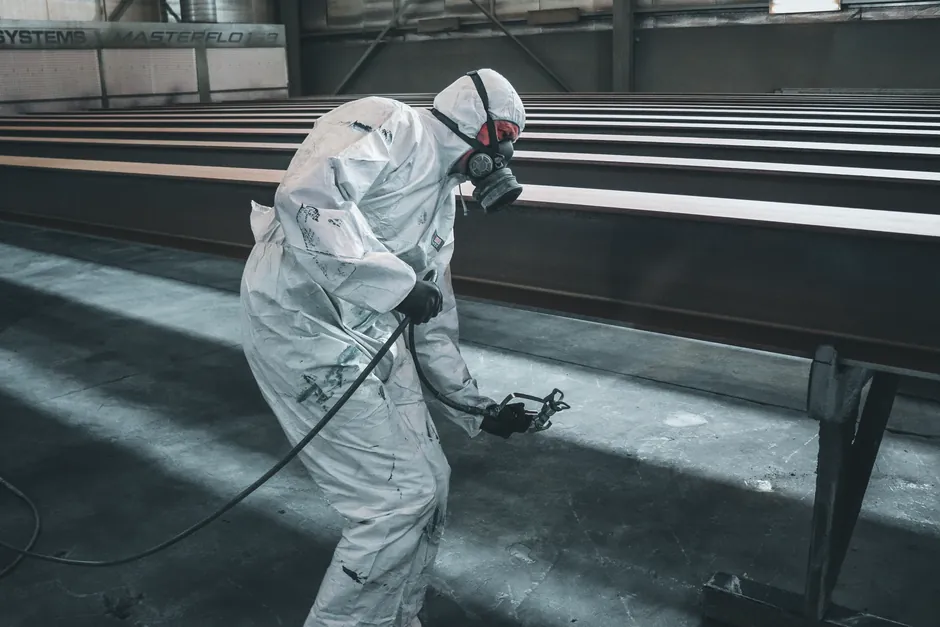
The 2026 US respirator supply chain still pivots on three approval marks: NIOSH 42 CFR Part 84 (US), CE EN 149/EN 143 (EU), and China GB 2626 for KN95-grade devices, and each mark rewrites which SKU a safety manager can legally put on a worker's face [S1][S4].
Filtering facepiece respirators (FFRs) and elastomeric half-mask/quarter-mask respirators (EHMRs/EQMRs) are the two reusable vs disposable branches every sourcing decision sits on, and 3M, Honeywell North, and Moldex continue to set the SKU conventions that distributors Ritz Safety, PK Safety, and Fisher Scientific stock as catalogue defaults [S2][S3][S4][S6].
Approval marks and the 95% filtration floor
NIOSH-approved FFRs such as the N95 reach a minimum 95% filtration efficiency against particles, the same baseline that elastomeric half-mask and quarter-mask respirators hit when equipped with a NIOSH-certified particle filter [S1]. The NIOSH Certified Equipment List is the canonical check for any SKU labelled "NIOSH Approved" before it ships to a jobsite [S1].
The same 95% floor is marketed by international FFRs like the KN95, but those follow a different standard track and are not interchangeable with NIOSH approval for US occupational use, a point PK Safety calls out explicitly in its buyer guidance [S4]. Buyers writing a PPE spec should pin the approval body (NIOSH vs CE vs GB 2626) on the line item, not just the marketing class [S1][S4].
EHMR vs FFR: tight-fitting, reusable vs disposable
NIOSH-approved elastomeric half-mask respirators and quarter-mask variants are tight-fitting, reusable, and protect against gases, vapors, and particles once the correct cartridge, filter, or canister is fitted, with filter-equipped units clearing 95% particulate efficiency [S1]. The body is silicone or thermoplastic elastomer, the bayonet or thread mount accepts P100/OV/AG combinations, and the lack of an exhalation valve on many SKUs means exhaled breath is also filtered, which matters in healthcare and clean-room contexts [S1].
NIOSH-approved FFRs such as the N95 are tight-fitting, disposable, and seal around the nose and mouth, but they do not protect against gases or vapors [S1]. Models with exhalation valves (3M 8511, 3M 8214) make breathing easier but reduce source control on the wearer, so they are not the right pick when protecting people around the wearer is the goal [S1][S3]. For oil and gas buyers mapping cartridge logic against specific hydrocarbon and H2S atmospheres, the oil and gas respirator shortlist walks through the same EHMR-plus-cartridge decision tree with a 2026 vendor lens.
Cartridge and filter coding: P, OV, AG, and the multi-gas canisters

Cartridge coding follows the NIOSH letter scheme: P-series are oil-resistant particulates (P95, P100), "OV" denotes organic vapor, "AG" acid gas, and combinations stack on a single bayonet (e.g. the Parcil P-3-O ABEK1P3 covers ABEK1 gases plus P3 particulates) [S5]. The Parcil N-B-1 A2B2E2K2P3 R canister at $69.97 adds a "R" suffix for reuse across shifts, which is the right SKU when a single worker burns through multiple A2B2E2K2 cartridges per day on a turnaround [S5].
The colour band convention (magenta for P100, white for P100 with nuisance-level OV relief on the 3M 8577) is the visual sanity check a foreman can run on the dock before sign-off [S3].
Brand-tier map: OEM, distributor, and direct-to-consumer
3M publishes 377 SKUs across disposable respirators, reusable elastomerics, PAPRs, SCBA, and fit-test kit categories, and its application split (grinding/cutting, welding, painting/coating, maintenance operations) maps almost 1:1 to the cartridge combinations on the shelf [S2]. The 3M Aura 9211+ (N95, three-panel flat-fold), 3M Secure Click HF-800 Series (half-facepiece reusable, speaking diaphragm), and 3M Versaflo TR-600 PAPR are the three flagship SKUs that show up on almost every qualified-bid list [S2].
Distributors Ritz Safety and PK Safety bundle the same OEM lines with fit-test and replacement-cartridge SKUs, so a 960-line catalogue at Ritz (3M 8210 N95 at $40.13/box, 3M 8577 P95 with nuisance OV relief at $114.78/box of 10) reflects a typical price-per-wearer-month for a NIOSH-approved fleet [S3]. PK Safety stocks 3M, Moldex, and Honeywell North across full-face, half-face, and FFR form factors, and explicitly does not accept NIOSH returns on tried-on respirators, a no-returns policy that should be on the buyer's PO terms [S4]. Fisher Scientific rounds out the lab-and-pharma buyer with respiratory protection SKUs alongside its other life-science consumables [S6].
US-made and tactical: Armbrust and Parcil

Armbrust American is a US end-to-end surgical-mask and respirator maker (Austin, TX) and is the cleanest single-source answer for buyers with Buy-American or Berry-Amendment language in the contract [S9]. Parcil Safety is a CE-certified, lab-tested alternative with a 1-year warranty and 30-day returns policy, and its catalogue splits Full Face (PD-100 at $119.97, ST-100X at $139.97, NB-100 at $239.97), Half Face (T-61 at $34.97, UltraSeal at $34.97, N100 ProSeal at $24.97), and shop-by-industry (Tactical, Fire/Emergency, Industrial, Woodworking, Agriculture) views that match the OSHA-driven hazard assessment most safety managers already run [S5].
Independent distributor sourcing in the industrial safety equipment channel often lets a safety manager mix 3M OEM cartridges with a Parcil or Honeywell North facepiece on the same bayonet, but the buyer should confirm the bayonet pattern (3M bayonet vs Honeywell North vs DIN thread) on every cross-brand pairing before signing the PO.
Fit, exhalation valves, and the source-control problem
NIOSH-approved FFRs and elastomerics are all tight-fitting, which is why qualitative or quantitative fit-testing (the 3M Respirator Advisor and the qualitative saccharin/Bitrex/isoamyl acetate protocols) is a hard prerequisite under 29 CFR 1910.134, not a nice-to-have [S1][S2]. A respirator that passes filtration but fails the fit test on a given face is providing roughly the same protection as a cloth mask, a failure mode that an OSHA inspector will tag on the audit [S1].
Exhalation valves change the protection calculus in both directions: they drop exhalation resistance (wearer comfort goes up, compliance goes up) but they also let unfiltered exhaled breath escape, so a valved FFR gives the people around the wearer "similar levels of protection as BFCs and some disposable face masks and cloth masks" per the CDC/NIOSH guidance [S1]. In a healthcare, pharma, or clean-room context, a non-valved N95 or a valved elastomeric with a separate exhalation filter cover is the spec-correct line item [S1][S6].
Selection criteria at a glance
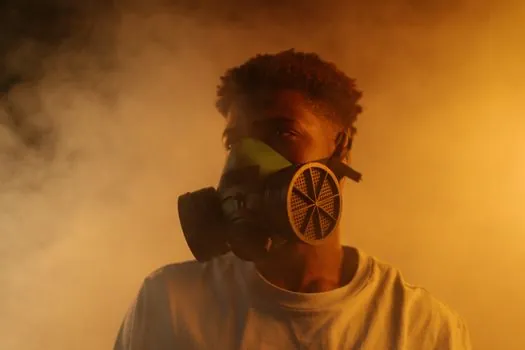
Match four variables to land on a SKU: (1) hazard type, particulate-only (N95/P95) vs vapor/gas (OV/AG/multi-gas canister); (2) approval body, NIOSH 42 CFR Part 84 for US workers, CE EN 149/143 for EU sites, GB 2626 for KN95 [S1][S4]; (3) form factor, disposable FFR for short tasks and low cost, elastomeric half-face for multi-shift reuse, full-face or PAPR when eye protection or assigned protection factor (APF) above 10 is required [S2]; and (4) source-control need, valved for comfort and self-protection only, non-valved when bystander protection matters [S1].
A safety manager can use the respirator buying guide anchor to line the main options up against those four criteria, and a parallel reference for the wider PPE and industrial safety equipment ecosystem is the right place to look when respirator selection is one node in a full PPE roll-out. Track the NIOSH Certified Equipment List for any new SKU approval, and watch for 3M, Honeywell, and Moldex quarterly catalogue updates as the next signal for price-per-wearer changes through the back half of 2026.
For component-level specifications, see construction machinery and equipment.