
A turnover box does not inherently require RFID, but closed-loop asset tracking typically needs a unique RFID identity for each reusable container so movements can be recorded automatically.
The decision depends on fleet size, custody complexity, read volume, and whether the objective is simply counting boxes or linking every container to a vehicle, store, order, return, and reuse cycle.
RFID is a system requirement, not a box feature
A turnover box can function without RFID when containers are counted manually, scanned one at a time, or controlled through a simpler asset register. RFID becomes operationally justified when the operator needs automated movement records across warehouses, vehicles, delivery points, and collection locations. [S2]
The governing design principle is one box, one code. The 2026 logistics implementation described by VANCH assigns each blow-molded polypropylene crate a unique digital identity through an RFID tag, then captures crate identity, quantity, vehicle, store, time, and circulation status across outbound processing, vehicle loading, transit, store handover, empty-crate recovery, warehouse return, and reuse [S3].
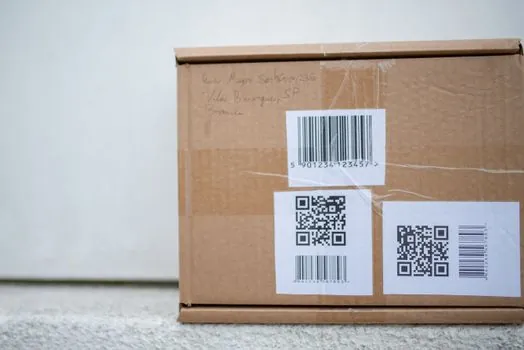
That distinction matters. A barcode can identify a box when someone aims a scanner at it, while passive UHF RFID can be read without line-of-sight and supports bulk capture as containers pass through a checkpoint [S8]. Passive tags require no battery because the reader supplies energy to operate the tag [S6].
Choose RFID when custody and movement dominate
RFID systems can track reusable containers throughout production and logistics chains, link their movements and positions with OT/MES/ERP systems, and improve visibility and control in load-carrier management [S4]. RFID systems can link reusable transport items with manufacturing execution and enterprise resource planning records, including timestamps, locations, users, and completed process steps [S4].
Reusable plastic turnover boxes are used to transport food products in fresh food distribution and other logistics settings [S2]. Reusable PP turnover boxes move between distribution centers, delivery vehicles, retail stores, and collection points, often in fleets large enough to make manual counting and paper records unreliable [S2]. RFID enables inventory monitoring, delivery verification, return tracking, exception management, and asset lifecycle analysis when readers, antennas, handheld terminals, vehicle-mounted equipment, and the management platform are compatible [S2].
High-value closed-loop systems are another suitable application. Corrugated plastic boxes with RFID have been used to record cycle count, location, contents, and other attributes while supporting account debit and credit [S1].
RFID, barcodes, and manual records compared

The main selection criterion is the required read speed and visibility, not merely the lowest price per box. Manual counting imposes the least hardware cost but is labor-intensive and prone to discrepancies. Barcodes support familiar identification workflows but require individual alignment and line-of-sight scanning [S8]. Passive UHF RFID adds automated bulk reading without a tag battery [S6].
Selection should therefore compare five variables: containers tracked per shift, number of custody handoffs, required read distance, environmental exposure, and software integration effort. Passive UHF RFID is the common option for pallets and containers, while active tags can serve longer-distance tracking and semi-passive tags can address environments with little available power [S5].
Application and environment determine tag construction
The tag specification must match the container, not the other way around. RFID Turnover Box Management assigns a unique digital identity to every reusable plastic container [S2]. The 2026 fresh-food implementation also specifies RFID crate tags, fixed warehouse readers, antennas, vehicle-mounted cargo-box readers, handheld terminals, vehicle communication equipment, and a management platform [S3].
Environmental exposure determines the practical envelope. Reusable containers may encounter moisture, dirt, abrasion, temperature variation, impact during handling, and repeated washing. Turnover boxes also appear in fresh produce, supermarket, agricultural, community retail, and chain-store distribution, where crates may cycle among a central warehouse, many stores, and recovery routes [S3].
Box design and tag placement must be checked together. If the tag is integrated into that design, attachment strength, washing exposure, radio performance, and identification visibility cannot be separated from the box specification.
Closed-loop accountability depends on checkpoints and data links

An RFID tag without a disciplined operating loop will not deliver closed-loop tracking. VANCH's RFID full-scenario management solution gives each logistics turnover crate a unique digital identity and covers outbound warehouse processing, vehicle loading, in-transit transport, store handover, and empty-crate recovery [S3]. This converts the tag from an identifier into an event record.
At the warehouse, fixed readers and antennas can establish batch quantities before dispatch. Vehicle equipment can capture containers as they are loaded. Store handover can record the delivered quantity and custody transfer. VANCH's solution covers empty-crate recovery, while traditional processes can lead to problems including detention at stores and crate loss [S3].
For a closed-loop pool, the management platform must connect those events to the existing plastic pallet, warehouse, transport, and ERP records. RFID information can connect physical reusable assets with operational and business-system data, supporting pool visibility, process control, error-source identification, and bottleneck detection [S4]. Without a clear master-container record, event history, and exception workflow, the installation becomes an inventory reader rather than a closed-loop system.
Failure modes are operational, not only technical
The main failure modes are missed reads, duplicate reads, damaged or unreadable tags, mismatched identities, weak handover discipline, and poor master-data ownership. Manual counting, paper records, and individual barcode scanning can produce unclear quantities, opaque transit status, loss that is difficult to trace, incorrect loading, slow store handover, and low recovery efficiency [S3].
RFID reduces these problems only when each capture point defines what it expects, what it records, and what happens when the observed quantity differs from the expected quantity. The platform should preserve the last recorded location when a container disappears and flag exceptions by warehouse, vehicle, store, or recovery stage. A unique identity is valuable precisely because it makes a missing-box investigation possible.
Tag reading also depends on the physical environment. Container density, metal, liquids, product contents, antenna orientation, reader placement, and interference can affect performance. The implementation should therefore be tested with the actual box, its normal load, and the intended route rather than with an empty sample at vendor premises.
What a procurement decision should require
A defensible specification requires more than the phrase RFID-enabled. The procurement package should define one unique ID per container, tag type, tag attachment or integration method, required read points, minimum captured fields, platform responsibilities, exception rules, and the process for replacing a damaged tag without breaking its lifecycle history. [S2]
For a closed-loop fresh-food system, the target architecture comprises UHF RFID tags, fixed readers, antennas, handheld terminals, vehicle-mounted readers, and a compatible management platform [S2]. The expected data set includes container identity, quantity, vehicle, store, time, and circulation status from dispatch through reuse [S3].
The economic case rests on avoided manual counting and data entry, faster handover, improved return recovery, and reduced loss [S5]. It is strongest for large fleets, multi-site distribution, and high-value or high-frequency circulation. It is weaker for a small internal fleet where manual control is adequate, or when installation and master-data integration cost more than the labor and recovery losses they prevent.
The next measurable checkpoint is a pilot that compares RFID events with physical counts across outbound loading, store handover, empty return, and reuse. Record missed reads, manual corrections, tag damage, unreturned containers, and labor time per handover before deciding whether to scale the installed base.