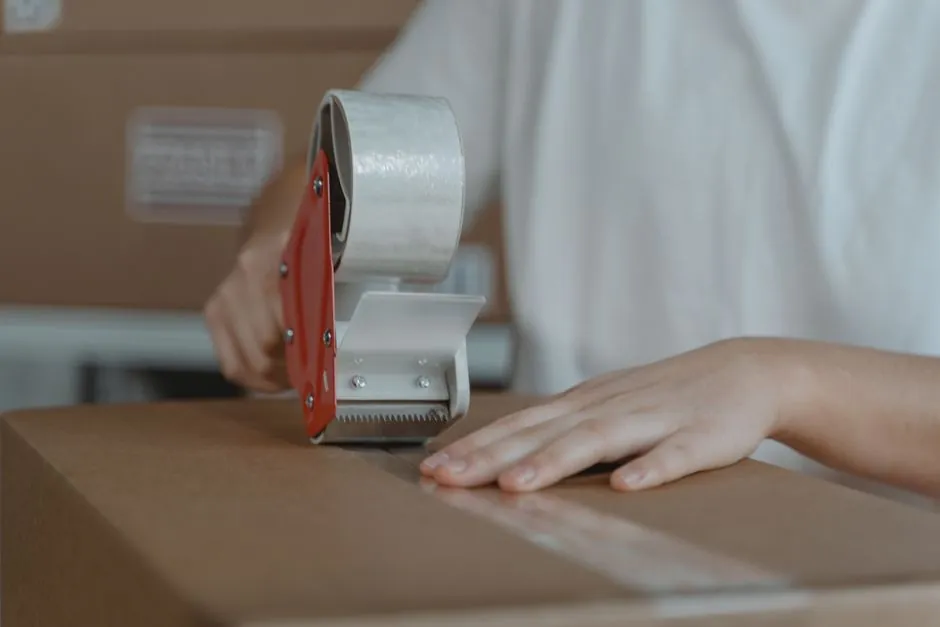
Condensation requires moisture-resistant treatment in exposed cold-chain shipments, with a 10% moisture-content increase capable of reducing Edge Crush Test strength by up to 50% [S2].
The correct choice depends on humidity, condensation, leak risk, dwell time, and food-contact requirements, with wet-strength board, wax, polyethylene liners, and coatings serving different functions [S1][S2].
When a Cold-Chain Box Requires Protection
Moisture protection is justified when a carton box enters refrigerated or frozen storage, crosses temperature zones, contacts ice or damp products, or remains under pallet load for weeks [S2][S3]. Cold-chain cartons can encounter condensation as they move between temperature environments.
Raw corrugated may be adequate for a short, controlled shipment with no contact liquid and low condensation risk. Coated or treated corrugated becomes necessary when the route includes humid docks, freezer transfer, repeated handling, direct ice contact, or extended storage under load [S1][S3][S5].
Cold storage packaging must withstand condensation, sustained cold, repeated handling, and weeks of compression in a pallet stack. These losses explain why dry-condition board ratings alone do not establish cold-chain performance.
Compare the Main Moisture-Control Options
Wet-strength resin, wax, polyethylene lining, and removable liners should be selected by exposure severity rather than by a generic term such as “water-resistant” [S1][S2].
Wet-strength resin is appropriate for condensation and high-humidity exposure, but it is not intended for prolonged direct contact with liquid. Wax saturation provides a liquid-water barrier and suits direct ice contact, although a surface-only wax spray does not offer the same full-board protection [S2].
A polyethylene liner creates a continuous moisture boundary, while a wet-strength liner reinforces the fiber network and a divider contains drips or point contact [S1][S2].
Select Treatment by Exposure and Use

Raw corrugated fits controlled, short-duration routes with low condensation and no liquid contact. Wet-strength board fits chilled distribution, humid storage, and non-dripping products, where condensation is the dominant hazard [S2].
Wax saturation is the stronger choice for ice-packed seafood, poultry, frozen produce, and other loads involving direct ice contact [S2]. Polyethylene-lined board is appropriate where a continuous liquid barrier is required, but its recyclability and disposal route should be checked with the converter rather than assumed [S2][S4].
Food and food-adjacent shipments require documentation that the coating is food safe and confirmation that it covers the intended container surface [S3]. For pharmaceutical shipments, the packaging specification must preserve the required product temperature through the defined transit duration, and ISTA transit testing is identified as a relevant validation method for packaging exposed to distribution hazards [S5].
Check Performance Under Cold and Humid Conditions
A moisture-resistant build should be verified after conditioning, not accepted solely from dry board data. The specification should include compression and edge-crush performance after humidity exposure, with the result compared against actual pallet load, stack height, dwell time, and handling count [S1][S3].
One quantitative moisture benchmark is the edge crush test, which measures columnar strength across corrugated flutes. When corrugated-board fibers absorb moisture, the hydrogen bonds between the cellulose fibers weaken and the fibers swell, reducing edge crush test strength and burst strength.
For heavy palletized freight or long freezer dwell, double-wall board provides two fluted layers and is generally more appropriate than single-wall construction [S3]. Thermal liners, foam inserts, and reflective liners can improve temperature retention, but they do not replace moisture protection for the outer corrugated structure [S4].
Set Supplier Questions and Failure Controls
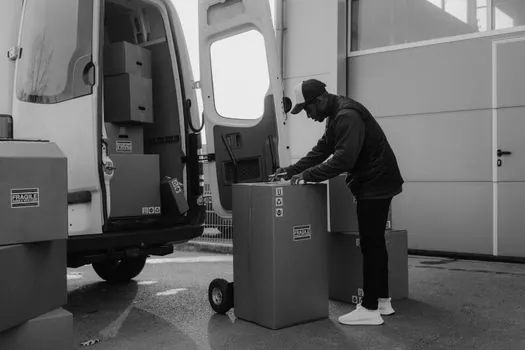
Five purchasing questions establish whether a carton is specified for the route: Is it coated or raw corrugated, is the treatment food safe, does the barrier cover the full container, has it been tested under refrigerated or freezer conditions, and does the board grade match the pallet load and storage duration [S3]?
Transport exposure should also be documented through the number of transfers, the duration of compression in storage, vibration during refrigerated movement, and the possibility of shifting loads [S3]. A box that performs well on a shelf can still bulge at its corners after weeks under a pallet stack [S3].
Failure modes differ by treatment: untreated board loses stiffness as fibers absorb water, WSR board can still saturate during prolonged liquid exposure, and an incompletely covered barrier leaves vulnerable board areas [S1][S2][S3]. Specify exactly where liners terminate, whether seams are protected, and whether coatings cover the inside, outside, or both surfaces [S3].
Decision Thresholds for Coating Procurement
Coating should be specified when any cold-chain route combines high humidity, condensation, direct moisture contact, long dwell time, or sustained compression. The bulk-bag and insulated-packaging alternatives are not equivalent to a moisture-resistant corrugated carton because their barrier performance, reuse model, and structural load paths differ. [S2]
Use WSR for condensation-dominant exposure, wax saturation for direct ice or liquid contact, and a polyethylene liner when a continuous inner moisture boundary is required [S2]. Ask for conditioned strength results, food-contact documentation, coating coverage, board construction, and the expected pallet load before approving a carton box specification [S1][S3].
The next trackable signal is the supplier’s conditioning test report and ECT or compression result, not a general claim that the carton is “moisture resistant.”