
Rigid insulation board is a flat, closed-cell or open-cell foam panel, commonly expanded polystyrene (EPS), extruded polystyrene (XPS), polyisocyanurate (polyiso), or graphite polystyrene (GPS), that delivers roughly R-5 to R-6.5 per inch depending on chemistry and density [S1][S5]. Batt insulation is a flexible blanket of spun fiberglass or stone mineral wool pre-cut to fit standard stud or joist cavities, with typical R-values of R-3.1 to R-4.0 per inch for fiberglass and around R-3.0 to R-3.3 per inch for standard mineral wool [S3][S5].
Boards are rigid enough to walk on lightly, hold their own shape outside a cavity, and act as a continuous thermal or weather-resistant layer; batts are floppy by design and rely on being friction-fit inside a framed bay [S4][S7]. The geometry alone dictates where each belongs: boards on exterior sheathing, under slabs, and against foundation walls; batts in interior stud walls, floors, and attic floors where a cheap cavity fill is the goal [S3][S8].
What "Rigid Board" Actually Means in Spec Sheets
The category covers at least four chemistries, each with a distinct thermal and moisture profile that needs to be read off the data sheet, not assumed. EPS is the lowest-cost closed-cell board at roughly R-4 to R-4.5 per inch; XPS runs R-5 per inch and is the common choice for below-grade and under-slab because of its higher closed-cell density and water resistance [S8]. Polyiso is the highest R-value foam at about R-6 to R-6.5 per inch but is more sensitive to cold and to facer type (foil-faced, fiberglass-faced, or coated), and its R-value drops as mean temperature falls [S1][S8].
Graphite polystyrene (GPS), used in products such as Halo Exterra, sits between EPS and XPS, with the graphite filler bumping per-inch R-value above standard EPS without the cost of polyiso [S5]. Rigid mineral wool board is the non-foam alternative: largely rock-based, high recycled content, no blowing agents, and rated for very high service temperatures where foams would scorch or melt [S6]. The single most useful spec line on any board is the R-value-per-inch at the project's design mean temperature, plus a water absorption percentage for below-grade use.
Batt Insulation: Form Factor, Materials, and Limits
Batts are sold as pre-cut panels (typically 48 in or 93 in long) or continuous rolls, in thicknesses matched to standard 2x4 (R-13) and 2x6 (R-19 or R-21) wood framing, and as faced or unfaced stock where the facing is a kraft or foil vapor retarder [S3]. The most common fiberglass batt delivers about R-3.1 to R-4.0 per inch; standard stone wool batts such as Rockwool Comfort Batt or Safe'n'Sound come in at roughly R-3.0 to R-3.3 per inch, with Safe'n'Sound about 1/2 in thinner to keep an air gap in the cavity for acoustic performance [S2][S5].
Because batts are flexible, they conform to minor framing irregularities, but that same flexibility is their failure mode: gaps, compressions, and voids at the edges cut field performance significantly compared to the lab R-value, and a single missed bay acts as a thermal short [S5]. Fiberglass is also a skin and lung irritant and requires PPE (eyewear, gloves, mask, long sleeves) during installation, which is not a concern with rigid foam board [S3]. Mineral wool batts avoid the irritation problem and add fire resistance up to roughly 1,000 °C stone-wool melt thresholds, which is why they are the default for acoustic and fire-rated assemblies [S5][S6].
Decision Comparison: Board vs Batt on Five Criteria
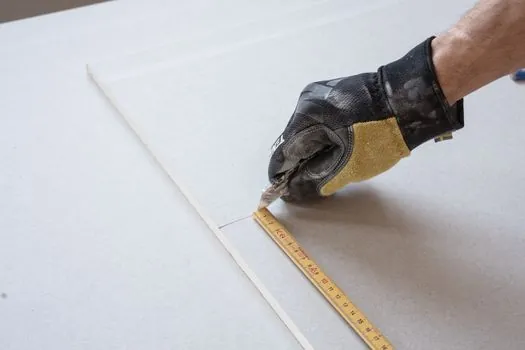
Lining the two up against the criteria that actually drive a specification, rigid board wins thermal efficiency per inch and water resistance, while batts win installed cost and acoustic damping. The comparison, as documented in current installer and manufacturer guidance: [S5]
R-value per inch: rigid board R-4 to R-6.5 (EPS, XPS, polyiso, GPS) versus fiberglass batt R-3.1 to R-4.0 and mineral wool batt R-3.0 to R-3.3 [S1][S2][S5]. Moisture behavior: rigid foam is closed-cell and largely water-resistant (XPS lowest absorption), so it suits below-grade and exterior continuous insulation; batts are hygroscopic, can hold moisture, and lose R-value when wet [S1][S5][S8]. Installed cost: batts are typically the cheaper option per board foot, while rigid board costs more in material and requires more precise cutting and sealing labor [S2][S5]. Acoustic performance: mineral wool batts deliver notably higher sound dampening per inch than rigid foam, which is essentially a rigid acoustic reflector unless paired with a separate absorptive layer [S5]. Fire behavior: mineral wool board and batt are non-combustible; polyiso and XPS will burn, ignite at lower temperatures, and require a thermal or ignition barrier in most code jurisdictions [S6].
Where Rigid Board Is the Right Call
Use rigid board where you need a continuous thermal layer that does not depend on stud spacing, especially on the outside of the sheathing, under concrete slabs, and against basement walls. The standard hybrid detail for cold-climate below-grade walls pairs an R-10 exterior rigid board with an R-14 interior batt, which lifts total assembly R-value while keeping the stud cavity cheap to fill and reducing condensation risk through the slab edge [S5].
Boards are also the default for low-slope roof assemblies, cathedral ceilings, and any place where thickness is constrained and per-inch R-value has to be high. For a 2x4 wall where the user is trying to maximize cavity R-value, a 3.5 in polyiso or GPS board delivers about R-21, which a 3.5 in fiberglass batt cannot match [S2]. The trade-off the installer flagged on GreenBuildingAdvisor is embodied carbon and cost: cutting rigid foam to fit an irregular 1924-vintage stud bay is labor-heavy, and rigid foam is generally more expensive than batts per R-value unit once labor is included [S2].
Where Batt Insulation Is the Right Call

Use batts in standard interior stud walls, joist cavities, and attic floors where the cavity is already there, the budget is tight, and the framing is regular. Fiberglass batts are the most common insulation material in U.S. residential construction and the form most homeowners can install themselves in a day [S3]. Mineral wool batts are the choice when acoustic separation or fire rating is the primary driver, since they are denser and non-combustible [S5].
Batt insulation is calculated by counting batts or rolls to cover the area, not by depth alone, which makes it straightforward to order [S3]. The North American Insulation Manufacturers Association has reported that roughly 90% of U.S. single-family homes are under-insulated, which is why the Department of Energy sets regional R-value targets rather than a single national number and recommends verifying existing depth against the target before adding material [S3]. A quick rule on field performance: a batt installed with gaps and compressions can lose 20% to 30% of its nominal R-value, which is rarely true of rigid board where the installation is a continuous sealed layer [S5].
Hybrid Assemblies and Common Spec Mistakes
The most common spec mistake is treating the two products as substitutes and putting a batt where a continuous rigid layer was required, or putting a board inside a stud bay where a batt was the simpler answer. Hybrid assemblies that layer a continuous R-5 to R-10 board outside the sheathing with a standard R-13 or R-15 batt inside the cavity hit code in most cold U.S. climate zones (IECC zones 5 to 7) and break the thermal bridge through the studs that a batt-only wall cannot break [S5].
For 2x4 walls specifically, the typical below-grade cold-climate target of R-19 to R-20 is hard to hit with batts alone because the cavity is only 3.5 in deep; pairing R-10 exterior rigid board with R-14 interior batt is the cleaner path to that target [S5]. Above-grade, a thinner continuous R-5 board outside the sheathing, plus a standard R-13 fiberglass batt inside, is a common residential energy-code compliance detail. Note that rigid board is not a substitute for a fire-rated assembly where the code requires one: use mineral wool board or a listed fire-resistive covering over foam in those locations [S6].
For more on how layered assemblies affect total project cost and where rigid foam is appearing in non-thermal roles, see the analysis of R-5 to R-6.5 per inch board assemblies in modern building envelopes, the broader category guide for masonry and continuous exterior insulation detailing, and the related polyurethane insulation reference for high-R-value spray and board polyurethane options. For a different cost-versus-performance trade-off in the building envelope, the suspended ceiling cost analysis at suspended ceiling installation cost drivers is a useful parallel case where board thickness and material choice swing the price line.
Selection Checklist for Specifying
Before locking a spec, confirm four numbers: the target assembly R-value (not just the per-inch rating), the design mean temperature for the project, the water exposure class (above-grade, below-grade, under-slab), and the fire-rating requirement. Match those to a board chemistry: EPS for budget-sensitive above-grade continuous insulation, XPS for below-grade and under-slab, polyiso for highest per-inch R-value where mean temperature is moderate, and GPS for a mid-cost mid-R upgrade over EPS [S1][S5][S8].
For the cavity side, use fiberglass batts as the default acoustic-and-thermal cavity fill, and switch to mineral wool batts when the assembly needs fire resistance, higher density, or a higher Sound Transmission Class (STC) rating [S5][S6]. Track two physical constraints at install time: rigid board joints need to be sealed or taped to avoid air leakage through the continuous layer, and batts must be cut to full cavity width without compression, with unfaced batts paired to a separate vapor control strategy appropriate to the climate zone [S3][S5].
To verify the spec on site, measure installed depth against the R-value chart on the bag or board, and confirm the facing type on the batt matches the vapor retarder requirement for the climate zone (typically Class III or smart retarder in cold zones, Class I or II in hot-humid zones). Industry guidance also flags that cutting rigid foam to fit a non-standard stud bay can easily double its install time, so weigh that labor against the per-inch R-value gain before switching from batt to full-cavity board [S2].
Two signals to track over the next planning cycle: code bodies in cold U.S. climate zones (IECC zones 6 to 8) continue to push higher continuous exterior R-value requirements, which favors thicker rigid board layers, and IRC 2024 / IECC 2024 alignment on vapor retarder class is starting to favor unfaced batts plus a separate Class III retarder over kraft-faced batts in many zone 5 and 6 assemblies. Watch the manufacturer's technical bulletin for the specific board chemistry in your spec for any change in facer rating, since that drives both the fire and vapor class of the assembly.