Isolated robotic fill-finish lines now process up to 500 vials per hour on the Cellana L1 platform and up to 675 vials per hour on the XL1 variant, both running inside H2O2-decontaminated isolators installable in Grade C cleanrooms [S2].
The driver is operational, not novelty: EU GMP Annex 1's contamination-control strategy (CCS) clauses force a measurable reduction in human intervention, and CDMOs handling personalized cell, gene, and biologic batches need to keep fill-volume accuracy in the microliter range while running short, high-mix campaigns [S1][S4].
Why Robotics + Isolators, Not RABS, For New Builds
Restricted Access Barrier Systems still use gowned operator intervention, which is the single largest source of microbial contamination in aseptic filling; isolated robotic cells remove that operator from the critical zone entirely [S1][S5]. The SKAN Cellana L1 integrates a six-axis robot into a closed-vial nest process, with a peristaltic pump handling 0.1–50 mL fills and a laser tool re-sealing the stopper puncture trace before a snap-fit cap is applied, all inside a chamber with a sub-20-minute rapid decontamination airlock [S2]. For greenfield builds the implication is direct: a Grade C host room with an isolator replaces the Grade B surrounding room that an open RABS line would otherwise require, which compounds into lower facility HVAC load and simpler gowning protocols [S2][S4].
Throughput, Footprint, and Cleanroom Class: The Real Spec Sheet
Three current commercial platforms set the throughput benchmark for vial filling under isolator robotics. The Aseptic Technologies M1 (manual) is rated to 180 AT-Closed Vials per hour, the L1 (semi-automated, six-axis robot inside a SKAN isolator) to 500 vials per hour, and the XL1 (fully automated with 100% in-process control) to 675 vials per hour, with the L1 and XL1 both rated for installation in a RABS or isolator and both designed for Grade C cleanroom backgrounds [S2]. 3P Innovation's Robotic Fill-Finish Cell is positioned for clinical-scale RTU containers in both liquid and powder formats and was engineered against the current Annex 1 revision [S3]. WuXi Biologics' robotic fill-finish platform is similarly built around the principle that human-generated contamination must be eliminated or absolutely controlled, with robotics and isolator-barrier systems treated as the core enabling technologies [S5]. For CDMO capacity planners the practical takeaway is that a single XL1-class cell can match the throughput of three legacy RABS lines while shrinking the Grade B footprint requirement, which is a meaningful capital expense delta even before labor savings are counted [S2][S4].
Decision Criteria: Robotic Isolator vs. Conventional RABS vs. Manual Isolator
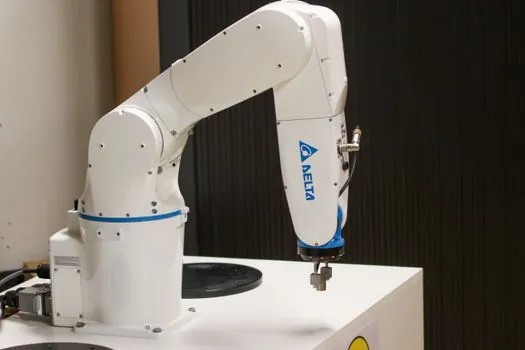
The selection trade is concrete and largely a function of campaign size, modality, and capex tolerance. Manual filling in an isolator (M1-class, 180 vials/hour) suits very low-volume clinical or orphan-drug work where flexibility matters more than throughput. A conventional RABS line keeps gowned operator access, which is acceptable for legacy large-batch products with established process knowledge but is the harder sell under Annex 1's expectation of demonstrably minimized intervention [S1][S4]. A robotic isolator cell (L1/XL1-class, 500–675 vials/hour) is the natural fit for high-value small batches of biologics, cell therapies, and personalized medicines where fill-volume repeatability in the microliter range and zero direct operator contact in the critical zone are both required, and where the operator can prepare the fluid path through glove access without breaking the H2O2-decontaminated envelope [S2][S5]. The table below summarizes the working envelope: manual isolator (≤180 vph, 0.1–50 mL, Grade C host, glove-access only); RABS line (gowned operator access, higher throughput ceilings, Grade B host typical, harder to defend under Annex 1 CCS); robotic isolator cell (500–675 vph, 0.1–50 mL fill range, Grade C host, CFR 21 Part 11 data capture, sub-20-minute airlock decon) [S1][S2][S4].
Use Cases That Already Justify the Capex
Cell and gene therapies, orphan biologics, and radiopharmaceuticals are the three product classes where robotic isolator lines are most often specified, because terminal sterilization is typically not an option for these modalities and 0.2-micron sterilizing filtration is either impractical or insufficient on its own [S1][S4]. Ready-to-use (RTU) containers, prefilled syringes, on-body devices, and intranasal formats are pushing demand for flexible robotics that can handle vial, syringe, and cartridge nests without re-validating the entire suite [S3][S4]. One concrete operational data point: the Cellana L1's peristaltic-pump fill with a closed-vial needle design delivers high filling accuracy on 0.1–50 mL volumes, and the platform is positioned as a smooth transition target for sites already running the pure² M1 manual line, which protects prior operator training and consumable inventory [S2]. The same logic applies to 3P Innovation's clinical-scale Robotic Fill-Finish Cell, which uses a robotic capsule filler and a separate fill-finish cell to cover powder and liquid formats inside the same product family [S3].
Limitations, Failure Modes, and the H2O2 Reality
The technology has real constraints. Isolator decontamination with H2O2 is sensitive to chamber loading, temperature, and humidity, and the airlock cycle time (under 20 minutes on the Cellana L1) only holds if consumables are correctly staged and the bulk aseptic connector is properly mated, otherwise cycle times stretch and throughput assumptions break [S2]. Single-use fluid paths and AT-Closed Vial® nests simplify changeover but introduce their own supply-chain risk, because a stock-out on the RTU container or on the peristaltic tubing sterilizes the line as effectively as a contamination event [S2][S3]. Process engineers should also expect a longer qualification cycle on first install: the combination of CFR 21 Part 11 data capture, the EU GMP Annex 1 contamination control strategy documentation, and a six-axis robot's validation envelope typically pushes first-batch release by 4–6 months versus a conventional RABS retrofit, which is one reason manual M1-class lines persist for very early clinical work [S1][S2][S4].
Standards, Sourcing Signals, and Trackable Next Nodes
The compliance spine is EU GMP Annex 1 (contamination control strategy, environmental monitoring, single-use systems) plus CFR 21 Part 11 for electronic batch records on the L1 and comparable lines [S1][S2]. For broader context on the factory-floor automation side that surrounds these cells, the filling machine and filling weighing scale reference pages cover the upstream dosing hardware that feeds a robotic isolator cell, while the electrical automation page covers the MES and PLC layer that a CFR 21 Part 11 line has to integrate with. Two signals worth tracking into 2027: any vendor release of a sub-500-vials-per-hour robotic cell sized for true personalized batches, and any Annex 1 inspection-cycle data that quantifies how CDMOs running isolated robotic lines versus RABS lines compare on human-intervention deviations. Watch the 3P Innovation commercial-scale Robotic Fill-Finish Cell Pro launch and any follow-on capacity announcement from SKAN/Aseptic Technologies on an XL2-class successor, since both would reset the throughput-vs-footprint benchmark set by today's 675 vph XL1 [S2][S3].
For related coverage, see Polymeric FR replaces HBCD in EPS and XPS foam: substitution status and open questions.